
An increase in climate change-driven disasters is pushing the US insurance market to its breaking point. Insurers in disaster-prone states have gone belly up or left the area altogether, leaving homeowners with unaffordable insurance options or state-run “insurance of last resort” programs. Some experts worry we are headed into an “uninsurable future.”
How should the insurance industry shift to respond to this reality? And how can we lower risks that are no longer insurable?
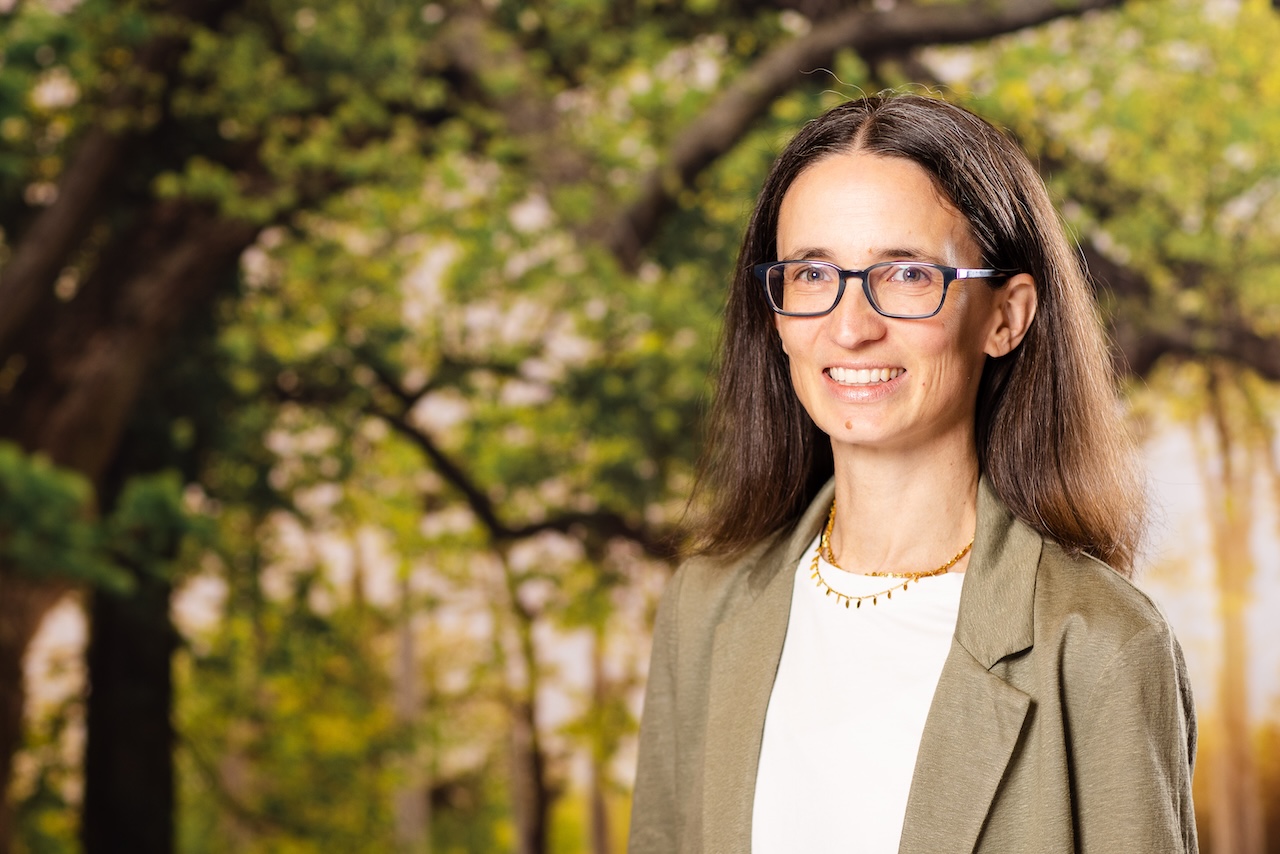
Those are the questions that preoccupy Carolyn Kousky of Insurance for Good, a nonprofit she launched in 2024 to act as a hub for a growing community of practice working to create more equitable and resilient insurance solutions.
The nonprofit helps policymakers and communities access resources and innovations that transfer climate risk more equitably. Risk transfer mechanisms, like insurance, help communities manage risk and absorb financial losses.
As an economist at the Environmental Defense Fund and a senior fellow at the University of Pennsylvania’s Kleinman Center for Energy Policy, Kousky is addressing the “very clear barriers” she saw to deploying risk transfer solutions that promote resilient and equitable futures.
“We are going to face an uninsurable future if we don’t invest in lowering the losses from climate impacts,“ Kousky tells ImpactAlpha in a Q&A. “What we’re trying to build are risk-transfer solutions that people can actually use and sustain.”
Among Insurance for Good’s current projects is a collaboration with the Philadelphia Office of Sustainability and a local community organization, Eastwick United, on a potential parametric insurance product for the Eastwick neighborhood in Philadelphia, where traditional flood insurance hasn’t always worked for lower-income residents.
The neighborhood in South Philadelphia, built on marshland, has experienced severe flooding for a century, most recently during hurricane Floyd and tropical storm Isaias. The majority-Black community has also been subjected over its history to redlining, ill-conceived urban renewal projects and environmental injustices.
That project, and others the nonprofit is working on, could become models that can be replicated in other communities.
Kousky says rising risks and costs requires innovation in multiple areas: policy, new insurance products and business models that meet the needs of communities on the front lines of climate change. Our conversation has been condensed and edited.
ImpactAlpha: Describe the problem you’re trying to solve in the Philadelphia project?
Carolyn Kousky: Eastwick is a very flood prone area and is highly socially vulnerable. They have a river and a creek that can both overflow; they also can face extreme precipitation, where the stormwater infrastructure gets overwhelmed.
Floods can be really costly for households, with a range of impacts, and this is exactly what we saw in Eastwick. It’s property damage, damage to personal belongings, but it’s also the cost of having to evacuate and stay somewhere else, or mold remediation and cleaning up debris. Maybe even lost income.
The federal flood insurance program is a really important and helpful program for many, many communities, but it’s also a bit one-size-fits-all. Not all flood risk is the same. In areas of more shallow flooding and rainfall flooding, you could have really serious damages, but you’re not going to lose your whole home. We saw this a lot in Eastwick; damages were much less than the value of the home.
The problem is, if you decide to try to save money on your flood insurance premium by lowering the total cap, buying only $50,000 of coverage, that kicks you into this category of insurance called actual cash value coverage. They only pay you the depreciated value of items, not the cost to replace them.
It means that people have wildly insufficient amounts of dollars to actually rebuild and replace.
ImpactAlpha: What solution are you investigating?
Kousky. We’re looking at a concept called parametric microinsurance, which is a mouthful. It’s been used largely in developing and emerging economies where there weren’t already well-structured insurance markets.
With parametric coverage, you get a predefined amount upon the occurrence of what’s called a triggering event. A good example is if wind speeds within so many miles of your home exceed a certain threshold, then you automatically get the money. Parametric is not a replacement for standard homeowners insurance, but it’s really fast and it’s flexible.
You can use parametric all the way up to the level of a country, but here we’re thinking about using it in microinsurance context, which just means that they’re smaller dollar payouts, between $1,000 and $20,000. Right now the only operating parametric microinsurance market in the country is in Puerto Rico, for both hurricanes and earthquakes. We’re looking at whether you can take that concept and apply it to flooding, especially in a place like Eastwick.
ImpactAlpha: What have you found so far?
Kousky: We’ve been in conversations with a number of potential private providers and one of the biggest challenges with expanding insurance coverage is how to sustain demand, particularly among non-affluent populations.
So what we’re working on right now is starting a bunch of conversations in Eastwick. How could it be most helpful? How much would you be willing to pay? Would you be willing to keep paying that over time?
Nobody likes to buy insurance, but the people who need insurance the most are often those who are least able to afford it because they don’t have lots of liquid savings. But what we’ve also seen is that philanthropy is not going to keep subsidizing premiums for people indefinitely. What we’re trying to solve for right now is what is the product that people would find really valuable and be able to keep affording over time?
ImpactAlpha: What are some lessons from similar products that might be useful?
Kousky: One that’s been really effective is to tie microinsurance to other types of purchases. For example, tying a micro insurance product to a loan that a CDFI offers, and so your loan comes and it’s a tiny bit more to repay over time, but that when the disaster hits, it either repays the loan for you or it gives you a cash infusion of liquidity.
This obviously doesn’t apply to Philadelphia, but insurance has also been tied to purchase of agricultural inputs, e.g. you buy seeds and it comes with a parametric drought product. There’s also been some conversations in other communities about whether you could tie it to certain government programs.
Flooding is a really difficult peril for parametric: the trigger needs to be fast, easy, verifiable and independent. Normally a stream gauge would work really well, but in many communities, including Eastwick, what if the flooding’s from the creek or what if it’s from rainfall? We’ve been talking with some folks at Drexel and other places about things like real-time flood sensors. That could be a better fit here.
ImpactAlpha: What other projects and solutions to climate change driven insurance gaps are you working on?
Kousky: We are working with some communities in California similarly on flood and fire risks. We’re also working with partners in Los Angeles about how to pay the extra cost — what we call the resilience delta — to build back to the highest level of wildfire resilience. The exciting thing is that some of the solutions will be very easily transferable around the country. There are lots of communities struggling with flood risk like Eastwick is.
ImpactAlpha: You’ve previously discussed the need for more investment in loss reduction. What does that look like?
Kousky: We are going to face an uninsurable future if we don’t invest in lowering the losses from climate impacts which are growing rapidly. We know [that investment] is going to save more money than we would face in damages in the future. But the question is, who’s going to pay for all of that work that needs to be done?
Insurance is a market that prices risk, so if we invest in loss reduction and we lower the risk, shouldn’t we see lower insurance premiums? And then can’t we use that savings as a cash flow to pay for the investments? That is a lovely idea that faces so many challenges with implementation, but I think it’s still an important one.
One we’ve seen at the household level is a discount on your insurance premium if you harden your home, then pay for it through the savings and the loss reduction. For some measures, I think that actually could work really well. For example, fortifying your roof has been shown to provide dramatic reductions in losses from hurricanes.
The things you can do to your own home to reduce flood losses meaningfully enough for your insurance to reflect it, like elevating your home, are very expensive. Sometimes the best measures are at a community scale, but we don’t know how to capture that in tiny premium savings over thousands of residents with dozens of insurance companies.
Some of those investments are very much public goods: stormwater infrastructure, stabilizing levees, doing prescribed burns to manage catastrophic wildfires. Insurance can’t be the sole solution for funding and financing all the loss reductions investments we need to be making, but one place where we think insurance could be doing a lot more is in the post-disaster context.
ImpactAlpha: Who do you think is best placed to drive that additional investment?
Kousky: It’s going to be using different types of community-financing mechanisms. The challenge is how do you repay the debt? Where’s the actual funding coming from? We’ve seen a lot of innovative things: using stormwater fees to pay for green infrastructure investments, insurance licensing fees are going into grant programs for home hardening. Hawaii passed a small tax on cruise ships to say all the tourists coming there need to help us invest in our climate resilience.
Insurance, bond markets and lenders can also price climate risk, like getting lower rates on your loan or your bond because you’ve invested in resilience. At a household level, most of this stuff is much, much, cheaper if we do it at the time of construction or reconstruction, so a big piece of the puzzle has to be strong building codes to make sure we’re building for our climate future up front.
ImpactAlpha: Where do you see the biggest gap in what insurance companies aren’t providing?
Kousky: An ongoing challenge is under-resourced households and communities, socially vulnerable communities, particularly on the front lines of climate change, tend to be lower profit margin products. Companies that are out there for their shareholders don’t invest a lot in low-profit margin products.
So we’ve seen growing interest in new kinds of business models for insurance: more mutuals that are owned by their policyholders, nonprofit insurers or mission aligned B Corps, where you can create better incentives between the policyholder and the company.
Insurers could also be doing a lot more to draw the links and support the needed investments in risk reduction and climate adaptation. That’s things like post-disaster assistance and financing but also using their political voice more to support the types of investments that we need from the public sector to maintain insurability.
You see a lot of communities really upset at the continued provision of insurance to the fossil fuel sector, which is causing all of these challenges. So folks who are not getting the insurance products they need because of these rising risks and then also see the continued support for the energy that’s causing them.