
Greetings Agents of Impact!
📞 Get PluggedIn: Inside LabStart’s blueprint for early-stage climate founders. What does it take to graduate breakthrough climate technologies from universities and national labs to venture-ready startups? On the next PluggedIn, Sherrell Dorsey speaks with Troy Daley of LabStart about how the incubator nurtures first-time founders; what the federal government gets right (and wrong) about tech transfer; and how the pathway from research to real-world application is essential for climate solutions. Get PluggedIn, tomorrow, Nov. 18, at 10am PT / 1pm ET. RSVP now.
In today’s Brief:
- Deploying catalytic capital for persistent financing gaps
- Building affordable housing in the US South
- Accelerating regenerative agriculture in India
- The UK’s Office for the Impact Economy
Featured: Catalytic Capital
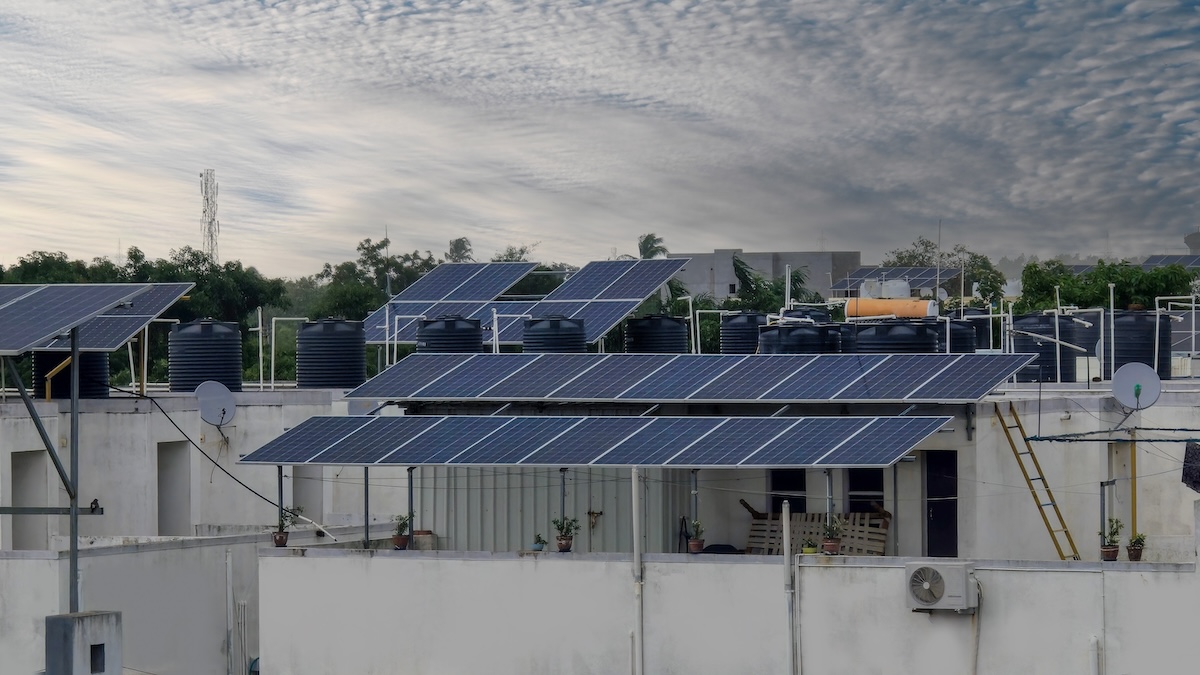
A case study in unlocking lending to small businesses to accelerate solar in India. India’s clean energy transition will run through its 63 million micro, small and medium-sized enterprises. Such businesses account for up to 30% of India’s total power consumption and represent an untapped $9 billion market for solar energy. In a guest post on ImpactAlpha, Harvey Koh of the Catalytic Capital Consortium, or C3, draws from “Addressing capital gaps: A guide to strategic deployment of catalytic capital,” to recount New York-based Encourage Capital’s push to unlock rooftop-solar financing for India’s small enterprises. Along with the guide’s case studies on worker ownership conversions and climate tech financing, the story of unlocking financing for small-scale commercial solar in India illuminates the persistence of many capital gaps and how they can be bridged. “Catalytic capital remains a crucial yet scarce resource,” Koh writes. “We urgently need our catalytic capital to work harder than it ever has before.” In the coming weeks, ImpactAlpha will share additional guest posts and case studies by catalytic capital practitioners that highlight key design principles.
- Guarantees are not enough. In 2021, Encourage partnered with USAID and the US International Development Finance Corp. to provide credit guarantees covering 30% to 50% of potential losses in order to reduce lenders’ hesitation to enter an unfamiliar sector. “It became clear to Encourage Capital that even this combination of equity investment and risk-sharing wouldn’t be enough,” Koh writes. Lenders lacked knowledge of the rooftop-solar value chain; small businesses had low awareness of solar and little demonstrated demand; the solar installation and equipment market was fragmented and of variable quality; and lenders needed new products, systems and staff training to help overcome mental barriers and organizational inertia. Technical assistance funding from Germany’s KfW helped organize and vet solar equipment suppliers and installers, lowering performance risks that undermined lender confidence. Encourage also worked with lenders to design solar-specific loan products tailored to their borrowers’ cash flows.
- Deploy, learn, adapt. C3 encourages practitioners to assess what parts of a marketplace they can change. Once lenders establish solar business lines, for example, they won’t need continued technical assistance. When solar ecosystems are more developed and organized, performance risk declines. Once awareness reaches a critical mass, demand becomes self-sustaining. Such transient, rather than structural, gaps can be closed with time-limited interventions. “Honest assessment matters,” Koh warms. “Not all barriers disappear – for example, higher pricing in cases of inadequate collateralization – and we should be clear when that’s the case.” Capital alone is usually not enough; the guide outlines how investors can respond with a mix of investment parameters, technical assistance, market-shaping strategies and advocacy efforts. “Deploy, learn and adapt,” it advises. “Market change can never be fully predicted in advance.”
- Keep reading, “A case study in unlocking lending to small businesses to accelerate solar in India,” by C3’s Harvy Koh. The Catalytic Capital Consortium, or C3, sponsors ImpactAlpha’s coverage of catalytic capital.
Dealflow: Affordable Housing
American South Capital Partners raises $60 million for affordable housing in the southern US. American South Capital Partners is a joint venture between LA-based SDS Capital Group and Louisiana-based Vintage Realty Company that invests in affordable and workforce housing across the southern US. SDS Capital’s Deborah La Franchi called the strategy both a “compelling investment opportunity” and “a moral imperative for society” in a region where low-income renters in rural and small metro areas struggle to find affordable places to live (for background, see “SDS Capital deploys private equity to finance permanent housing for homeless Californians”). The partners are raising their third fund and have a goal of closing at $500 million. The fund would finance approximately $1.5 billion in multifamily housing development, or about 18,000 units, which will be affordable for families earning up to 80% of their area median income. Asset manager GCM Grosvenor invested in the fund through several pension-backed vehicles.
- Workforce housing. American South Capital’s third fund is a continuation of its American South Real Estate Fund series, which raised a combined $234 million for its two prior funds. GCM Grosvenor also backed the second fund. The first two funds have deployed $200 million in 29 projects supporting the development of 7,500 affordable and workforce housing units.
- Share this post.
Mirova invests $30 million to help more than 300,000 farmers in India adopt regenerative techniques. India-based climate tech startup Varaha launched in 2022 to train smallholder farmers in sustainable agroforestry, biochar production, water management and regenerative agriculture practices like drip irrigation and reduced tillage. It runs seven projects in India and Bangladesh that aim to help farmers improve yields and sell carbon credits for additional income. Varaha has secured $30 million from French asset manager Mirova to support a larger-scale project in India. It is Mirova’s largest nature-based carbon deal and its first in India.
- Scaling up. The project, called Kheti, has a goal of supporting more than 330,000 smallholder farmers working 1.7 million acres of land in Haryana and Punjab, states known for wheat and rice farming. It is currently working with 25,000 farmers in the project. Varaha uses invasive tree species as feedstock for biochar production. In January, Varaha signed a deal to sell 200,000 tons of biochar-based carbon removal credits to Google. Other buyers of its carbon credits include Klimate in Denmark, Good Carbon in Germany and Carbon Future in Switzerland. Varaha has also teamed up with Carlifonia-based Patch to link project developers to carbon credit buyers.
- Share this post.
Dealflow overflow. Investment news crossing our desks:
- Rgreen Invest and Echosys Invest’s jointly managed AFRIGREEN Debt Impact Fund provided €15 million ($16.3 million) in senior debt to SolarX, a commercial and industrial solar developer working in Côte d’Ivoire, Senegal, Mali and Burkina Faso. (Impact Investor)
- FedEx, Capricorn Investment Group’s Technology Impact Fund and vehicle maker THOR Industries led a $160 million Series C round for California-based electric truck maker Harbinger. FedEx also ordered 53 of Harbinger’s medium-class electric delivery vehicles. (Harbinger)
- Singapore’s Anomaly Bio raised $2.6 million in a round led by San Francisco-based Pebblebed Ventures to make biological ingredients for crop protection, nutrition and cosmetics. (Anomaly Bio)
- Norfund made a $75 million investment in Mulilo, a South African renewable energy developer and independent power producer that is majority-owned by Copenhagen Infrastructure Partners. (Mulilo)
- South Africa-based SolarSaver, a provider of solar-powered cold-storage systems for small businesses and hospitals, secured $60 million in a round led by Inspired Evolution’s climate impact fund. (Disrupt Africa)
Signals: Policy Corner
UK looks to impact investors for private capital to tackle poverty and housing crises. With the creation of an Office for the Impact Economy, impact investing is firmly ensconced at 10 Downing Street. The new office said in a statement that it will act as “a single front door for impact investors, philanthropy and purpose-driven businesses to partner with the government and grow their social impact across the UK.” The creation of a Cabinet-level office was among the key recommendations by the Social Impact Investment Advisory Group, tasked by the UK’s Labour government to identify ways to mobilize private capital for public good. The advisory group, led by Schroders chair Elizabeth Corley, helped to shape the £500 million ($654 million) Better Futures Fund for vulnerable children and families, which launched this summer. The central message: Government agencies should partner with the country’s £100 billion impact economy to unlock billions of pounds for child poverty, clean energy, affordable housing and other social issues.
- Impact economy. UK Prime Minister Keir Starmer is eyeing tax hikes and budget cuts to shore up public finances in a hotly anticipated budget due this month. Strained finances are one reason the UK declined to back COP30 host Brazil’s tropical forest fund. Impact capital already plays a role in the UK economy, with at least £42 billion aligned with key government priorities, according to the advisory group. Greater Manchester Pension Fund’s £1.4 billion local investment portfolio is financing the construction of more than 3,500 new homes, childcare facilities and a special needs school. Better Society Capital, which was set up by David Cameron’s conservative government in 2012, has helped grow social impact investments more than 10-fold (see, “Canada’s Social Finance Fund aims to build an investment ecosystem with ‘wholesale’ impact capital”). Harnessing the “huge potential” for impact investment, said Legal & General’s Pete Gladwell, will require governments to “move from the traditional ‘borrow and spend’ model to harnessing pension funds and philanthropy as a force for good.”
- Keep reading, “UK looks to impact investors for private capital to tackle poverty and housing crisis,” by ImpactAlpha contributor Danielle Rossingh.
Agents of Impact: Follow the Talent
Join ImpactAlpha at these upcoming partner events:
- Nov. 19: Making Missing Markets: Connecting Communities and Capital, New York.
- Nov. 20 – 22: Impactaland, Santiago, Chile.
- Feb. 26 – 27: Purpose Trust Ownership, Austin, Texas.
Builders Vision welcomes Megan Murday, formerly with Dasseti, as vice president of impact measurement and management… Media Impact Funders is recruiting a director of development and member recruitment… Triodos Bank is looking for a nature-based solutions fund manager… Sequoia Climate Foundation seeks a climate finance program manager in London.
Alliant Energy Corp. has an opening for an economic development manager… Copia Power is hiring a capital markets associate in Washington, DC… Symbiotics is on the hunt for a fintech investment associate in Cape Town… GenZero seeks a Singapore-based vice president or assistant vice president of investments for its Carbon Ecosystem Enablers work… Brookfield Asset Management is looking for a senior sustainability manager in London.
Bank of America has an opening for a sustainable investing analyst in Boston… Climate Imperative Foundation is hiring a US electricity initiative director… Schroders seeks an impact investment analyst for a 12-month contract… World Education Services is recruiting a senior director of sales, marketing and customer solutions… WK Kellogg Foundation is looking for a public equity investment analyst.
👉 View (or post) impact investing jobs on ImpactAlpha’s Career Hub.
Thank you for your impact!
– Nov. 17, 2025