
Greetings Agents of Impact!
In today’s Brief:
- Bad Bunny’s economics of joy
- Food resilience in Africa
- AI for education
- Breaking into careers in impact investing
Featured: Returns on Inclusion
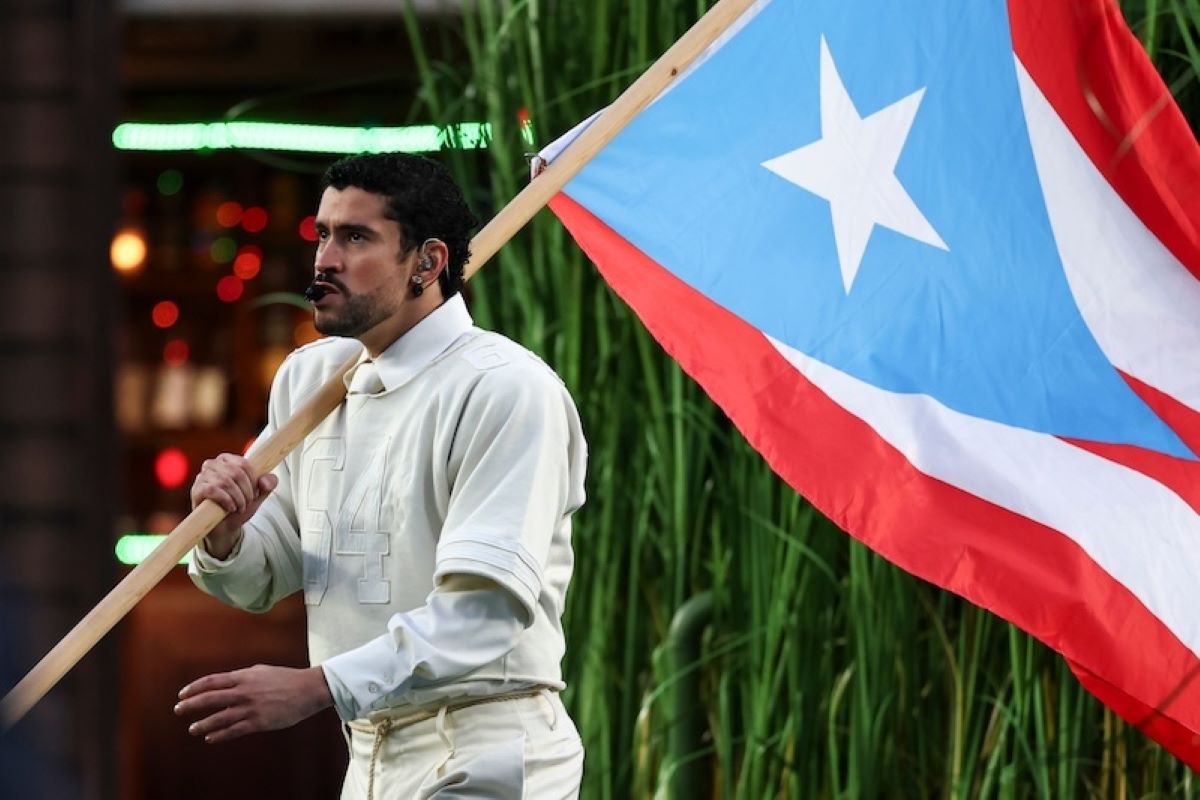
Bad Bunny expands the imagination and the market for investing in the Americas. Joyful. Geographically, culturally and generationally rich. And here to stay. Bad Bunny presented an unapologetically expansive vision of inclusion and opportunity in Sunday evening’s Super Bowl half-time performance in the US, a sharp contrast to a narrow conception of an America based on exclusion. “The only thing more powerful than hate is love,” declared the Jumbotron at Levi’s Stadium in Santa Clara, Calif. From sugar cane fields to food stalls, to a real-life wedding, and a party at “La Casita,” his signature rural-style house, Bad Bunny presented the joys of family, community and a vibrant, local economy with a proudly Latin flavor. The performance by the Puerto Rican mega-star wasn’t explicitly about immigration or the Trump administration’s current crackdown, but of course it was. Bad Bunny reminded the record-breaking audience that Puerto Rico is, indeed, part of the United States (and that its residents are US citizens). Football in hand, he led dancing flag-bearers representing every country in all of the Americas, south, central and north. At the conclusion, Bad Bunny lifted the football to the camera so viewers could read, “Together, we are America.” Then he spiked the football – touchdown!
- Immigrant boost. “This wasn’t just entertainment; it was a powerful statement on belonging,” Refugee Investment Network’s John Kluge wrote on Substack. “When we invest in immigrants and refugees, fostering their integration and success, the benefits ripple out to everyone – reducing divides, boosting growth and even balancing budgets.” The positive economic benefits of immigration are becoming more apparent as they slip – or are ripped away. The US population grew by only 1.8 million people last year, or 0.5%, one of the slowest gains ever, as immigration fell by half, according to the US Census Bureau. With birth rates falling, immigration now makes up about 80% of net population gain. Cutting that source of growth is accelerating the aging of the US population and increasing the strain on Social Security and Medicare. A new report from the center-right Cato Institute, based on three decades of federal, state and local data, shows that, through taxes and other contributions, documented and undocumented immigrants have been net positive for budgets, reducing the US deficit by $14.5 trillion since 1994.
- Small business lending. The economic costs of the immigration crackdown look set to go dramatically higher. Starting next month, the US Small Business Administration will bar small businesses owned directly or indirectly by non-US citizens, including legal permanent residents in the US, from receiving SBA-guaranteed loans. The SBA’s flagship 7(a) program guarantees loans of up to $5 million to help small businesses refinance debt, purchase equipment and fund other needs. Immigrant entrepreneurs own roughly 20% of the country’s 36 million small businesses. “This limit, it’s pretty substantial,” Kim Folsom of Founders First Capital, a San Diego-based lender to small businesses nationally, tells ImpactAlpha. At least one quarter of the small businesses in Founder First’s portfolio are owned by legal permanent residents (see, “Helping diverse founders grow businesses with revenue-based financing”). The SBA guarantees let banks make loans to small businesses at the most affordable rates, Folsom said. “And now, if you are not a US citizen, you won’t get access to that debt to power the growth of value creation, job creation, wealth creation.”
- Pushback on Palantir. The secretive data analytics supplier founded by Trump ally Peter Thiel has become a flash point for employees and investors. The New York Times reported that Immigration and Customs Enforcement agents in Minnesota are tapping into a Palantir database to identify locations for individuals they are pursuing. The fatal shootings in Minneapolis, and ICE activities more broadly – as well as the protests and increased scrutiny that have ensued – “highlighted material reputational and human rights risks to Palantir,” NYC Comptroller Mark Levine wrote in a letter to the tech firm. Levine oversees New York City’s pension funds, which have more than $311 billion in assets and are “substantial long-term beneficial shareholders of Palantir.” Levine called for an independent human rights risk assessment of Palantir’s work with the Department of Homeland Security to “strengthen Palantir’s governance, ensure alignment with the company’s stated human rights commitments, mitigate material risk, and enhance long-term shareholder confidence.”
- Keep reading, “Bad Bunny expands the imagination and the market for investing in the Americas,” by Dennis Price, Roodgally Senatus, Amy Cortese and David Bank.
Dealflow: Investing in Food and Agriculture
Phatisa raises $86 million for food resilience in Africa. Phatisa has acquired minority stakes in food and agriculture-related companies to strengthen Africa’s food resilience for more than 20 years. The South African private equity firm’s third food fund reached an $86 million first close toward its $300 million target. Investors include British International Investment, Swedfund, the International Finance Corp., FinDev Canada and Norfund. “Competitive food value chains are critical to job creation and economic development in Africa,” said Norfund’s Pindie Nyandoro. Phatisa’s predecessor fund has deployed nearly half of the $143 million it raised from development financiers; has returned nearly 40% of invested capital, after selling stakes in poultry-focused vaccine maker Deltamune and agrochemicals company Rolfes Holdings.
- Agri acquisition. Phatisa’s new fund acquired a stake in Zaad Group, a Cape Town-based distributor of seeds and agrochemicals. Phatisa joined the 1.4 billion rand ($87 million) deal alongside the Industrial Development Corp., the Public Investment Corp. and Women Investment Portfolio Holdings, a Black women-owned investment firm in Johannesburg. Phatisa has made around 20 investments in 17 African countries. Its second fund backed eight companies including Farming and Engineering Services, which offers equipment, agricultural contracting and soil and water testing services in Malawi, Zambia and Tanzania, and Kenyan coffee chains Artcaffé and Java House. The firm also invests in affordable housing solutions to meet demand from a rapidly urbanizing population.
BeConfident raises $16 million to expand AI tutoring beyond Latin America. BeConfident, a Brazilian AI tutoring platform that serves more than three million students in Latin America, raised $16 million to expand operations into Asia and the US. BeConfident’s platform connects students with AI-based tutoring through WhatsApp, where students can practice languages and other subjects through conversation. The venture arm of Prosus, a publicly traded Dutch holding company, led the round. The venture group backs early-stage tech companies in both developed and emerging markets. “As a global investor, we see strong demand for scalable learning solutions worldwide, and our goal is to support BeConfident’s international expansion while consolidating Latin America as a hub for educational innovation with global reach,” said Prosus’s Rafael Barbalat.
- AI for education. The World Bank estimates that 79% of students in Latin American countries suffer from learning poverty, which is defined as children who fall below minimum reading levels or are out of school entirely. That rate jumped from 52% during the pandemic, largely due to the lack of in-person instruction. Companies like BeConfident are leveraging AI in an effort to close the gap. The company partnered with Stanford University to launch BeConfident Labs, a research unit developing AI models for education.
- More.
Dealflow overflow. Investment news crossing our desks:
- California-based Lunar Energy raked in $232 million to develop home battery systems and AI-driven virtual power plants. Backers include DVDC, Activate Capital, B Capital and Prelude Ventures. (Lunar Energy)
- South Africa-based climate tech investor Holocene invested in Yongeza Capital to expand electric motorbike battery swapping in Uganda. (Holocene)
- Sistafund, Norrsken Evolve, Endgame Capital, Triple Impact Ventures, Ventures Together and Earth Capital invested €5 million ($6 million) in Paris-based Recupere Metals, to recycle scrap copper for use in European EVs, renewables and power grids. (Recupere)
- Canadian forest-data provider Remsoft acquired INFLOR, an Orlando-based company that helps landowners and investors manage sustainable forest assets. (Remsoft)
Impact Voices: Impact Jobs
Breaking into impact investing: Mapping student pathways and experiences. A guest post last July by Harvard Business School researchers analyzing 350,000 MBA graduates to determine who lands impact investing jobs went viral. The researchers are back with a study that provides a more qualitative look at how to land a plum impact investing role. Although impact investing is firmly embedded in US business school curricula, access to jobs in the field is determined less by that coursework than by prior finance experience, targeted networks and on-the-job investing skills, Harvard Business School’s Shawn Cole and Jonah Zahnd found. The researchers surveyed 20 participants in Impact Capital Managers’ Mosaic fellowship program, which places grad students as summer associates at impact funds (see, “Empowering young impact professionals to advance their careers and their impact”). The survey “offers one of the first systematic, qualitative looks at how students actually break into impact investing,” write Cole and Zahnd, “and what universities, fellowship programs and job seekers can do to make those pathways more transparent and equitable.”
- Finance first. The survey suggests that the main pathway into impact investing runs through traditional finance and consulting, rather than sustainability or social-sector training. Most Mosaic fellows come from investment banking, venture capital, private equity or consulting backgrounds; a minority studied sustainability. Fellows emphasized that buy-side investing skills – particularly financial modeling, diligence and deal exposure – were more predictive of securing full-time roles than impact-specific credentials. They said the fellowship’s greatest value was network-building and practical investment experience. Seven out of 10 Mosaic alumni go on to work in impact investing. The fellows also cited experiences such as the Turner MIINT program and the Toigo Fellowship as instrumental in their success.
- Keep reading, “Breaking into impact investing: Mapping student pathways and experiences,” by Harvard Business School’s Shawn Cole and Jonah Zahnd.
Agents of Impact: Follow the Talent
🤖 Shaping the algorithm for ‘good AI’. Katy Knight of Siegel Family Endowment, Paul Fehlinger of Project Liberty Institute, Mohamed Nanabhay of Mozilla Ventures and other (human) Agents of Impact will sketch an emerging investment thesis and suggest how institutional allocators can invest in “good AI.” The call kicks off ImpactAlpha’s “Shaping the Algorithm” beat, in partnership with Siegel Family Endowment. Answer the Call, Wednesday, Feb. 18, at 10am PT / 1pm ET / 6pm London. RSVP today.
JPMorgan Chase promotes Connor Bercik to senior associate of sustainable investing… Spring Point Partners is recruiting a 2026 MBA summer intern in Philadelphia… Regeneration.VC is looking for a Europe-based intern for impact measurement, deal flow and communications… Cleantech Open is looking for US-based startups to join its annual accelerator program.
Harvard Impact Labs is accepting applications from its faculty to launch an impact lab or a new line of work in an existing lab… Terner Labs is accepting applications for its Housing Venture Lab accelerator that supports entrepreneurs making housing more equitable, accessible and sustainable… The Oikos Institute for Social Impact and Fishing Differently are co-hosting a three-day conference on place-based investing and social impact, Sept. 9-11 in Philadelphia.
👉 View (or post) impact investing jobs on ImpactAlpha’s Career Hub.
Thank you for your impact!
– Feb. 10, 2026