
Greetings Agents of Impact!
In today’s Brief:
- Billions of households and trillions of dollars at stake in emerging markets
- Clara Miller on aligning foundation assets and mission (podcast)
- Emerging fund managers in Canada
Featured: Looking Ahead to 2025
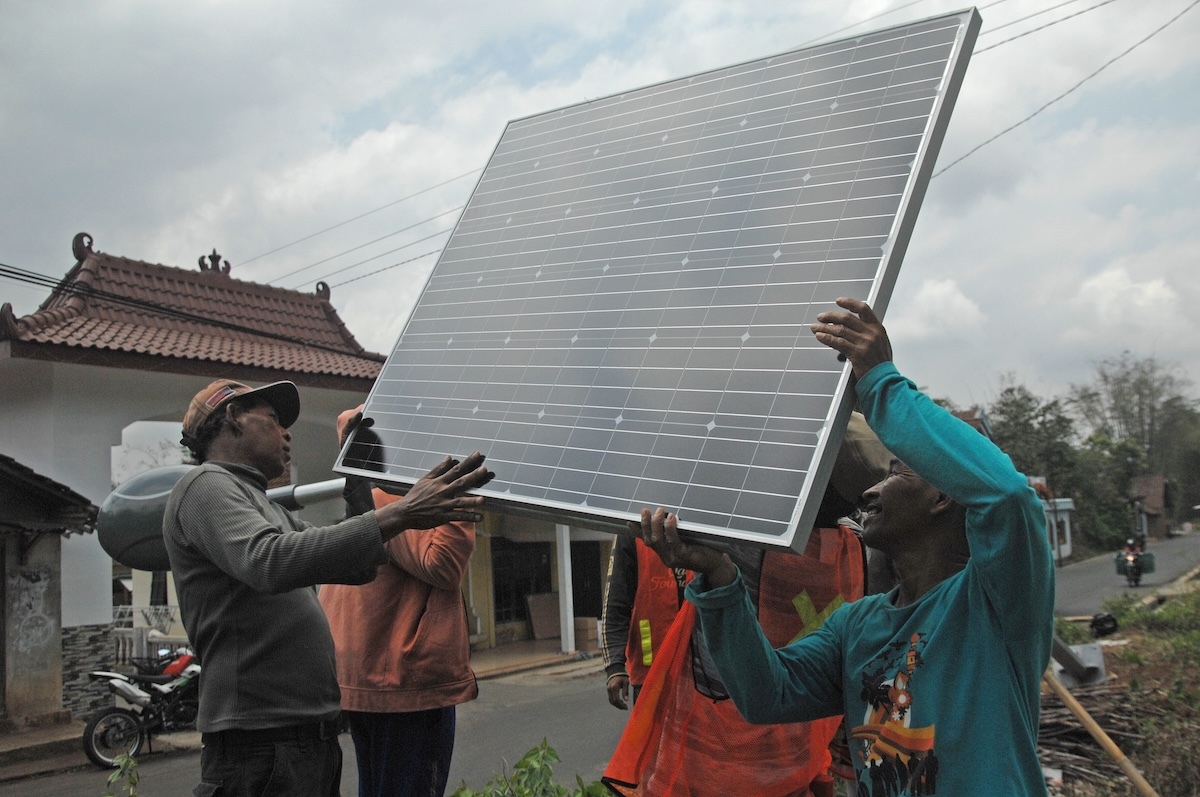
Finding impact alpha in emerging markets: Local innovation, mispriced risks and billions of households. From off-grid solar on rooftops, to clean and quiet electric scooters, to community farms and forest conservation, the most exciting stuff in emerging markets – or anywhere, really – is happening on the ground. And now, with better data and crisper strategies, institutional and commercial investors have new visibility into opportunities to generate sustainable returns by supporting resilience and prosperity for billions of households. Emerging market fund managers like Elevar Equity, LeapFrog Investments, Accion and Acumen have deployed billions of dollars of investor capital into companies serving the vast low- to moderate-income “mass market.” Allianz and Mitsubishi UJF Financial Group are investing in billion-dollar funds to support the Sustainable Development Goals and climate adaptation and mitigation in emerging economies. With a decade of market building and data collection for off-grid solar products, Sun King and d.light have convinced commercial banks to securitize their receivables and lower their cost of capital. “Let’s reframe this with more positive, more opportunistic, long-term thinking,” Elevar’s Amie Patel said on an Agents of Impact call, “and see this segment of the market as the future.”
Some of the stories we’ll be watching in 2025:
1. Local founders and fund managers mobilize local capital. Global capital allocators have a range of excuses for overwhelmingly investing in fund managers in London, New York and San Francisco, and not Nairobi, Mumbai and Bogotá, even for funds targeted at opportunities in emerging markets. So emerging market entrepreneurs and fund managers are turning their attention to local wealth holders and institutional investors. Impact Investing Ghana has helped Ghanaian fund managers like Injaro Investments and Mirepa Investment Advisors secure backing from local pension funds. The national advisory board for impact investing in Chile is mobilizing family office capital for impact.
The ImpactAlpha team has been on the ground this year, covering impact ecosystem-building and local capital mobilization efforts. In Bangkok, the Feminist Finance Forum connected Agents of Impact to drive women’s financial inclusion, prosperity and leadership in Southeast Asia. In Buenos Aires, the GLI Forum Latam mobilized to get more women in leadership roles. In Nairobi, Africa’s impact market makers displayed e-mobility solutions, off-grid clean energy expansion, youth-lens investing, and engagement from local institutional investors. At FLII gatherings in Merida, Mexico, and San Jose, Costa Rica, entrepreneurs, fund managers and investors put the Caribbean on the impact investing map. This year ImpactAlpha teamed up with Latimpacto, New Ventures, Alterna, Pro Mujer, Impaqto Capital and other regional partners to launch our first regional edition, ImpactAlpha Latin America.
- “Valuing the ‘invisible’ work of women to build resilient economies and fight climate change,” by Jessica Pothering.
- “Building Africa’s pipeline of local capital for sustainable economic growth and resilience,” by Lucy Ngige.
- “The push and pull of impact investing for wealthy families in Latin America,” by Dennis Price.
2. Better data debunks misperceptions of risk. Fund managers and development finance institutions know the real risks of business-lending in emerging markets – but have dragged their feet on sharing data that could mobilize more private capital. A rare data release of more than 15,000 emerging market credit transactions from the Global Emerging Markets, or GEMs, found lower-than-expected default rates. Tech-enabled fintech ventures are finding the same thing: Emerging market risk perceptions are overblown. Impact debt strategies are “very low risk,” with annual loan write-offs of just 0.4%, says Ramkumar Narayanan of research firm Tameo.
- “New release of GEMs loan data debunks misperceptions of risks,” by Jessica Pothering.
- “Emerging market debt investors debunk risk myths,” by Jessica Pothering.
- “The returns are there for high-impact investments, they just require patience,” by Swetha Balachandran, Martina Castro and Yasemin Saltuk Lamy.
3. Trillions in unmet demand lure investors down-market. Trillions of dollars are at play for companies that design products and services that people want, not just ones they need. More than half of the global population lives on less than $7 per day and collectively spends trillions of dollars each year on products and services necessary for their livelihoods and daily life. “Customers are looking for an economic opportunity to make their lives better and thus have more customer loyalty than customers in other markets,” Accion’s Abhishek Agrwal told ImpactAlpha. At Citi, its 20-year-old Social Finance group, which invests in financial and economic inclusion in more than 45 markets, is now “core to the business,” says Citi Social Finance’s Borja Garcia Fernandez. “The market is maturing, and we see more interest from investors.”
- “Billions of low and middle-income consumers represent trillions in impact investment opportunities,” by Jessica Pothering.
- “Protests in Kenya present an impact opportunity to invest in Africa’s youth,” by Lucy Ngige.
- “A guide to investing in better livelihoods and expanded access for low-income people,” by Kathleen Mignano, Charitha Isanaka, Oreva Odu, Jana Svedova, Mitzi Perez Padilla.
4. Commercial investors get by with a little help from their catalytic friends. Commercial investors that want to allocate more capital to emerging markets may be blocked by regulatory rules around risk calculations. They’re turning to catalytic investors to help derisk funds and deals, and, eventually, change investment policies and baselines. Allianz and Mitsubishi UJF Financial Group brought catalytic investors to the table to close several billion-dollar blended finance transactions this year. New catalytic investors have stepped up as well, including Lukas Walton’s family office, Builders Vision, which came in with the Inter-American Development Bank to guarantee a “debt for nature” swap in the Bahamas; the guarantee catalyzed $300 million from Standard Chartered. To accelerate the use of catalytic capital, new foundations and family offices have chipped in to the Catalytic Capital Consortium.
- “Private investors drive blended climate finance to record $18.3 billion,” by Jessica Pothering.
- “Harnessing global momentum for catalytic capital,” by Urmi Sengupta.
- “How commercial investors are streamlining blended fund structures,” by Jessica Pothering.
5. Necessity is the mother of impact innovation. Capital scarcity has made emerging markets a breeding ground for innovative financial tools. Africa Eats is charting a path for Africa’s agrifood businesses to raise growth capital – by going public on the Stock Exchange of Mauritius. ProMujer and BancoSol listed gender bonds on the Argentinian and Bolivian stock exchanges. Koko Fuels, BURN Manufacturing and Bboxx are bringing down the price of their household clean cooking technologies for customers with revenues from the voluntary carbon markets. The Nature Conservancy helped the governments of Ecuador and the Bahamas refinance sovereign debt to free up capital for ecosystem conservation. Watch for more innovation for private financing for climate adaptation and mitigation. This year’s COP climate and biodiversity summits made clear that there will be no flood of government funding from the Global North to the Global South.
- “Early growth-stage companies are going public – in Africa,” by Lucy Ngige.
- “With gender bonds, Pro Mujer puts Argentina’s capital markets to work for female entrepreneurs,” by Dennis Price.
- “Leveraging the carbon markets for clean cooking, climate justice and social impact,” by Jessica Pothering.
6. It’s all climate investing now. Climate and gender. Climate and food. Climate and health. With the world’s most climate-vulnerable people primarily living in low- and middle-income countries, investors are putting a climate lens on economic inclusion, fintech, agtech and impact investment categories. In Africa, commercial impact capital is moving into climate-smart infrastructure, renewable energy and e-mobility. Standard Bank backed CrossBoundary Energy’s commercial and industrial solar portfolio. LeapFrog Investments and Indian small business lender Northern Arc are both in the market with first-time climate funds. British International Investment and Symbiotics teamed up to financial institutions build out green loan products to households and small businesses.
Because women are disproportionately impacted by climate change, an increasing number of fund managers, including New Energy Nexus and Circulate Capital in Asia, Ecosystem Enterprise Fund and Regenera Ventures in Latin America, and Catalyst Fund in Africa, are investing in climate solutions with a gender lens. Check out ImpactAlpha’s database of more than three dozen Climate + Gender investment funds.
- “Voices of women and Indigenous leaders push ‘the Finance COP’ toward a just transition,” Agents of Impact podcast.
- “Blending finance for India’s green transition,” by Shefali Anand.
- “When it comes to moving capital to climate-vulnerable nations, impact investors have the models,” by Jessica Pothering.
Keep reading, “Finding impact alpha in emerging markets: Local innovation, mispriced risks and billions of households,” by Jessica Pothering and Lucy Ngige on ImpactAlpha. Catch up on all of our lookaheads to 2025.
Dealflow: Follow the Money
- Stand Insurance, which uses AI to underwrite home insurance in California’s wildfire zones, raised $30 million in a Series A round led by Lowercarbon Capital and Inspired Capital, along with Equal Ventures and Convective Capital. (WSJ)
- Canada’s Realize Capital Partners backed seven emerging fund managers with an aggregate $32 million of its government-backed Social Impact Fund. The managers include women-led Amplify Capital and Area One Farms, Indigenous-led Flowing River Capital Partners, and place-based Thrive Impact Fund. (Realize Capital)
- The Emerging Africa and Asia Infrastructure Fund, managed by Ninety One, invested $18 million in a 20 megawatt solar plant that will bring power to Uganda’s remote northwestern area. (Africa PE News)
- Fidelity’s Real Estate Logistics Impact Climate Solutions Fund, which buys old buildings and decarbonizes them, made its first deals, acquiring three buildings in the Netherlands and Spain. (Impact Investor)
- France’s Proparco invested $5 million in the Equator Africa Fund to support climate tech ventures boosting local climate resilience. (Empower Africa)
Podcast: Finding Alpha
Clara Miller on investing for communities with common sense and humility (podcast). As president of the Heron Foundation, Clara Miller in 2012 set a five-year goal to invest 100% percent of the foundation’s then-$250 million in assets to fight poverty. Heron beat the deadline by a year to become one of the first foundations to align its full endowment with its mission. In the latest episode of Finding Alpha, ImpactAlpha contributing editor Rob Brown spoke with Miller about the innovations she fostered in impact lending, the value of starting your career at the bottom, and her favorite Beatle, Paul McCartney.
- Aligning investments. “I think our duty of care, our fiduciary duty, is to the people we want to help… whether the folks are starting the business, whether they’re beneficiaries of the business,” Miller says. At Heron, conversations about missions crossed from the program side to the investment side and back, she says. “Each side benefits from the expertise of the other, and each side also benefits from the information of the other.”
- Cash is king. “If the revenue is flowing, the capital will come,” Miller says. As a lender, her mantra at both the Nonprofit Finance Fund and the Heron Foundation was “cash is king.” When assessing an opportunity to loan money to a social enterprise, understanding the people running the enterprise is critical, she says. “In a way, they’re all story loans,” she says, “so you want to be comfortable with the people you’re doing business with.”
- Valuing humility. Miller tells Brown that some of the most important lessons she learned were in the earliest part of her career, when she was a typist, library assistant and receptionist. “Listening to people and paying attention to organizational dynamics, seeing how enterprises of all types and sizes do and don’t work – that’s what one gets to observe if you’re in the bottom of the engine room as a junior chipmunk.”
- Keep reading, and listen in to, “Clara Miller on investing for communities with common sense and humility (podcast),” by Rob Brown on ImpactAlpha. Subscribe to ImpactAlpha podcasts wherever you listen, and catch up on all of the shows on the ImpactAlpha Podcast Network.
Agents of Impact: Follow the Talent
Stephen Marquardt will step down as CEO of Blue Earth Capital early next year. Marko Roeder will be appointed as interim CEO, and Mark Rowe will assume the role of COO on an interim basis… Ramzi Issa, the former Credit Suisse/UBS banker who structured the first debt-for-nature swaps, has started his own firm, Enosis Capital, to focus on debt conversions and other global impact deals (see, “Ecuador makes $1.5 billion debt swap to free up capital for nature preservation”).
Village Capital has an opening for a fund manager… Bezos Earth Fund is looking for a senior research associate focusing on greenhouse gas impact… Environmental Resources Management is looking for a senior consultant for ESG and impact value creation… Sustainable Energy First is on the hunt for a net-zero consultant… CenterSquare Investment Management seeks a real estate ESG associate.
👉 View (or post) impact investing jobs on ImpactAlpha’s Career Hub.
Thank you for your impact!
– Dec. 18, 2024