
Peru is claiming its spot on the impact investing map.
Long considered Latin America’s “fourth market,” behind the big three of Colombia, Mexico and Brazil, Peru is building momentum in impact investing. Leading institutions, fund managers and entrepreneurs are mobilizing an ecosystem to finance solutions to climate resilience and financial inclusion.
Last week, Amazonia Impact Ventures, which provides flexible loans to Indigenous entrepreneurs in the region, received an investment from Wisconsin-based Working Capital for Community Needs. In May, Inkaterra, a Peruvian ecotourism company, secured $17 million to grow Peru’s hospitality sector and create formal jobs. And in February, Peruvian bank BBVA Perú, with IDB Invest, issued a social bond with $100 million with proceeds going to expand access to credit for micro and small businesses led by women.
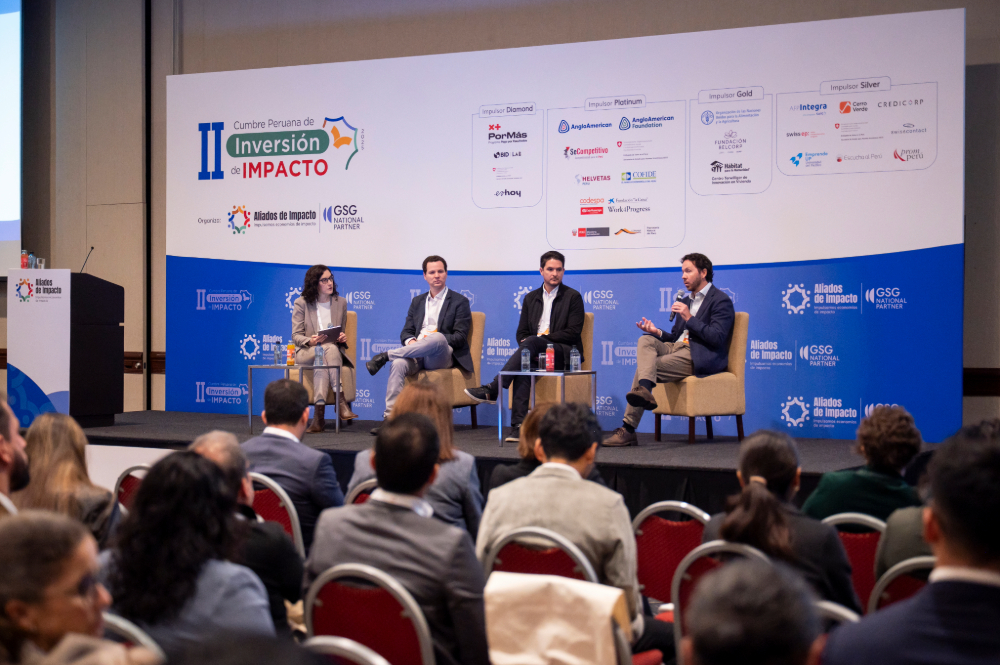
“We’re not just looking for returns on the economic side, but we’re also trying to cause an impact,” Luis Lira of Aliados de Impacto – NAB Peru told ImpactAlpha in a video interview at this month’s Peruvian Impact Investing Summit. “People that are investing in these types of [impact] businesses are what moves the needle here.”
Aliados de Impacto, Peru’s national advisory board on impact investing, is aiming to bring more visibility to the ecosystem. Launched in 2023, the group received backing from Peru’s national development bank Corporación Financiera de Desarrollo, The Swiss State Secretariat for Economic Affairs and the Canadian Embassy. It operates as part of the Global Steering Group (GSG) for Impact Investment network, which spans more than 50 countries.
At its third annual summit in Lima, investors, fund managers and entrepreneurs zeroed in on how to mobilize private capital for greater impact throughout the country’s promising but complex investment landscape.
The Amazon
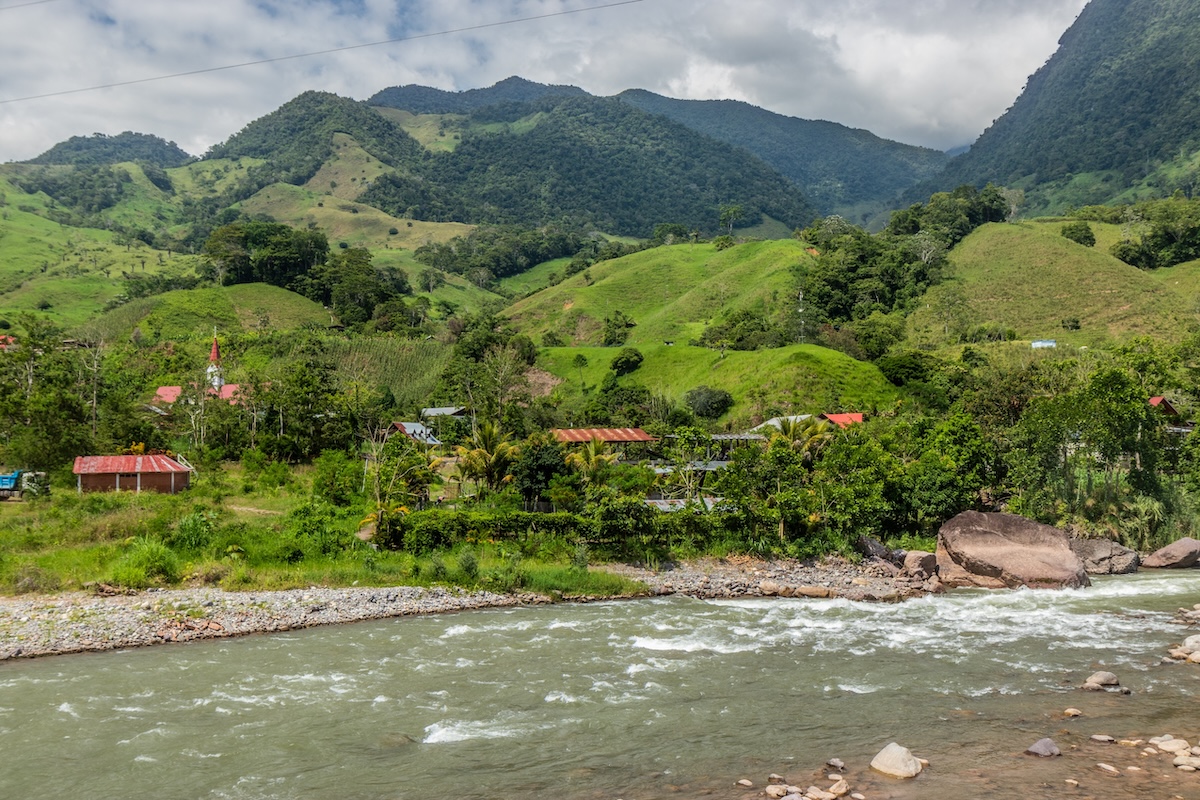
Peru’s Amazon faces deep socioeconomic inequalities. Six in ten Amazon residents now live in cities, but urbanization has not translated into opportunity. Limited digital infrastructure and few formal jobs continue to constrain growth.
Despite massive investment, the challenges persist. “I cannot think of another place on the planet that has received more financing in the last 50–60 years, but the impact is really very uneven,” said Juan Carlos of Peru’s regional development bank COFIDE. The region has received more than $1 billion in public financing in recent decades, but without scalable results—and it continues to struggle to attract the kind of private capital needed for long-term economic impact.
A growing crop of impact fund managers are mobilizing private capital to invest in the region.
Amazonia Impact Ventures provides flexible loans to Indigenous and forest-based entrepreneurs, helping them navigate the long timelines and high transaction costs of doing business in the region. Amazonia’s Aldo Soto notes that “a single investment may require five years of preparation, dozens of consultations, and patient capital that traditional investors rarely have.”
Oikocredit, a micro lender for MSMEs in Peru and Colombia, takes a scale-based approach. “If the business succeeds and scales, the impact scales with it,” said Harold Calderon of Oikocredit.
ALIVE Ventures, a venture fund investing in high-impact startups in the Andes, is demonstrating the same logic. “We need more visibility of wins,” said general partner María Pía Morante.
The event underscored the growing urgency of climate change and its threat to the Amazon biome’s stability – and highlighted discussions around how to mobilize more private capital in that direction.
“The current business model in the Amazon is unsustainable. Why do we know this? Because we can measure it with geophysical metrics: deforestation keeps increasing. The more it increases, the greater the risk that this biome will lose its resilience and reach a tipping point,” said Andrés Herreño from the Food and Agriculture Organization.
In response, FAO is working with the Amazon Cooperation Treaty Organization on a regional Hands in Hand bioeconomy program. The initiative, FAO’s first focused on a single region, identifies high-impact territories, addresses bottlenecks with governments, and matches projects with public and private capital. “We want to redirect investments toward a new bioeconomy that leaves no one behind,” said Herreño.
Companies like Inkaterra, a Peruvian ecotourism company with more than four decades of experience, have shown that conservation can go hand-in-hand with profitability.
“What we have seen is that you can create ventures that protect the forest and generate income for local communities,” said founder José Koechlin.
But the challenge, he added, is scale: “Many projects are too small, too isolated. They need networks, partnerships, and financing that allows them to expand. That is where innovative mechanisms — such as revenue-sharing, impact-linked loans, or green bonds — become critical.”
Scaling also depends on local entrepreneurs, noted Tita Zúñiga of Emprende UP, the business incubator of Universidad del Pacífico in Lima. “Many are Indigenous or come from rural communities. They are innovating in agroforestry, sustainable tourism and food systems — but they face the valley of death for financing. Too big for microcredit, too small or risky for banks and large funds.”
Digital inclusion
In Peru, more than 15 million people remain excluded from formal financial services, a gap driven in part by the country’s challenging geography of mountains and rainforest. Fintech, mobile tools and social programs are emerging as the next frontier to extend access to rural communities long left out of the financial system.
Rosanna Ramos-Velita of Caja Los Andes, one of Latin America’s largest microfinance institutions, recalled early attempts to scale mobile payment in Peru. More than a decade ago, she said, the plan was to harness the rise of smartphones through BIM, Peru’s first interconnected mobile wallet. But without strong policy support the effort struggled to gain traction.
“Although we had the tool ready, what we lacked was policy and vision,” said Ramos-Velita. “In Brazil, the central bank created Pix; in India, the government pushed UPI. That’s what integrated their countries. Here in Peru, we never had that mandate, and today the challenge of turning cash into digital—especially in rural areas—remains.”
She urges Peru to give the model another chance, noting that behind every success story like Pix or UPI are other innovations that faltered but laid important groundwork. “I think that’s a model we need to revisit. We often look only at the models that succeeded, but behind them there are many other innovations that were attempted in countries like Peru. And to this day, we still face the challenge of how to transform cash—especially in rural areas—into digital money.”
Institutional impact
Peru’s $4.4 billion impact finance gap is far beyond the reach of philanthropy. Development finance institutions are recalibrating to crowd in private capital.
“We’re not the same bank we were 10 years ago. In the past, we measured ourselves by how much money we disbursed. Today, we measure impact,” said Ezequiel Cambiasso of the Inter-American Development Bank. IDB Invest has partnered with COFIDE to blend local knowledge with financing.
COFIDE is prioritizing thematic bonds and sustainable infrastructure. “We know our local market better than anyone else, but we need multilaterals to amplify our reach,” said Jorge Velarde, COFIDE’s president. As part of this initiative, COFIDE recently made its debut in the sustainable capital markets in May 2024 with a $300 million social bond to support women-led MSMEs.
Corporación Andina de Fomento, the regional development bank of Latin America and the Caribbean aims for at least 40% of projects to include a green component by 2026. But private leverage remains low. “Only 10–15% of Latin America’s development financing currently mobilizes private capital — far too low,” said CAF’s Mauricio.
Switzerland’s SECO is backing Aliados to institutionalize governance. “Closing Peru’s impact investment gap requires more than capital — it requires mobilizing institutions,” said Massima Bloch of the Swiss Embassy.
Those institutions are looking for theses that deliver impact, and returns.
COFIDES’s Juan Carlos Crespo stressed that these impact funds must “at least have a purpose of doing good,” citing gender-lens funds like Bogota-based EWA Capital.
“A strong impact narrative, combined with profitability, opens up more sources of capital,” he said. The Inter-American Development Bank, invested in more than 55 funds across the region, goes beyond financial returns to track jobs created, women employed, and services delivered to vulnerable populations. “A portfolio built with companies that respond to real social needs will always be more resilient,” noted IDB Lab’s Mosi Mosquera.
Both sides acknowledge that standardization remains a barrier. “In public markets, everyone knows what metrics to look at. In impact, it’s less clear, especially in emerging markets,” said IDB’s Mosquera.
Still, familiarity is growing. “When we raised our second fund, conversations were easier than with the first,” said Oikocredit’s Calderon. “Investors in Europe and the US now know what impact investing is, while in the region knowledge is growing but still mixed.”