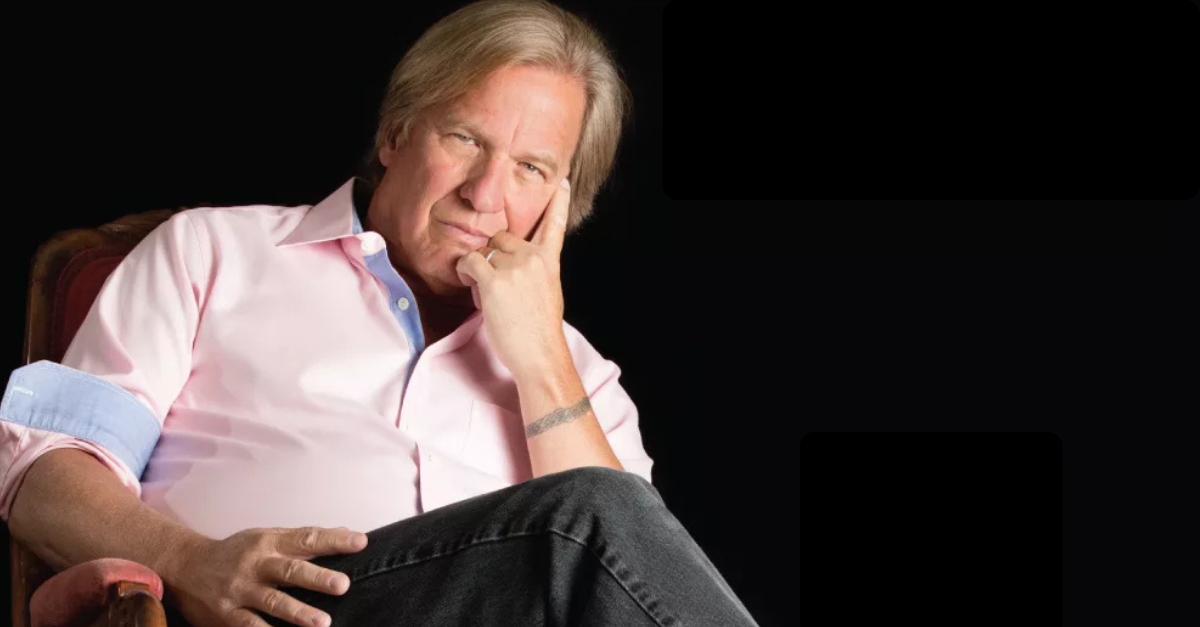

(Editor’s note: Jed Emerson is an “OG” of impact investing, having coined the concept of blended value more than three decades ago. He is the author, most recently, of “The Purpose of Capital.” He currently serves as a senior advisor at AlTi Tiedemann Global, a multi-family office, a senior fellow at Impact Assets, a board advisor of Happiness Capital in Hong Kong and a board member of Katapult Foundation in Oslo. You can read more about Emerson on ImpactAlpha here and here.) This post is adapted from Emerson’s ongoing series on Substack, “Antidote to Autocracy.”)
Dear Agents of Impact:
Let us not pretend corporate America stands alone and on its own, head bowed in a darkened corner. While some rhetoric and practices have shifted over the years, I have never turned to corporate or commercial America for moral or professional vision or leadership within impact investing, much less in this current moment.
There are others, however, who I had thought I might turn to and am now surprised to largely count among the absent and cowed, for our impact investing and social entrepreneur community has, in the public sphere, participated in its own process of quiet capitulation.
A central reason I was moved to engage in this research over these past months, write these posts over these last weeks and attempt to find my own voice in all this is that I have been surprised at the lack of coherent and consistent public response coming from our own community and its leaders.
I will say and not for the first time:
- I definitely understand and appreciate the challenge of these times for those leading our field’s organizations.
- I do get it and count myself among those who have been complicit in contributing to our community’s roaring silence.
- I know what it means to be responsible for an organization, its stakeholders and sustenance.
- And to fear what might happen were one to speak out too visibly in this moment.
I truly feel for our field and community.
To consolidate and paraphrase a couple of my recent conversations with fellow impact investment activists and managers (we can perhaps explore that difference…), I have been told:
- “These past months have been exhausting and have left us curled up in a fetal position on the floor. Under advice from our legal counsel, we’ve had to go through and scrub our web site of any DEI related statements, we’ve had to be cautious not to leave written records of our discussions and planning, and we’ve had to try to figure out how to support our portfolio while also working to remain off the radar of the Administration and its allies.”
- “This isn’t what we signed up for! And, after witnessing what’s happening to others (Academics, former opposition leaders and so on), we are all genuinely scared about what is to come!”
Truth to power
Believe me, even as I’m not running a fund or organization these days, I share these fears and sense of exhaustion—I can only imagine what it is like for those working to advance their impact strategies against the countervailing energy that has been unleashed over recent months and continues to advance by the day!
But know also the fear we may feel is nothing compared to the fear of those directly in the cross hairs—those members of our community who risk not only their jobs or organizations, but are actively stalked, harassed and incarcerated.
I spoke with one of our colleagues recently who, with literal tears in her eyes, described the comments she has received from neighbors and the deliberations she has had with her family regarding where they might possibly go at this point.
I keep her words in mind and heart as much as I do those of impact professionals who carry their own fears and challenges.
And know I am aware that by transitioning out of my previous role I have positioned myself to be able to speak more directly to the current time of authoritarianism addressed in this series. Know also I would exchange the limited number of words I have heard in our community for some measure of action. But as the old saying goes,
“I cannot hear what you are saying, since what you are doing speaks so loud!”
Or in this case, what we are not doing.
I have heard the logical argument that our goal should be simple survival as opposed to advocacy and speaking truth to power or whatever else one might claim stands beyond keeping the lights on and door cracked open in case of stakeholder approach.
And yes, I would confess to finding a degree of truth in that position—or the clever caution I have heard that we need to be more courageous than stupid. So, yes, I know: we certainly must live to fight another day and I hope you do… Yet…
That said, we must also accept the truth that to know but not speak is its own form of capitulation to a reality that must be challenged and a trajectory that must be redirected in all haste.
I appreciate the organizing I understand is taking place in closed meeting rooms and across encrypted chats or even the periodic conference panel shout out, but as we work to adjust our internal strategies and practice, the external communities and causes with which we are ultimately concerned burn with the fear of those directly on the front lines and trenches.
Our silence is a quality of privilege and power which must be acknowledged but ultimately set aside if not moved beyond.
In recent conversations with one colleague, I told her I felt this moment is the time for which we have been preparing and over a career of community service and advocacy leading to my present role of impact capital advocacy, this is what we’ve been preparing for!
She rightly corrected me with soft reprimand, saying I was wrong and, for perhaps a majority of our fellow impact managers, the goal and ultimate purpose has not been meaningful social/political change or redistribution of capital and power, but rather the continued execution of successful fundraising, increased AUM and to continue doing what they were already doing. This is a somber assessment of what lies at the root of our capitulation, to be sure. I hope she is wrong; only time will tell.
Net present impact
Along these same lines, the present value of continuing philanthropic foundation survival when only 5% (or, in one case, 6%) of philanthropic assets are deployed for the generation of meaningful impact (as 95% of foundation assets are invested to grow financial returns alone). If I may say that with regard to philanthropic funds, it makes sense for us to question whether in these times of rising American authoritarianism, our impact investor, “business as usual” approach to field building, fund management and efforts focused upon improving our present practices is any more justified.
Consider how over recent years we’ve seen the rise of multi-billion-dollar impact funds, celebrated for their ability to scale impact capital and bring “big brand” venture and private equity organizations into our community.
Note: I have been a long-time apologist for such firms, taking the position that if we are serious about impact at scale than we must welcome large institutional firms and colleagues into our impact community.
I would then ask: Where is their voice now?
Where is the leadership they exert at national and international conferences where they have in the past taken the stage to tell us of their great deals, deeds and investments? How can they now be so completely silent in the face of the real threats and challenges to our field, its values and practices?
Are we to conclude they were simply leading with their press releases and corporate sponsorships but never truly serious about our common charge and mission?
And for our larger community of funds at more modest scale, we must also ask if a singular focus upon executing an individual fund’s long-term theory of change in the context of the present and immediate massive, destructive and existential changes sweeping over our country right now is truly adequate to the times.
Or consider, in addition, our impact media platforms and multiple national/international networks that seem also to be largely mute despite the need for new interpretation and narrative showing how what we do is what we are called to be in the midst of these various and many challenges in the U.S. and around the world.
If the core premise of this series, that we hold the solutions to rising authoritarianism in the form of our strategies and approaches to new structures for capital, is true, how can we be so absent from calling out the greater challenges and opportunities of this moment that call us to advance a more just approach to capital’s purpose, structure and function in our world today?
I am left to wonder: if small, emerging managers such as Adasina Social Capital can find their voice in this moment, why can’t the rest of us?
Our field’s impact investing, organizing and capital ownership strategies should be celebrated as they are, when scaled, the building blocks of our community’s ability to act as antidote to autocracy.
The antidote to autocracy is increasing local ownership, accessibility to enterprise capital, integrating values with value creation to advance a more just world and so many other elements the impact investing community has pioneered over the decades and that need now be brought forward and fully centered in this time.
We are the leaders we’ve been waiting for!
These are the strategies that will address the underlying frustrations and anger of many at the same time we scale proven solutions we have co-created in community with others.
This is both our critical moment and historic opportunity!
But for now, even with all that is happening around us, we are not connecting the dots between the times we are in and the solutions we might offer.
We promote our community but not its potential to challenge the rising autocracy.
System change?
We must acknowledge our choirs (which for years heralded new visions of capitalism) have largely gone from loud chorus to quiet humming, if not a low whistling as we saunter by the cemetery of our past selves.
We hit the right notes, yet are singing a weak song of continued asset aggregation and investment with little in the way of challenge or change speaking to this political time. We confuse the hoped-for survival of our funds and networks with the advancement, much less attainment, of our ultimate mission as a field formerly focused on change and transformation of extractive capitalism—not impact as capitulation to what threatens to become our nation’s new normal.
I knew the revolution was not to be televised, yet while we seem able to find our voice to promote fund raising campaigns, execute deals or participate in various activities of field maintenance, or even growth—apparently believing that alone suffices as “doing the work”—we appear to have limited capacity to directly challenge the larger political, social or policy environment within which our work and communities now find themselves; this despite our promotion of “systems change” investing and other grand visions of possibility.
We speak to thematic concerns such as climate finance, new and traditional variations of sustainable economics or any number of other favored areas of investment focus and
work to advance our individual firm or network agendas
but do not address the more immediate threats of operating within a system of increasing American authoritarianism which fundamentally threatens our organizations and initiatives much less the causes and communities we seek to promote or claim to protect.
I acknowledge many may be working in silence and to the side, largely out of sight.
And do certainly wish all the best to those quietly moving to protect themselves, their investees and by extension our larger community.
And yes, the good work of the U.S. Impact Investing Alliance and US-SIF is to be supported, advanced and applauded. Yet these groups should not be expected to carry a solitary banner through periodic initiatives and visits to the Hill absent what should be a constant drum beat from each of us standing on our own yet together.
I am confused by the general silence of our field in that over the past thirty-five years (of at least my time in this community) we have consistently grown our assets as well as the numbers of those marching under the banner of impact and sustainability. Having now raised trillions of dollars for impact and gathered thousands of practitioners, I find it more than awkward to realize our parade has dwindled so significantly just at the time when showing up in force with full-throated voice is most critical, certainly for the Other if not for ourselves.
Regardless of religious tradition or secular philosophy, we might keep in mind the words, “To whom much is given, much is required,” as we now regroup to better position ourselves and our community for the critical future actions required if we are to step out of a posture of complicity and capitulation toward one of engagement and full presence in the face of a newly refreshed version of American authoritarianism which now increasingly slides toward fascism.
Again, let me be clear:
I do not claim to have the answer. And I am not advocating for a single solution or response from our community.
But surely having consistent public voice and vision in this moment is required if we are to maintain our posture of commitment to what I thought were our core values and beliefs as a field of practice: Empowerment. Diversity of representation. Transparent governance and access to resources. Active and positive stewardship and deployment of capital toward the generation of more than financial returns alone.
If we are each going to be able to look at our reflection in the mirror in coming years, we must first reflect on one key question:
How are we called to show up in the face of rising authoritarianism of this time?
There is not a single “right” answer and that answer will itself no doubt continue to evolve in light of ongoing challenges, but I would ask each of us to step up and into a new, expanded understanding of how we are called to be present in support of our field, our colleagues, our stakeholder communities and our core values and mission.
In coming posts, I will explore the questions we must ask ourselves as we find our way forward. I will outline a bit of how I believe purpose driven organizations, impact investors and capital activists might consider showing up in the world, at this time and in this moment.
Whatever your response to this challenging moment, I believe we should each consider how best to step up our presence and voice, given this was the entire purpose of our field’s being created.
“Impact” is our vocational calling card and the heart of the work in which we thought we were engaged; namely, to consistently promote and advance greater equity, justice, diversity and sustainability in the world through the active deployment of various types of capital and innovative management of organizations, whether nonprofit or for-profit. It is quite literally in our name:
Impact investing.
Otherwise, tell me this: How does our cause differ from the lobbying and positioning efforts of actors within traditional finance and corporate management who have left the field of play and battle now in exclusive pursuit of profit alone?
– Jed Emerson, Blended Value
Guest posts on ImpactAlpha represent the opinions of their authors and do not necessarily reflect the views of ImpactAlpha.