Private equity firms are becoming “holdcos.”
As private equity firms increasingly hold on to the companies they acquire for longer, some are starting to leave behind the old PE playbook of quick profits through layoffs and restructuring. Longer holds require longer term strategies to increase the value of the enterprises they hold – say by treating employees as a valuable asset that can be retained and nurtured through higher quality jobs.
Holding companies, or holdcos, which have permanent capital and long-term shareholders, not limited partners, can keep companies and other assets on their balance sheets indefinitely. They have long been on the opposite end of the financial industry spectrum from private equity companies, which generally acquire companies through typical closed-end funds, requiring them to juice profits and exit in as little as four years.
The biggest case in point: KKR, the $686 billion alternative asset manager that is usually referred to as a private equity firm. KKR established its “strategic holdings” unit at the beginning of 2024 to hold companies for longer periods – and on its own balance sheet, as opposed to in its funds, according to KKR’s filings. By the end of the year, strategic holdings owned 18 companies, including 1-800 Contacts, Arnott’s Biscuits, Atlantic Aviation and Viridor Limited, an energy infrastructure company.
That makes at least part of KKR a holdco by design. Other private equity firms are effectively becoming holding companies because the dearth of exit opportunities, including a sluggish market for mergers and acquisitions and a chilly environment for initial public offerings, means private equity companies are holding on to the companies they acquire for longer periods. According to Pitchbook, private equity firms’ average holding period before exits has increased to 7.1 years, up from 4.6 years in 2006.
The situation has prompted new urgency around alternative pathways to exits that enable fund managers to return capital to their LPs (for more see, “Restive LPs look to secondaries and creative exits to recoup capital”). The pathways include established vehicles such as secondary funds that buy up LP stakes, and continuation vehicles set up by GPs to hang onto favored assets. GPs have also sold minority stakes in their portfolio companies to raise some cash while maintaining exposure to further upside.
Human capital
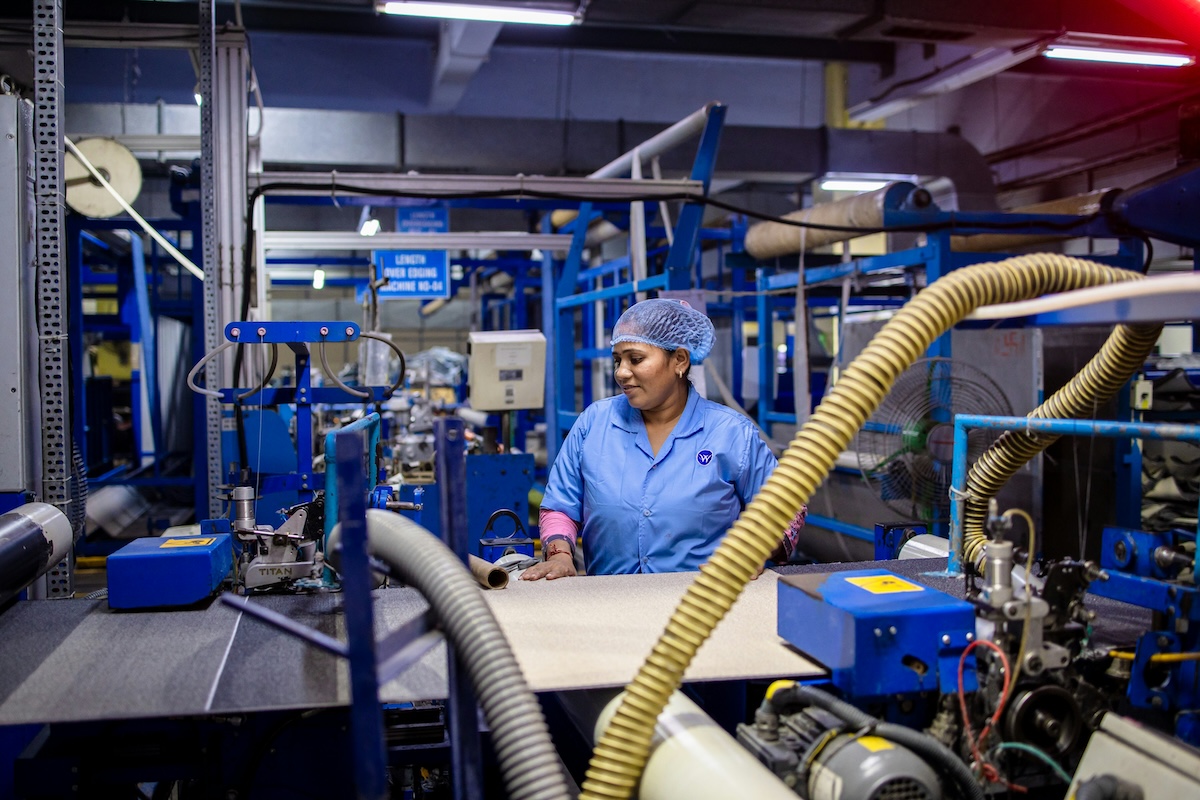
Longer hold times require the firms to pull different levers for enterprise value-creation. Employees may be considered expendable when the short-term goal is boosting earnings by cutting costs. For long-term growth, they are companies’ most valuable asset, as many top executives often say (but rarely mean).
Apollo, Carlyle, Blackstone and other private equity firms also are adjusting their strategies and their balance sheets to hold companies longer.
“Many large private equity platforms already have long-dated funds or a balance sheet designed to hold assets for decades,” said Aren LeeKong, founder and CEO of Nine Dean, a new permanent holding company launched this spring with an anchor commitment from the Ford Foundation (disclosure: Ford Foundation also is an investor in ImpactAlpha).
“The logical next step is increased focus on the broader elements that make people the most important asset of any company— including fair wages, quality healthcare, and strong benefits,” he said (for background see, “Nine Dean is building a holding company around quality jobs”).
Other asset managers have also discovered that treating workers better can be a winning investment thesis. HCAP Partners provides mezzanine debt and private equity for medium-sized businesses and helps them add opportunities for career advancement, wealth creation and health and well-being (listen to the podcast, “Finding alpha with a ‘gainful jobs’ strategy”).
Lafayette Square, which emphasizes low- to moderate income workers and communities, focuses on employee benefits through its “worker solutions” platform (see, “Lafayette Square is banking on low-income communities and worker solutions”).
“There are absolutely a number of private equity firms who are recognizing that focusing on decarbonization and human capital are areas where investing in improved operational excellence drives better financial performance,” said Tensie Whelan, director of NYU’s Center for Sustainable Business (see “Private equity is leaving billions of dollars in sustainability value on the table,”).
Holding companies that have full ownership of their portfolio companies have more leverage to implement such policies than lenders or investors that take minority stakes.
Cranemere, which was founded in 2014, holds a portfolio of logistics, transportation and manufacturing companies, managing more than $3 billion in shareholder equity.
Cranemere’s CEO Kamil Salame told Pitchbook that one of its companies, a provider of anesthesia, lost nearly half of its earnings during the Covid pandemic. Cranemere maintained full employment and injected additional capital. “The company had a record year in 2024 and expects strong performance in 2025,” Salame said.
KKR’s Strategic Holdings unit effectively absorbs what the firm had called its core private equity fund. That unit was headed by Pete Stavros, the firm’s co-head of global private equity. Stavros has championed what KKR calls “shared ownership” that gives employees a meaningful payout when KKR sells off a portfolio company (see our Q&A, “Employee ownership is a competitive advantage in private equity”). He is also championing policy changes that would give more companies the tax benefits of employee stock ownership plans.
Impact exits
A holding company that prioritizes job quality and employee satisfaction could become a preferred acquirer for mission-driven companies. The late Andrew Kassoy, a founder of B Lab, said in May that he realized early on that the social missions of certified B Corps would be at risk when it came time to exit. Private equity acquirers, or even corporate buyers such as Unilever and Danone, he said, are subject to strategy shifts and personnel changes; after several years, the social mission is often lost.
B Lab’s original strategy was to create a holding company to provide responsible exit opportunities.
“We were like, ‘This can’t be that hard. We’ll just create a Berkshire Hathaway for responsible business. We’ll call it B Holdings, and we’ll raise money and we will be available to buy B Corps when they need a buyer,’” Kassoy told ImpactAlpha.
The B Lab team put the idea on the back burner, but Kassoy kept returning to it. This year, he became an advisor to Arowana, which is building a B Corp holding company out of Singapore.
Just days before he died, Kassoy helped launch Nine Dean. Backed by Ford’s investment, Nine Dean built its strategy around a quality jobs thesis.
“The return on capital invested in employees becomes significant over time,” LeeKong said. “While the full impact may not be visible within two to four years, over a 10- to 20-year horizon it is not only evident, it is a foundational driver of long-term success.”