
A year ago, the Trump administration tried to freeze $20 billion in federal “green bank” grants earmarked for projects aimed at reducing energy costs and pollution in communities across the country.
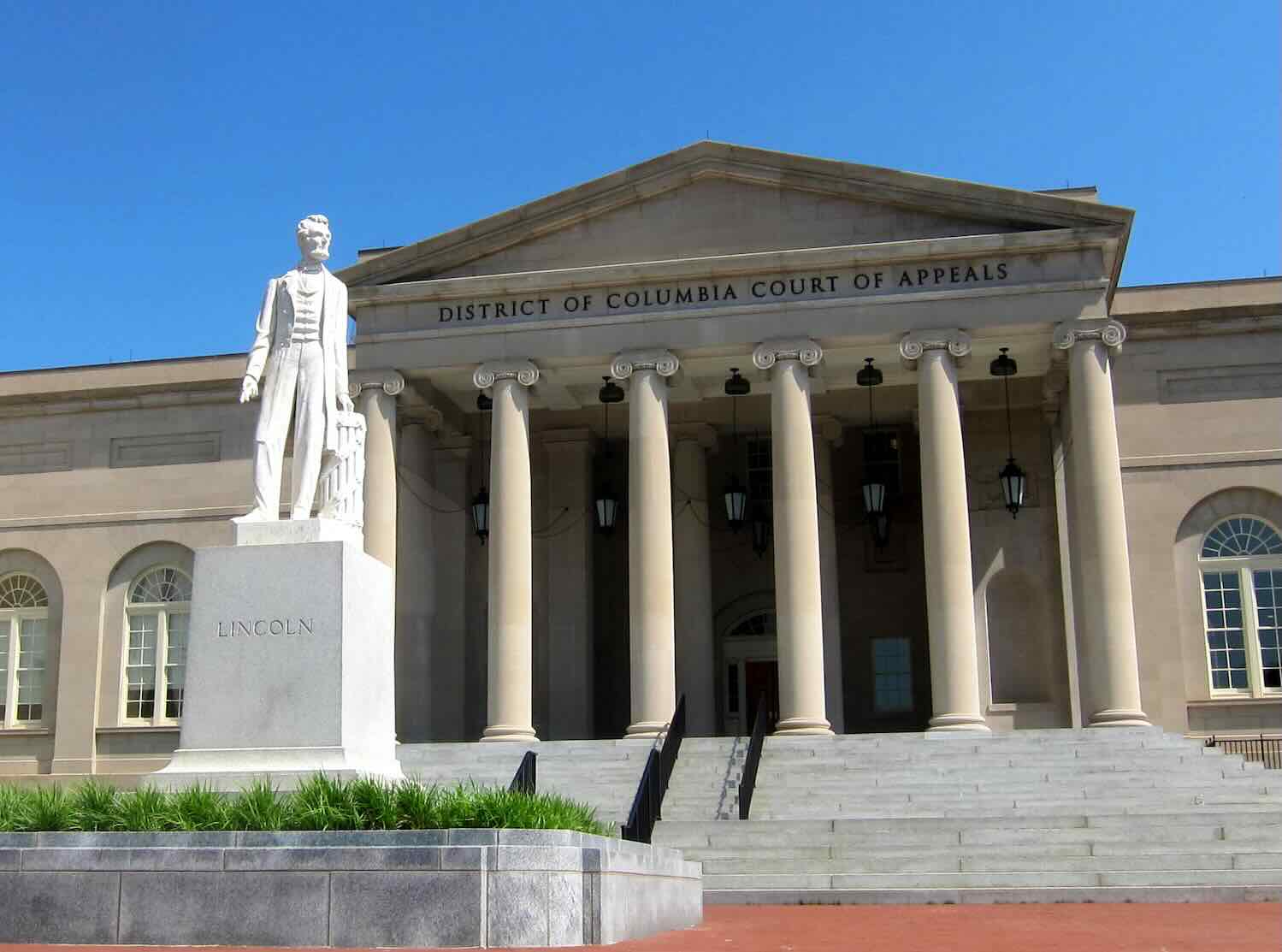
A critical court hearing today by a full “en banc” panel of the US Court of Appeals for the DC Circuit could reinstate funding for the program, the Greenhouse Gas Reduction Fund, most of which has remained frozen in Citibank accounts while the legal battle plays out. A decision is not expected for months and could then go to the Supreme Court.
As the litigation has dragged on, Climate United and the other coalitions of community lenders that came together to build a distributed green banking system have scrambled to cobble together alternative funding to be able move forward community infrastructure projects they insist are still viable.
“The teams at each Climate United coalition partner continue to do the work we have done for decades — raising and deploying private capital to support projects and businesses that are driving a more equitable economy and clean energy future,” Calvert Impact’s Beth Bafford, who leads Climate United, told ImpactAlpha ahead of the hearing.
Capital needs
In late 2024, Climate United was awarded nearly $7 billion from the Greenhouse Gas Reduction Fund, part of the Inflation Reduction Act, to finance energy retrofits, electric school buses, community solar and other green projects. The lead plaintiff in the federal lawsuit, Climate United, is said to be raising capital to finance projects while the litigation drags on.
Another GGRF awardee, the Coalition for Green Capital, which now goes by CGC, managed to allocate $2.7 billion to four big financial partners before the Environmental Protection Agency, which administers the program, froze the funds, as ImpactAlpha has exclusively reported. The first deals from that tranche are expected soon.
The Justice Climate Fund, which was awarded $940 million to help community lenders get up to speed on green lending, launched the Climate Opportunity & Resilience Fund last fall to raise $100 million. It hopes to leverage $1 billion for green projects in disadvantaged communities. Justice Climate Fund has partnered with the Green Bank 50 to expand its technical assistance and capacity-building work.
The private fundraising efforts are not likely to fill the hole left by the freezing of the federal grants. But alternative financing efforts are helping keep some local projects on track.
The Energy Catalyst Fund, kicked off late this year with $50 million from the MacArthur Foundation and five family offices, seeks to raise as much as $100 million. Managed by ImpactAssets Capital Partners, the fund will make low-interest loans to advance green projects in low-income communities orphaned by the federal funding freeze. It is supported by a first-loss tranche that is backed by funders including the David & Lucile Packard Foundation, which kicked in $200,000. The catalytic debt fund will focus on low-to-moderate income communities and will invest in, as well as alongside, community lenders, green banks and other intermediaries.
Candide Group’s Afterglow Climate Justice Fund, a catalytic debt fund, aims to expand access to, and ownership of, clean energy in underserved communities. It raised an initial $53 million, and is looking to expand that to $100 million.
On the philanthropic side, the Deployment Grant Fund was launched in July by The Clean Fight, Builders Vision and Breakthrough Energy Ventures to accelerate deployment of climate solutions. The fund began making awards late last year, including a $175,000 grant to Texas-based geothermal startup Bedrock Energy to pioneer the adoption of its “geothermal-as-a-service” business model. A second grant of $125,000 went to Kelvin, a New York-based heating startup, to demonstrate the cost-effective electrification of an affordable housing complex in Brooklyn.
The grants are matched by the customer with a mix of tax credits, local government grants, customer funding and private capital. “One of the most impactful uses of these small-dollar grants is unlocking additional funding to support projects,” The Clean Fight’s Kate Frucher told ImpactAlpha.
“There is a lot of capital out there, and there are a lot of projects that still can get funded. We see a lot of projects that are penciling out,” Curtis Probst of the New York City Energy Efficiency Corp., or NYCEEC, said on an ImpactAlpha Call in June.
Still, the funds amount to a tiny fraction of the billions of dollars tied up in legal limbo and the billion-dollar pipelines clamoring for capital.
Local impact
“Local communities are already bearing, and will continue to bear, the burden of stalled or abandoned projects to the detriment of local taxpayers,” the National League of Cities and US Conference of Mayors write in an amicus brief filed in support of Climate United and the other GGRF plaintiffs.
In many cases, the organizations say, the awardees “were set to advance projects that local governments lack sufficient capital or institutional capacity to support, and that would not have been possible otherwise.”
The GGRF funding freeze, on top of broader federal climate funding cuts, have upended municipal budgets and planning. The cities’ and mayors’ groups were among several organizations that submitted amicus briefs supporting the plaintiffs.
A full US Court of Appeals panel will hear arguments about whether the case is a contractual dispute and therefore belongs in the US Court of Federal Claims, as EPA argued. A three-judge appeals court sided with the EPA in September, reversing an earlier judge’s injunction on the frozen funds. In December, the court agreed to the plaintiffs’ request for an en banc, or “full bench” hearing.
A ruling from the full panel could take months. And the EPA would likely appeal a decision against it with the Supreme Court. If the justices declined to hear the case, the injunction would go into effect and the plaintiffs would ostensibly be entitled to their grant funds.
A decision against the plaintiffs would send the case to federal claims court, which would take years to wind its way through the system — perhaps the goal of the EPA.
More than 40 Democratic members of Congress also weighed in on the high-stakes case. “At every turn, EPA has sought to thwart Congressional intent concerning the GGRF,” they wrote in a brief.
“At its heart, this is a case about whether the Executive Branch can freeze and confiscate lawfully made funding awards held in private bank accounts without due process because of an Administration’s disagreements with policy decisions that Congress has already made and signed into law,” they said.
“If so, then perhaps no one in the United States is safe from such unchecked arbitrary action.”