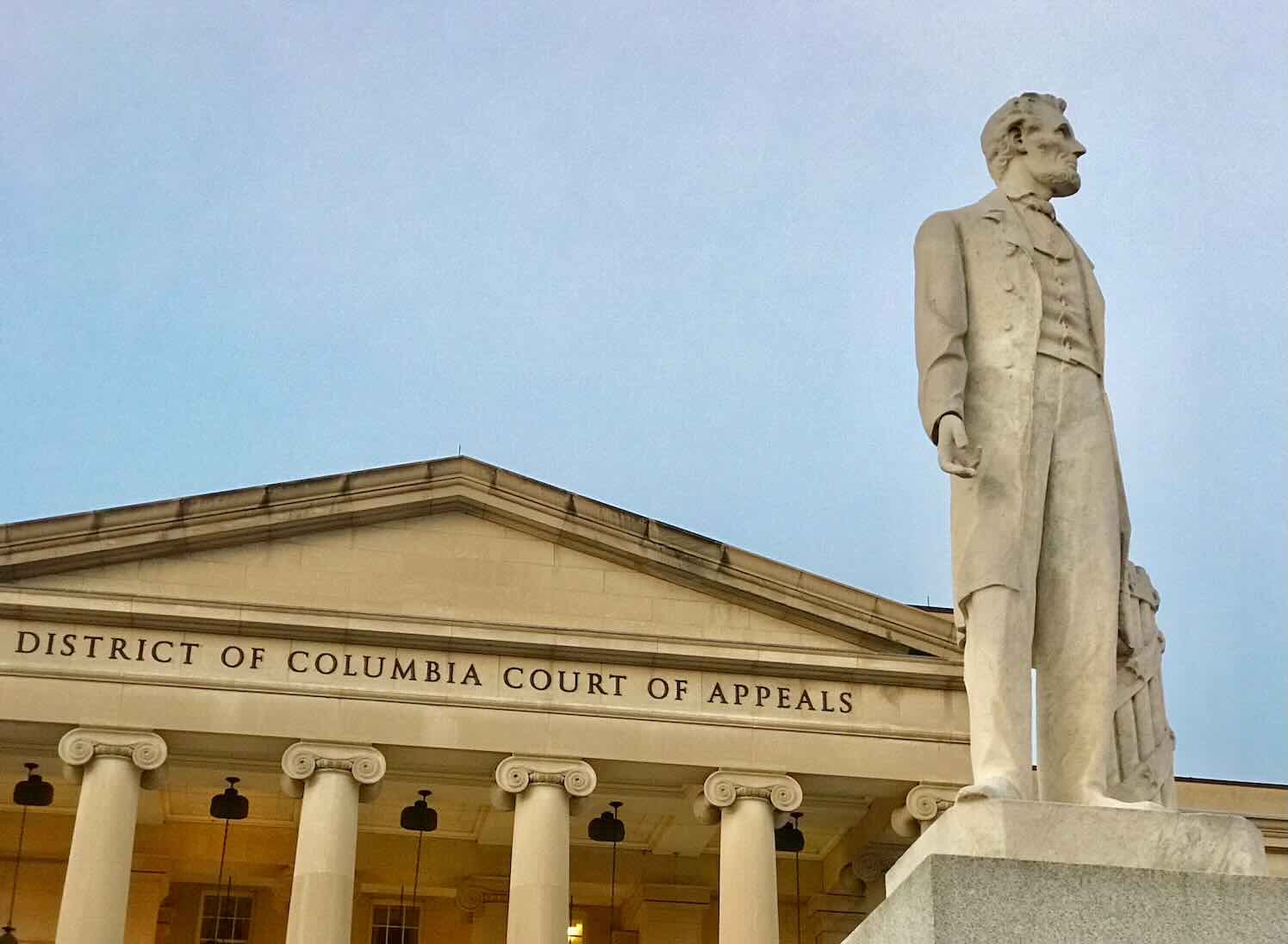

Federal ‘green bank’ recipients head back to court today in their standoff with the Environmental Protection Agency over $20 billion in frozen funds. A Washington DC district appeals court will hear arguments to determine whether to affirm or deny a federal court’s preliminary injunction issued, and then “stayed,” last month.
The awardees were bracing themselves for an unfavorable ruling from the Trump appointee-dominated appeals panel. An affirmative ruling would unfreeze the funds, held in a custodial account at Citibank, unleashing much needed capital to the nine plaintiffs that have been unable to pay staff or fulfill loans and technical assistance grants since mid-February. The opposite could give the EPA a greenlight to reclaim the funds.
The Greenhouse Gas Reduction Fund, part of the Biden administration’s Inflation Reduction Act, sought to catalyze a nationwide green lending infrastructure that could finance pollution-reducing projects that benefit rural and low-income communities and mobilize private capital. EPA administrator Lee Zeldin has painted the program as rife with fraud and abuse, and its recipients as unqualified and conflicted, without providing any evidence. Despite broad-based subpoenas — the pretext for freezing the funds — government officials have uncovered no evidence of wrongdoing or malfeasance, according to a New York Times report.
A new analysis by Energy Innovation found that the program power up to 2.2 million homes with solar power each year, save consumers $52 billion in energy costs over the next 20 years, and spur $65.5 billion in private investment.
If the appeals court affirms the preliminary injunction issued by federal Judge Tanya Chutkan in mid-April, the best case scenario for green bank awardees, Citi would have no choice but to release the funds. The EPA would likely try to terminate the GGRF program again, but would have to go through prescribed rules, buying the green bank grantees time. Alternatively, the appeals court could reject the earlier court’s ruling, enabling the government to claw back the Congressionally appropriated funds. All of the potential scenarios almost certainly involve appeals and counter-appeals, possibly leading to the Supreme Court.
The drawn out legal battle is already taking a toll. Last week, Rewiring America, a member of the Power Forward Coalition, laid off 28% of its workforce. “We are facing purposeful volatility designed to prevent us from fulfilling our obligations and from delivering lower energy costs and cheaper electricity to millions of American households across the country,” wrote the group’s Ari Matusiak in a post announcing the news.
Burning bridges
Other parts of the landmark IRA, a comprehensive law aimed at reshoring critical clean industries and supply chains, are facing their own threats. Energy Department officials are expected this week to “de-obligate” loans and guarantees to seven projects that had been offered conditional commitments by the agency’s Loan Programs Office, former DOE Loan Programs Office Jigar Shah said in an email.
The Biden administration boosted the LPO’s loan authority to $400 billion to help build “a bridge to bankability” for promising cleantech startups. Under Shah, former DOE Loan Programs Office chief, LPO committed more than $107 billion to 53 projects. Some $60 billion of those loans and guarantees were concluded; another $46.95 billion were still pending conditional milestones.
The conditional loans, said Shah, are intended to “signal to equity investors that the project can meet a ‘reasonable prospect of repayment.’” That, of course, assumes a stable policy environment — a quaint notion as House Republicans drafting a budget bill have take an ax to the IRA’s tax incentives, phasing out or eliminating provisions that cleantech companies and their investors had baked into their models.
“The House reconciliation bill has effectively repealed the Inflation Reduction Act and has caused these equity investors to think twice about investing in America,” said Shah. The bill, he said, would undercut nuclear power, critical minerals, geothermal and other energy sectors that the Trump administration claims to support. “When we lose the trust of equity investors, our loan applicants have no choice but to move away from commercializing their technologies in America or cancel their projects outright.”
The hotly contested budget bill eked out a committee vote over the weekend. Although some Republicans support the IRA tax incentives, which have lured factories and jobs to their districts, the bill if facing pushback by hardliners pushing even more stringent IRA cuts.