For years, Africa’s energy story was told as one of promise — vast solar potential, abundant wind corridors, geothermal riches — held back by poverty, uncertainty, and a lack of transparency.
Promise does not attract capital; structure does. And over the past decade, African governments have quietly built the structure investors said was missing.
In the early 2010s, policy uncertainty was Africa’s biggest deterrent to capital. That has changed in many African countries. South Africa’s Renewable Energy Independent Power Producer Procurement Programme, for example, has become a global case study in competitive, transparent procurement, mobilizing over $14 billion and more than 6 GW of renewable capacity.
Egypt’s Benban Solar Park condensed dozens of investors into a single, de-risked ecosystem, aggregating land, permits, and grid access to unlock $4 billion of private finance. Morocco’s MASEN program proved that state-backed blended finance could de-risk large-scale projects while maintaining commercial discipline.
These successes are evidence of a pattern. Governments are learning, institutionalizing and scaling.
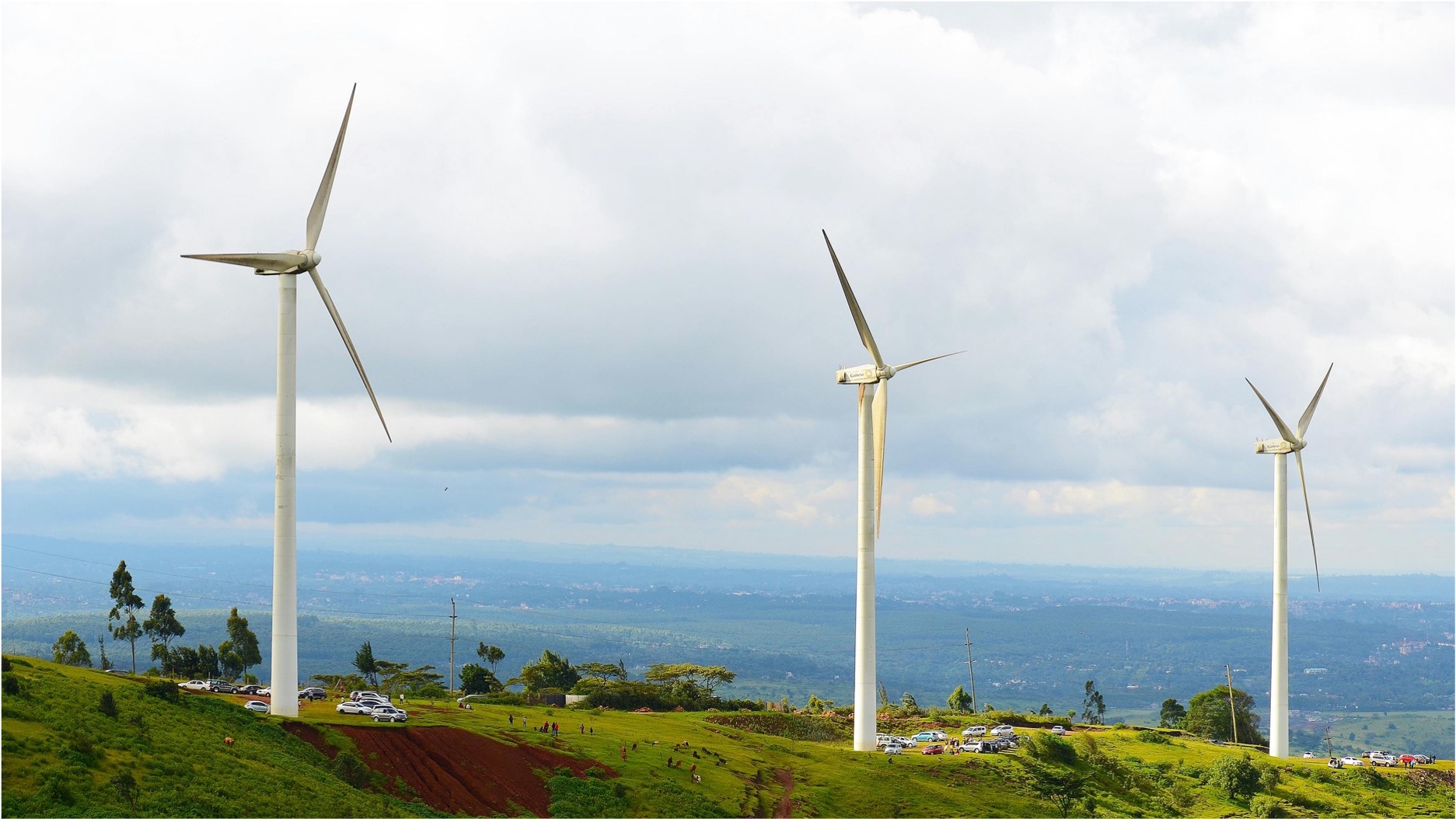
In Kenya, over 90% of power generation now comes from renewables on many days — thanks to early geothermal investment, clear IPP tenders and concessional partnerships. Senegal’s first utility-scale wind project and Rwanda’s off-grid expansion have shown that clarity of regulation drives confidence.
Even in larger markets like Nigeria, there are clear signals of momentum: sovereign-backed mini-grids, new IPP frameworks and a solar pipeline exceeding 300 MW. Investors are beginning to notice that these examples are no longer policy experiments. They reflect a functioning market.
Betting on growth
For the first time, multiple African countries are converging toward regulatory professionalism. The story is no longer about “who has potential,” but “who can execute.” This should be a clear signal to investors that many African countries are now more ripe for investment than they were a decade ago.
This maturity is precisely what long-term capital looks for: bankable offtakers, replicable frameworks and regional scale. Africa’s renewable space is evolving into a portfolio play, diversified across markets and technologies and anchored by real policy discipline.
The continent is moving beyond capacity to competitiveness. For investors, this means renewable investments in Africa are no longer a bet on aid, but a bet on growth; and the opportunity is getting bigger and bigger.
South Africa, Morocco, Kenya, Senegal, Rwanda, Nigeria, Egypt and other African countries have enacted ambitious, renewables-friendly policies to close their energy gaps and drive economic growth. Many of them have learned that renewables are their best bet for more and sustainable energy. For example:
- Tanzania is building its first geothermal power project.
- Burkina Faso is powering its new airport with solar.
- Zimbabwe is incentivizing investors toward $1 billion in solar energy projects.
- Mali is building West Africa’s largest solar plant.
- Namibia has mobilized over $1 billion toward the Luderitz wind energy project that will help reduce its power imports by at least 50 MW.
For many countries in Africa, renewable energy has become a socio-economic imperative, making governments even more determined to transition.
Further, as Africa’s already large population grows fast, the demand for renewable energy is expected to approximately double by 2030 and increase eightfold by 2050. This is the time to invest in Africa to cater to its current appetite and the continent’s future growth.
Integrated and investable
Another opportunity lies in connecting what’s already been built. Regional power pools are expanding. Cross-border transmission is accelerating. Clean-energy industrial zones are emerging, pairing renewables with green manufacturing and mineral processing. And integration is almost inevitable; initiatives like the Africa Green Industrialization Initiative — which mobilized $100 billion at the Second Africa Climate Summit in Addis Ababa — and the African Continental Free Trade Agreement are on course to create shared energy infrastructure and deepen energy trade in Africa.
Many outside the continent still assume Africa’s progress is uneven. The reality on the ground is the opposite: Governments are studying the procurement playbooks that work, regulators are trading lessons from recent tenders, and utilities are tightening the basics of planning and execution. In just a few years, a region once tagged as unpredictable now offers some of the cleanest, most transparent renewable procurement pathways in the Global South.
There is an economic urgency behind all this. Africa’s fast-growing workforce needs industries that can run on dependable and affordable energy. For many African governments, renewables are no longer just a climate choice; they are the backbone of industrial expansion, job creation and long-term competitiveness. That is why there is new attention on grid reinforcement, storage, flexible markets and clean baseload technologies. Leaders know that the countries that solve energy reliability will pull ahead economically.
Investors have spent years waiting for clarity. Africa is now producing exactly that. The real question is whether global capital can adjust quickly enough to keep pace with the continent’s accelerating shift from ambition to execution.
Sibusiso Nkomo is the programme director of CISL Africa at Cambridge Institute for Sustainability Leadership.
Guest posts on ImpactAlpha represent the opinions of their authors and do not necessarily reflect the views of ImpactAlpha.