
Inclusion has always been just the starting point for gender-lens strategies. As organizations work to bring more women into financial systems and better economic opportunities, more are now taking on the systemic issues that prevent women from having the right services, jobs and resources.
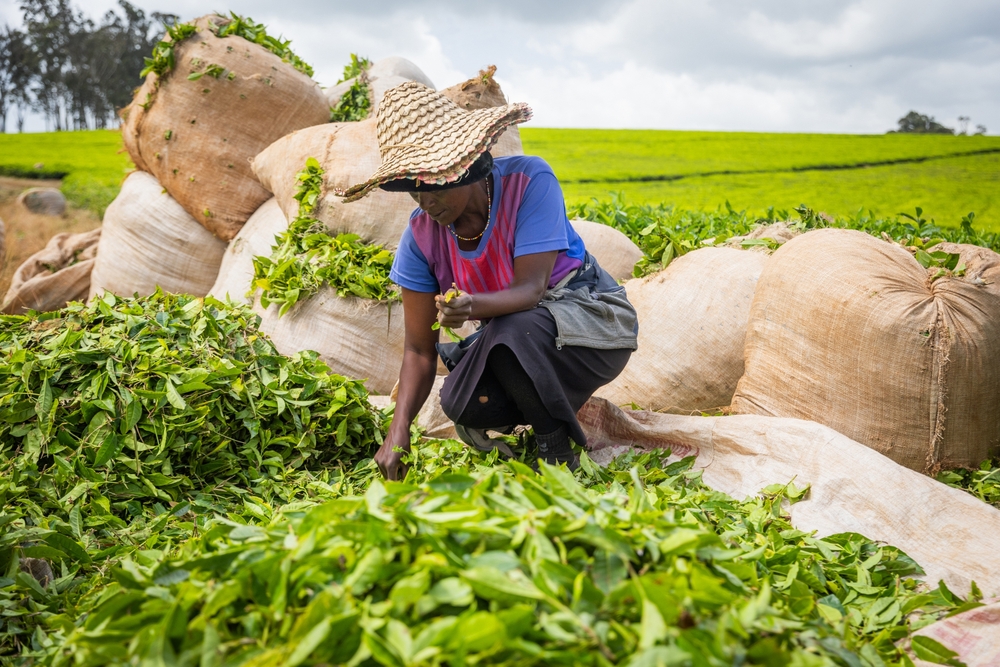
Take Africa’s agriculture sector as an example. Women make up as much as 80% of the labor force in some countries, but are often restricted from owning land or making critical decisions to support their livelihoods. Most gender-focused work in the sector is geared towards access to microfinance and job creation, observes Esther Dassanou of the Mastercard Foundation.
“Women are not given the agency, but if they were given the agency and the voice, the equipment, access to land, finance and markets, they would have the ability to quickly turn this particular industry around,” she said in a recent discussion about “gender transformative approaches” to Africa’s agriculture sector, hosted by Mastercard Foundation, Acumen and the Dutch nonprofit, IDH.
What’s needed are more strategies that deliberately address the root causes of women’s economic exclusion: power structures that disadvantage women, and cultural norms that restrict women’s economic empowerment and wealth creation, like inheritance practices that favor men, or restrictions on asset and land ownership.
One approach IDH and Mastercard Foundation are testing in Northern Ghana is leveraging public-private partnerships to bring more women and youth into grain supply chains. Mastercard put $22 million into the four-year-old Grains for Growth to drive women’s access to land, machinery and farm inputs.
Another model, which IDH initiated in India and could be applicable to Africa, targets gender-based violence as a root cause to women’s absenteeism in the workplace and its affect on their careers and economic opportunities, as well as business performance. A study of the tea sector in India found that absenteeism from gender-based violence compromised as much as 7% of annual revenues. IDH partnered with Unilever and British tea companies Twinings and Taylors of Harrogate on the Women’s Safety Accelerator Fund to promote gender-based violence awareness and strengthen systems and safe channels to support female employees at 550 tea estates in the country.
Systems change
A frustration for female fund managers and entrepreneurs in Africa is over-emphasis on “training” for women without funding them or working to dismantle systemic structures holding them back.
“We are over-trained and over-mentored and underfunded and now need the conversation to move [to] really putting your money where your mouth is,” said Lelemba Phiri of Africa Trust Group and gender-lens investment fund Enygma Ventures on an ImpactAlpha Agents of Impact Call (see, “Agents of Impact Call No. 45: Creative capital for gender-smart investments“).
Oscar Koome of Acumen believes training is a crucial tool in the gender-lens toolkit, but only when coupled with strategies to break down systemic barriers.
When Acumen invested in 2023 in cold-storage startup SokoFresh, based in Nairobi, the investment firm supported training initiatives for female farmers on proper storage and distribution techniques, which led to less waste and greater earnings “when it came to sourcing fruits and vegetables across these value chains, even during seasonal downturns,” Koome said.
Acumen also worked with the company to build an agent network composed of 40% female agents. Having women in key procurement positions that are historically dominated by men led to “women sourcing from women, which meant that more families were directly empowered,” Koome explained, because it’s often the women in rural farming families who “are looking for access to markets and selling their produce.”
Men as allies
Effective gender-transformative strategies need to include men, Dassanou, Koome and colleagues at IDH argue. IDH has found that its gender-focused strategies also positively impact male farmers and agricultural workers. Acknowledging that male agri-workers also face obstacles encourages them to participate in initiatives designed to include and uplift women.
“Before any program is implemented in any community, take the time to prepare whomever are the gatekeepers of the community,” said Dassanou. “Get them to see why it is so important for women to be engaged, and [anticipate] the potential backlashes that come out that you [should] address from the very beginning.”