
Add tokamak vs. stellarator to the list of legendary technology battles like VHS vs. Betamax, Windows vs. Mac and Anthropic vs. OpenAI.
The competition among startups racing to commercialize fusion power is heating up like the plasma in the magnetic fields of a fusion reactor. Those magnets can be donut-shaped, as in tokamaks, or twisted, in the case of stellarators. Also in contention are a variety of laser-based and other approaches to contain the plasma, which can exceed 150 million degrees Celsius, 10 times hotter than the center of the sun.
The contest is raising geopolitical rivalries, with Europe seeking to secure its place in the fusion future, along with the US and China. Fueling it all is the insatiable appetite for energy from datacenters for artificial intelligence (see also, “AI power demand revives climate tech funding”).
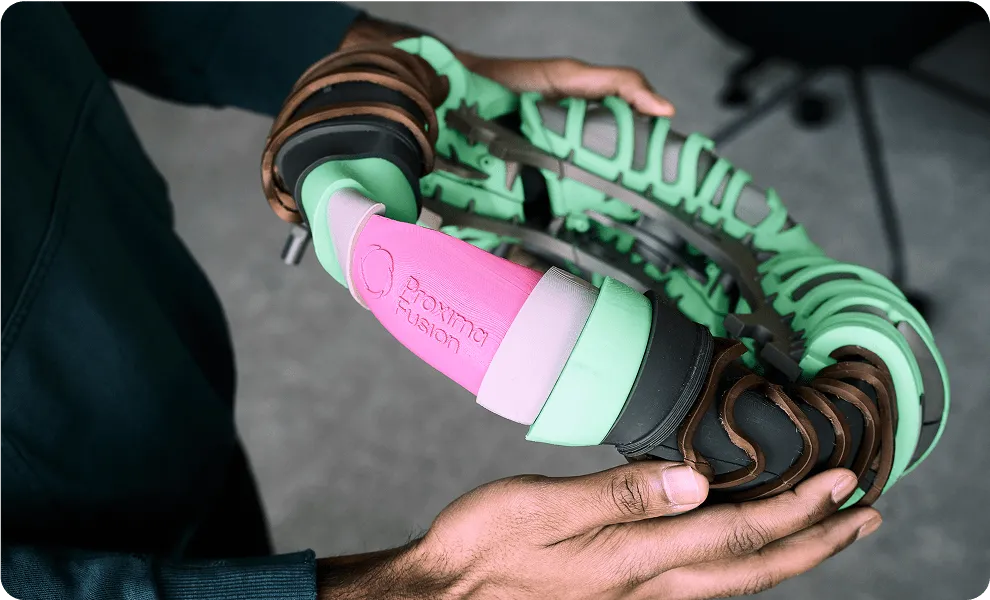
This month, Munich-based Proxima Fusion announced it had raised $468 million from investors including Google and RWE, the German utility. The raise, which gave Proxima a valuation of $2.7 billion and freed a €400 million ($455 million) match from the Free State of Bavaria. Bavaria is a partner with Proxima and the Max Planck Institute for Plasma Physics in building out its Alpha stellarator near Munich.
The financing “demonstrates that Europe can not only invent breakthrough technologies, but also build globally competitive companies around them,” Proxima’s Francesco Sciortino said in announcing the raise.
Next week, Massachusetts-based Commonwealth Fusion Systems is expected to announce major new financing to build out its tokamak-based fusion reactor. Commonwealth already has raised nearly $3 billion, including an $863 million round last year. In June, the Abu Dhabi-owned early-stage fund Plynth Energy took a stake in CFS as well. Google is an investor in Commonwealth as well. Analysts estimate Commonwealth’s value at between $8 billion and $12.5 billion.
All told, fusion startups have raised a record $4.5 billion raised in the last year, bringing total commercial fusion financing since 201 to more than $14 billion, according to the Fusion Industry Association.
Two fusion companies, TAE Technologies and General Fusion, are even testing the public markets, with listings on Nasdaq that have raised hundreds of millions of dollars for even more esoteric technology approaches.
Heated rivalry
Adding to the competitive drama is that Proxima’s Sciortino and Bob Mumgaard, CEO of Commonwealth Fusion, both come out of MIT’s Plasma Science and Fusion Center.
Sciortino himself was originally a tokamak guy. After leaving MIT, Sciortino joined the Max Planck institute as a European coordinator for tokamak research. “Until 2022 I was in the world of tokamaks, and I had been taught that stellarators are just not reasonable,” he told ImpactAlpha in an interview on the sidelines of the Milken Global Conference in May .
Decades of work has gone into the donut-shaped tokamaks, which are considered easier to build (it’s all relative), but harder to control. Because the design requires the superhot plasma itself to hold an electric charge, the problem has been compared to holding a squirming jelly donut together with rubber bands made of electricity.
Stellerators, on the other hand, move the magnetic twisting outward, creating more of a glass box around the jelly donut. That eliminates the primary trigger for catastrophic instabilities because the electric current is not pulsed through the plasma. Stellerators should be able to run continuously for days or months, a key advantage for power plants intended to serve as baseload power on electricity grids.
“They want to prevent instabilities. We don’t have instabilities in the first place,” Sciortino said.
But if stellarators are easier to operate, they are harder to build. The three-dimensional magnets must be precisely designed, a formidable challenge. In 2022, a seminal research paper declared that the design challenges could be knocked down one step at a time.
“As founders, we came together, and we said, ‘We bet that we can optimize for all of them at the same time, between physics and engineering,’” Sciortino said. “We are rephrasing the problem as a design one. We’re trying to use machine learning to come up with better designs that make the control effort completely redundant.”
Baseload power
Proxima and Commonwealth share some of the same supply chain, namely in the superconducting tape used to wind the powerful electromagnets.
Last year, Proxima published the engineering design for its Stellaris reactor. Several other fusion companies, including in China, have adopted the approach. “That’s fine. That’s good. We published it for a good reason,” Sciortino said. “We wanted to convince the world that this is a new era for fusion.”
For now, tokamaks are leading the race. Commonwealth Fusion expects to have its first commercial plant in operation by the early 2030s, and has already inked a power purchase agreement with Google to supply 200 megawatts of power from its plant in Chesterfield, Virginia.
Proxima’s plan calls for its first commercial stellarator fusion reactor to be operational by 2037, and to have 50 plants in operation by 2050. The approximately 500-megawatt plants could be used for steel plants and other heavy industry, or as baseload for urban utilities.
In the end, the winning energy technology may not be fusion at all.
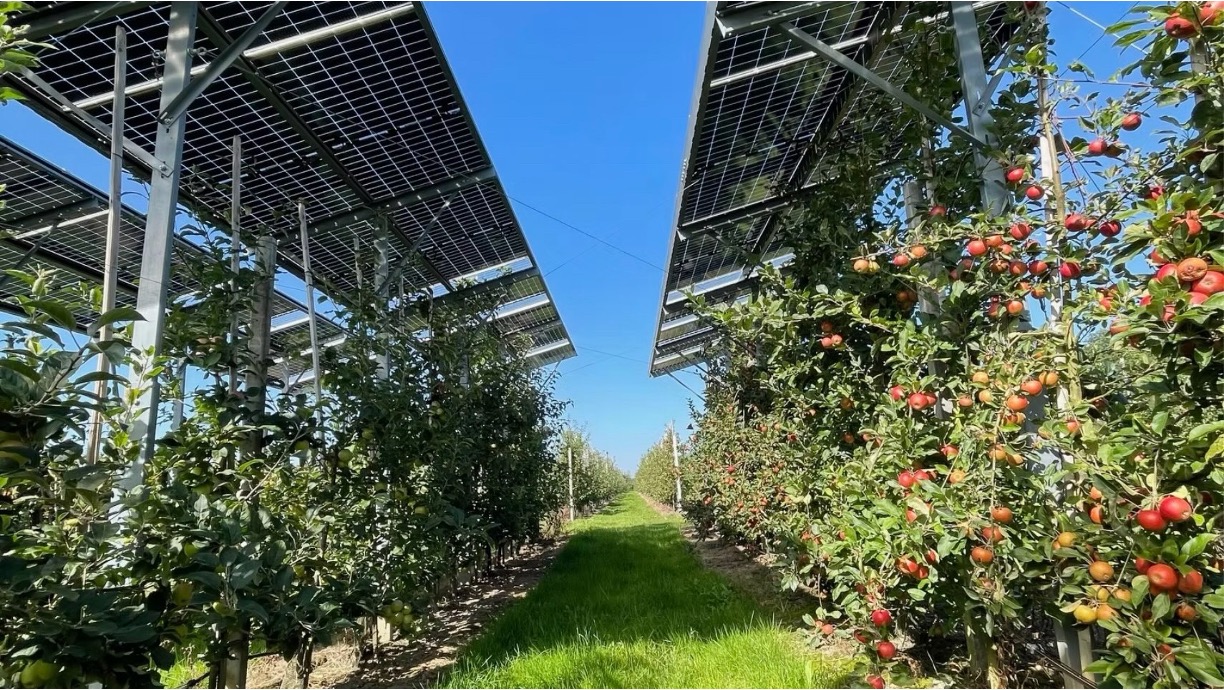
“The cheapest source of energy that humanity will ever have, most likely is through photovoltaics. And photovoltaics are fantastically cheap right now,” Sciortino says.
He says fusion will complement, rather than replace, renewables like solar and wind. Even if it’s never as cheap as solar, as baseload power, fusion can bring the overall cost of electricity down, with carbon-free energy and without radioactive waste.
“This is compelling enough that fusion will have a clear place.”