
Africa is a compelling investment destination with a young population, vast natural resources, and fast-growing consumer markets. But investors often don’t engage.
Ask why, and the immediate answer might be political risk. Push a little harder, and you get a different response: currency risk.
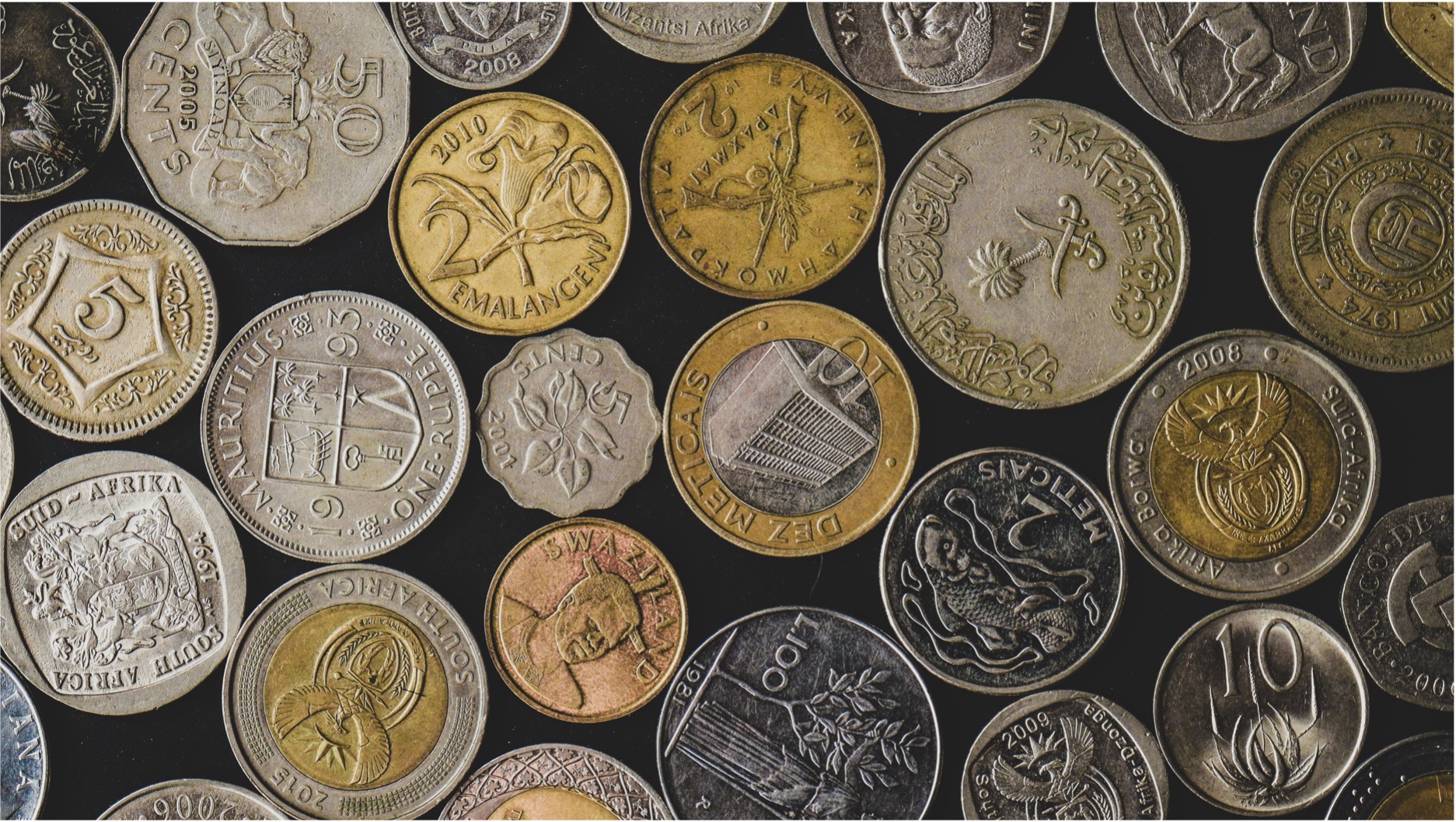
Currency trading is extremely volatile. Currencies in African and other emerging markets are more sensitive to economic swings and shocks for a whole host of reasons. For investors, the fear is that currency pricing won’t be as strong when they exit an investment as when they enter.
In a small poll we conducted with 15 investors in varied asset classes, more than 80% said foreign exchange volatility was among their top three concerns for investing in Africa. The African Private Capital Association, or AVCA, had similar findings in a 2022 survey: 86% of fund managers and 64% of limited partners viewed currency risk as an important issue in African private equity.
Mainstream investors have tools to manage currency risk exposure; development-focused investors have not fully borrowed that playbook.
As mid-career impact investors pursuing graduate degrees at Stanford, we wanted to find out why, and also, what is working. We interviewed public market managers, private equity firms, and blended-finance specialists.
Promisingly, the answers were more practical – and more actionable – than we expected.
Hedge smarter, not more
Let’s start with a tangible example: An investor can back a Kenyan agribusiness that demonstrates 30% growth over five years. If that growth is in the local currency, the Kenyan shilling, and the shilling depreciates, say, 25% over the same period (which it did from 2020 to 2025), the investor could walk away with a dollar return below 5%. The businesses would win, but the currency would not.
The most common instinct for investors is to try to hedge their currency risk exposure. A currency hedge is essentially an insurance policy, letting investors pay a premium today to guarantee a fixed exchange rate at exit regardless of what the local currency does in the meantime.
Signing on for such a hedge can be expensive enough to kill deals before they start. Very few currencies on the African continent have liquid hedging markets. Specially designed facilities to hedge currency risk exist, but an overwhelming majority of African fund managers – 94% – cite the high cost of those facilities as the reason they don’t use them.
Perfectly good investments therefore get shelved because the currency math feels impossible.
It doesn’t have to be all or nothing. Partial, dynamic and portfolio-level hedging are all alternative options.
Leading emerging market investment managers such as Nuveen, T. Rowe Price, Franklin Templeton and Ashmore use dynamic hedging, adjusting coverage based on market conditions instead of committing to full protection upfront. The ETF issuer WisdomTree uses an emerging-market hedge ratio that it dials up during volatile periods and pulls back when conditions stabilize.
Another approach: hedge an investment’s principal and not total cash flow. A $10 million, five-year currency bond in Nigerian naira generating 12% annual interest produces $16 million in total obligations. Hedging only the $10 million principal reduces cost by about 40% while still protecting the investment’s core value.
BlackRock and PIMCO go even further, hedging their aggregate portfolio rather than hedging at the individual deal level.
Eliminate risk at the source
Concerns about currency risk stems from the fact that most foreign investment in Africa arrives in dollars, while an investments’ revenues and profits are generated in the local currency. One fix is to close that gap at the fund level.
The African Local Currency Bond Fund, launched by German development bank KfW in 2012 and managed by Cygnum Capital, channels local currency financing through domestic capital markets while offering dollar- or euro-settled exposure to international investors. Its layered structure includes first-loss tranches absorbed by KfW and FSDAi. It has deployed more than $450 million in deals in 16 countries, with more than 90% originated in local currency. Its default rate is less than 2%. It has a Moody’s Baa1 rating.
CrossBoundary takes a similar approach for deals in the off-grid energy sector. It builds special purpose vehicles that isolate local currency cash flows and align operational costs with local revenues, therefore solving the classic trap of operators squeezed between hard-currency debt service and local-currency revenues.
TLG Capital’s $200 million Africa Growth Impact Fund II goes further, using local bank guarantees to protect its principal. It also sets up revenue-linked repayment terms that align debt service with actual cash generation.
None of these are exotic instruments, only structural choices made early enough to enable real impact.
Use DFIs as currency partners
Development finance institutions, or DFIs – government-backed overseas investors like the World Bank’s International Finance Corp., Norway’s Norfund and the US’s International Development Finance Corp. – often play a catalytic role in African investment opportunities by offering a “seal of approval” for deals they participate in. An underappreciated role may be that of the foreign exchange risk partner.
In our conversations with investors, we learned that Rwanda Green Fund and Africa50 have relationships with its government shareholders to obtain dollars from their central banks when needed, eliminating convertibility risk on checks up to $100 million. Co-investing alongside DFIs, or bringing them in as limited partners, is the fastest path to similar terms.
Dynamic hedging, liability matching, synthetic currency structures, first-loss tranches – these are tools sophisticated investors in other markets already reach for instinctively. Development-focuses and impact investors should borrow techniques that allocate risk and currency exposure more strategically.
In Africa, a region where most players are still treating currency risk as a reason to pass on deals, that willingness is its own edge.
Caroline Chinhuru is a former senior investment officer at Calvert Impact and a joint MBA/MS in Sustainability candidate at Stanford.
Sithara Rasheed is a former investor at Artisan Partners and the Rockefeller Foundation, and an MBA candidate at Stanford.
Katherine Tang is an infrastructure investor, a former BCG Project Leader, and a joint-degree candidate between Stanford Graduate School of Business and Harvard Kennedy School.
Guest posts on ImpactAlpha represent the opinions of their authors and do not necessarily reflect the views of ImpactAlpha.