Bangladesh was weeks into a new government when the US and Israel attacked Iran. The war has challenged the South Asian country’s new leaders and economy with disruptions to critical fuel supplies, and potentially, the flows of remittance capital from the Middle East.
The combination of a new government and a strain on gas imports due to the closure of the strait of Hormuz, gives Bangladesh the chance to enter a new phase of increased climate action.
Bangladesh has been actively encouraging investment in its green transition with tax incentives in renewable energy, agriculture, transport and manufacturing. Coupled with its rapid economic development, strong GDP growth, and proactive stance toward climate adaptation, the South Asian country makes a compelling case for climate investors.
The natural entry point, especially for investors unfamiliar with the climate opportunity landscape in Bangladesh, is through its established financial sectors, like microfinance, as well its growing banking, public markets and venture scenes, international investors.
Sustainable fashion
Bangladesh, one of the world’s most densely populated countries, has been quickly industrializing since its independence from Pakistan in 1971. Modern economic drivers of the diversified economy include services, industry, and agriculture. The ready-made garment industry is notable, representing about 80% of exports.
What real economy sectors in Bangladesh are ripe for climate investment?
As one of the world’s largest textile exporters, Bangladesh has great potential to become a leader in sustainable fashion. The 2013 Rana Plaza garment factory collapse sparked a number of reforms across health, safety, and other ESG areas in Bangladesh and among international RMG companies. Some of Bangladesh’s garment factories have gained recognition as among some of the world’s most environmentally-friendly facilities. There are over 250 LEED-certified factories in the country.
The textile industry has also led to greater women’s empowerment, as women often hold the keys to the coveted techniques for delivering high-quality RMG products. Buyers of “Made in Bangladesh” apparel have largely signed on to the UNFCCC’s Fashion Industry Charter for Climate Action, which sets a net-zero target for 2050 and motivates climate mitigation within the industry.
An EU-backed ESG finance scheme, called the Programme to Finance Safety Retrofits and Environmental Upgrades in the Bangladeshi Ready-Made Garment Sector, is widely seen as successful. SREUP, implemented by Bank Bangladesh, was a €50 million credit facility and €14.3 million grant program that provided financial and technical support for safety retrofits and environmental and social upgrades for ready-made garment export companies. SREUP is fully deployed and there are calls to renew the scheme.
Agriculture is also one of Bangladesh’s key sectors, representing around 11% of the country’s GDP. Rising climate risks such as rising temperatures, increased rainfall, cyclones and droughts are impacting production and soil stability. Investments in agricultural resiliency are needed.
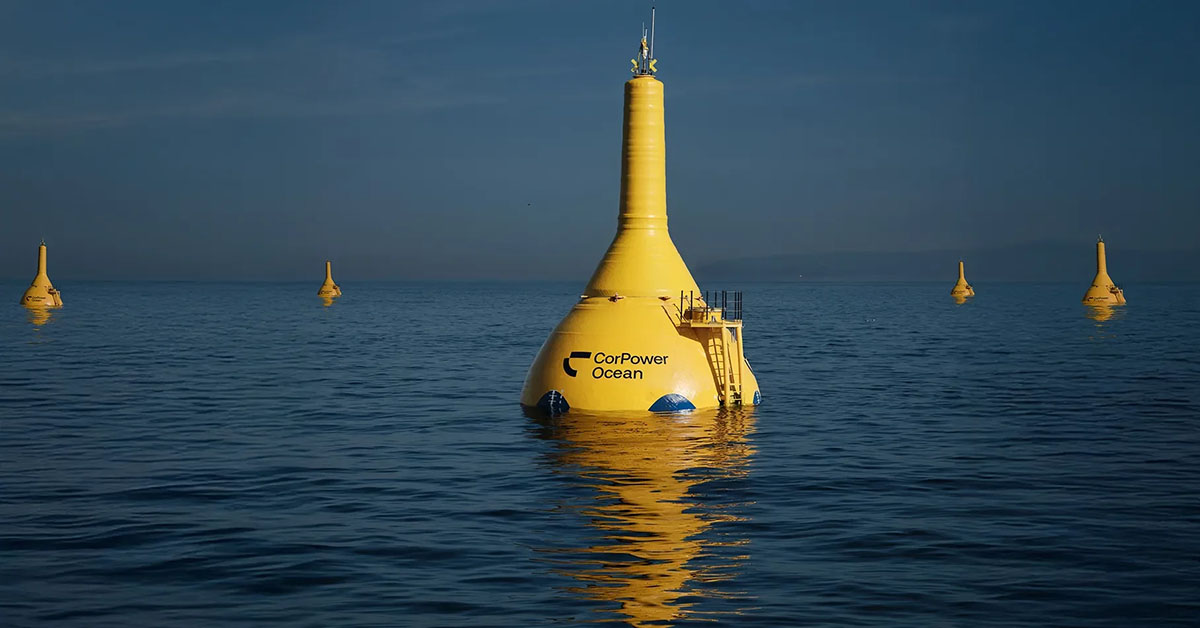
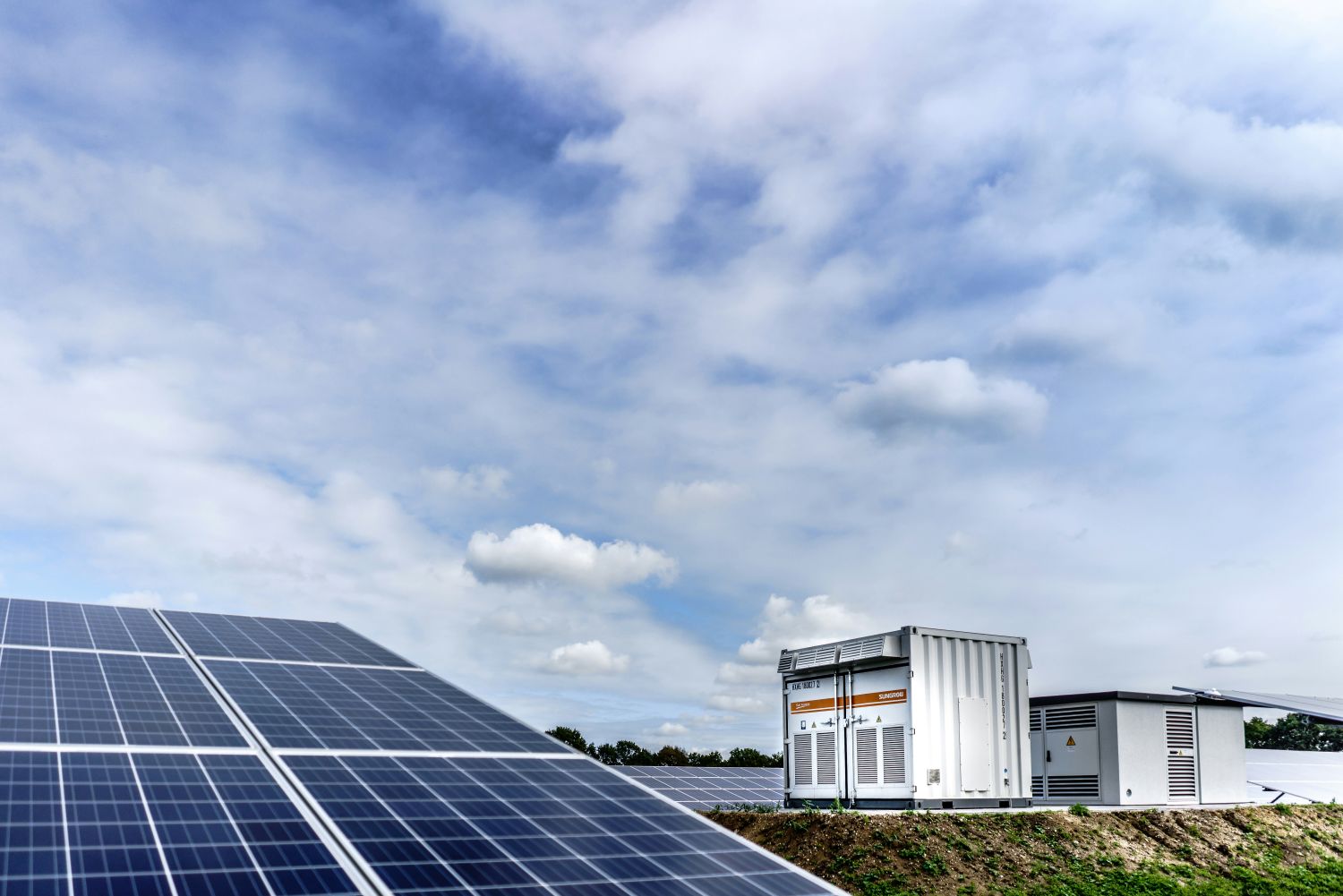
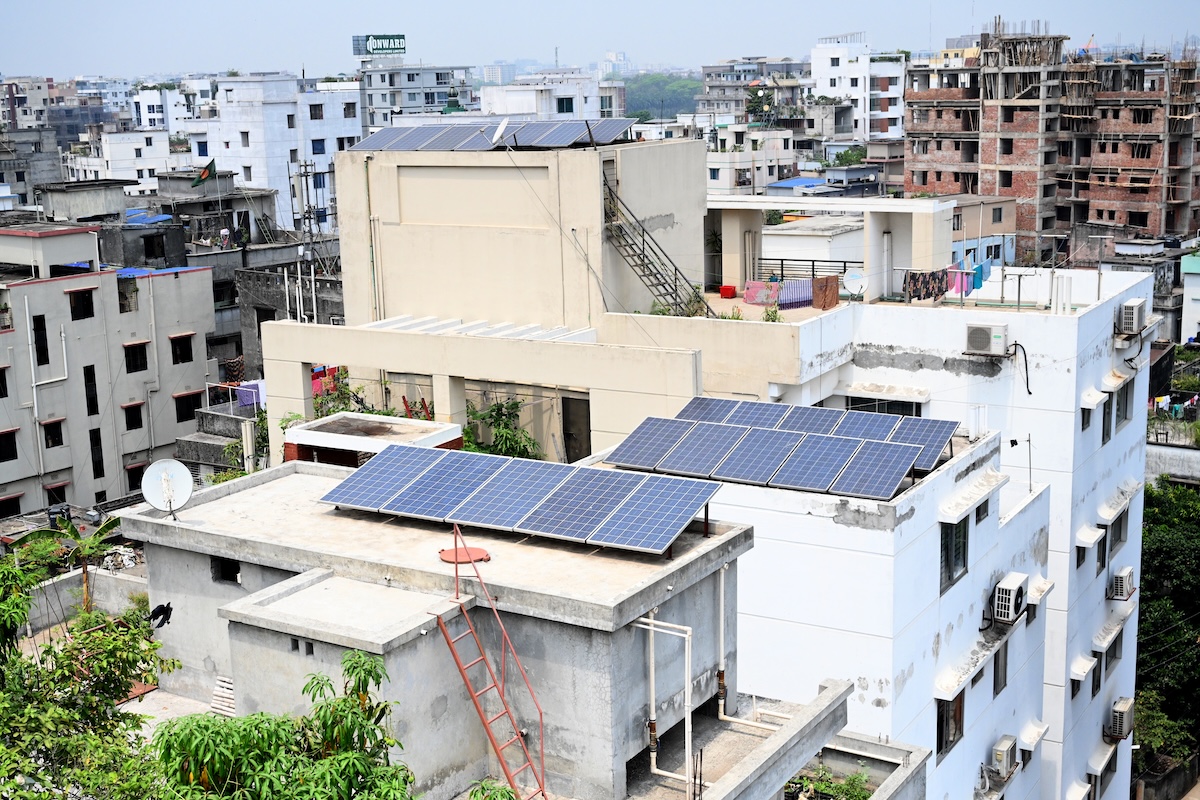
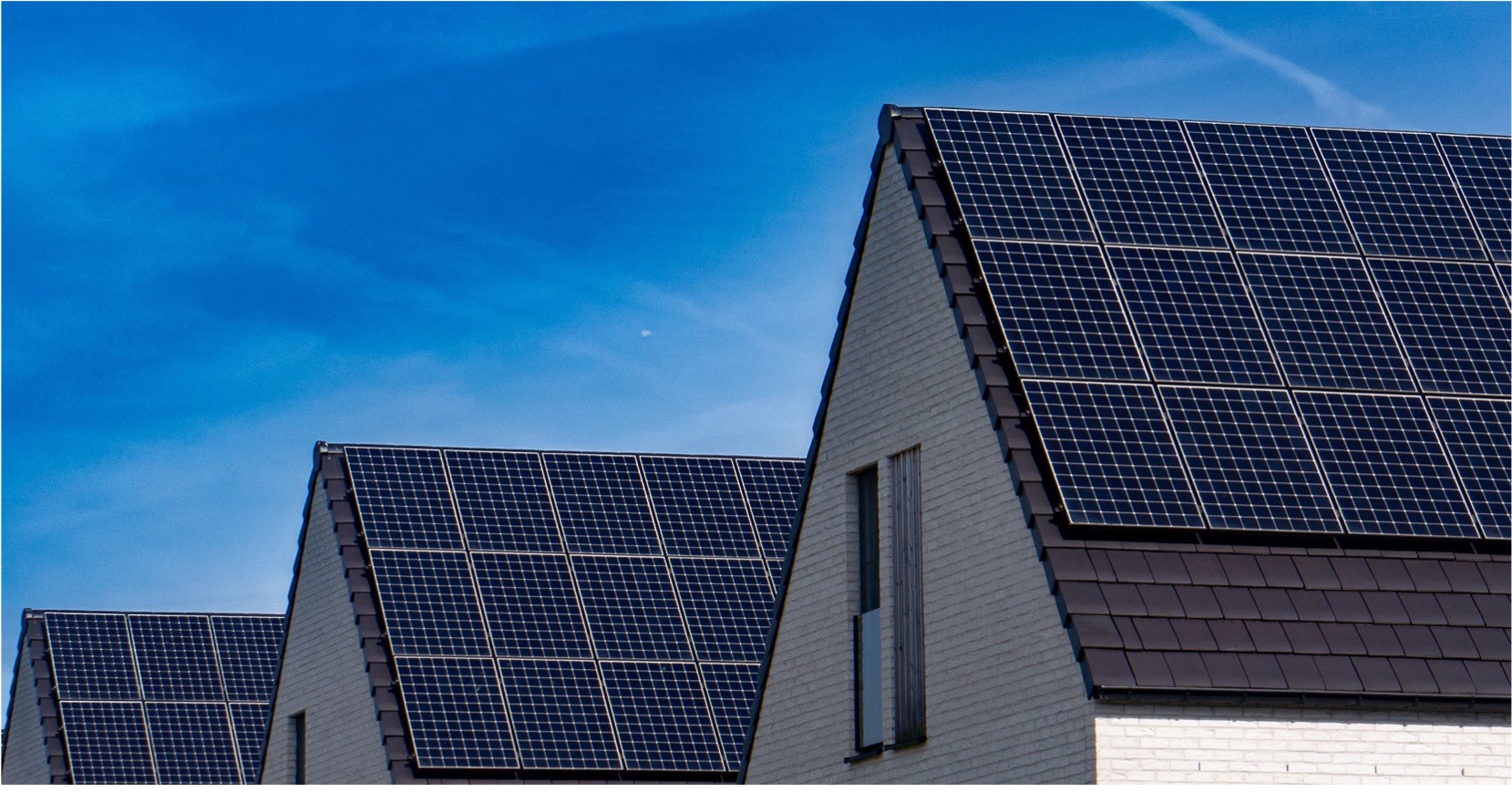
For the country to achieve its goal of 40% renewable energy capacity by 2040, an estimated $1.7 billion of annual investment is required. Rooftop solar with integrated battery storage is a no-brainer; Bangladesh has a theoretical solar energy potential of up to 240 gigawatts of power. It also holds untapped wind energy potential, with its 725-kilometer (451-mile) coastline.
Bangladesh is increasing transport decarbonization through rail modernization and EV manufacturing. The government set a goal to reach 30% EV adoption by 2030. To encourage EV manufacturing, Bangladesh provides import duty exemptions on complete knock-down, or CKD, kits and EV components.
According to Tashmeem Muntazir Chowdury at BRAC Bank, credit guarantee schemes work well in the Bangladesh context and could be extended to many climate mitigation and adaptation applications.
Least developed status
The country has a population of roughly 180 million living in a geographical area the size of the US state of Iowa. There is an urgent need for affordable, space-efficient climate solutions to support Bangladesh’s large population and economic growth.
The Bangladesh Investment Development Authority, or BIDA, which spearheads foreign direct investment facilitation, has introduced tax holidays as high as 100% for 10 years, as well as tax-free profit repatriation guarantees in two dozen priority sectors, including wind energy, agro-machinery and environmentally-friendly ship recycling. BIDA also provides investment incentives for green manufacturing, such as a 10% income tax rate for LEED-certified textile factories, and a 10-year corporate income tax reduction for operators of plastic recycling plants.
Bangladesh has gleaned some benefits from its categorization as one of the world’s “least developed countries.” Such designations are established by the United Nations to support countries with special measures to enable their economic development. In order to be classified as an LDC, countries must agree to the designation and meet all three criteria: a low average per capita income, a low score on the Human Assets Index, and a high score on the Economic and Environmental Vulnerability Index.
The status has afforded Bangladesh preferential tariffs on exports, which has supported its enormous garment sector. The country was set to graduate from the status of least-developed this November, but the government announced its aim to delay its designation as a more economically developed country by three years. This will allow the country to better plan for less favorable trade terms.
Climate-smart microfinance
Many 101 introductions to microfinance include a case study on Bangladesh. (Muhammad Yunus, largely considered the founder of microfinance and a Nobel prize winner, recently led Bangladesh’s transitional government.) Future case studies may focus on microfinance’s instrumental role in Bangladesh’s green transition.
The more than 700 microfinance institutions in the country, which collectively serve more than 40 million people, are expanding inclusion and driving climate resilience by supporting sustainable agriculture, renewable energy projects and microinsurance against climate risks. In a recent conversation, Shafiqul Alam of the Institute for Energy Economics and Financial Analysis told me that microfinance institutions are particularly suited to support solar irrigation systems for rural farming.
As green micro-loan products build momentum, there is a clear case for concessional capital to help increase the affordability, and reduce the interest rates, of such loans, as well as loans for rural rooftop solar and storage is also important.
Global investors can earn fixed returns by allocating capital to microfinance institutions’ fixed-deposit products, diversifying an investment portfolio while enabling solutions at the intersection of climate action and poverty alleviation.
Green bonds and banking
Retail and commercial banks in Bangladesh also offer green investment opportunities for investors through sustainability-linked products. For example, Trust Bank offers a range of sustainable banking products, from solar heating and cooling systems designed for manufacturing plants to organic farming conversion loans.
BRAC Bank, a member of the Global Alliance for Banking on Values and a signatory of the Partnership of Carbon Accounting Financials, has pioneered a number of climate products, including climate-friendly loans for small businesses, large companies and households. BRAC International pioneered impact notes, recently raising $32 million from international investors.
For non-residents of Bangladesh, a non-resident foreign currency account can be opened, allowing account holders to both keep foreign currency earnings or savings in Bangladesh without converting to Bengladeshi taka and to repatriate funds without hassle.
This work in the banking sector is being incentivized by Bangladesh’s government. Bank Bangladesh, the country’s central bank, created the Green Transformation Fund, offering concessional interest rates to help industries invest in equipment such as water and waste management systems, energy-efficient machinery, pollution control measures, and renewable energy solutions.
The Green Transformation Fund, with an allocation of around $200 million, is now fully deployed and there are calls to extend the fund.
Public markets
Capital markets are slowly maturing in Bangladesh. Two listed Bangladeshi companies made it to the Carbon Collective list of climate solutions stocks: Coppertech Industries and Saif Powertec.
Corporate bond issuances are also increasing. Bank Bangladesh issued a Policy on Green Bond Financing for Banks and Financial Institutions in 2022, which allows for the issuance of green bonds across eight sectors. PRAN Agro, a food manufacturing company, issued the first corporate sustainability-linked bond in 2024.
International investors can purchase green “sukuks,” which are bonds that comply with the principles of Islamic law, through the Dhaka Stock Exchange, Bank Bangladesh or Islamic banks.
Foreign investors can access many climate-friendly capital market products by opening what is known as a non-resident investor’s taka account, or NITA, in Bangladesh.
Venture opportunities
Bangladesh’s climate venture capital sector is emerging with key players like Greentech Ventures and Sajida Foundation driving innovation in sectors such as agribusiness and renewable energy.
Within tech solutions, the Bangladesh Fintech Innovation Council has recognized fintech as a force for creating a more sustainable economy. Bangladeshis already use micro-lending programs and digital wallets to pay for items such as solar panels and eco-friendly cookstoves.
Foreign investors can access Bangladesh’s climate innovation ecosystem by investing in local and regional venture funds, such as Sangam Ventures and IIX Asia, both of which invested in SOLshare.
Climate capital from the diaspora
As oil prices surge above $100 a barrel, there is no greater time for investors everywhere to support the transition to greener pastures in the Global South, Bangladesh included.
While Bangladesh works to attract new foreign investment, its diaspora community will also play a key role in its green transition and climate resilience. The country’s diaspora is the sixth-largest worldwide, consisting of at least 13 million people across 162 countries who provide $30 billion in annual remittances. While many countries in the Global South are encouraging their diaspora to return, Bangladesh encourages outward migration.
Channeling the Bangladeshi diaspora, as well as the broader pan-Asian diaspora, toward domestic climate investments is an untapped opportunity for the country’s decarbonization plan.