It’s Wind 5, Trump 0.
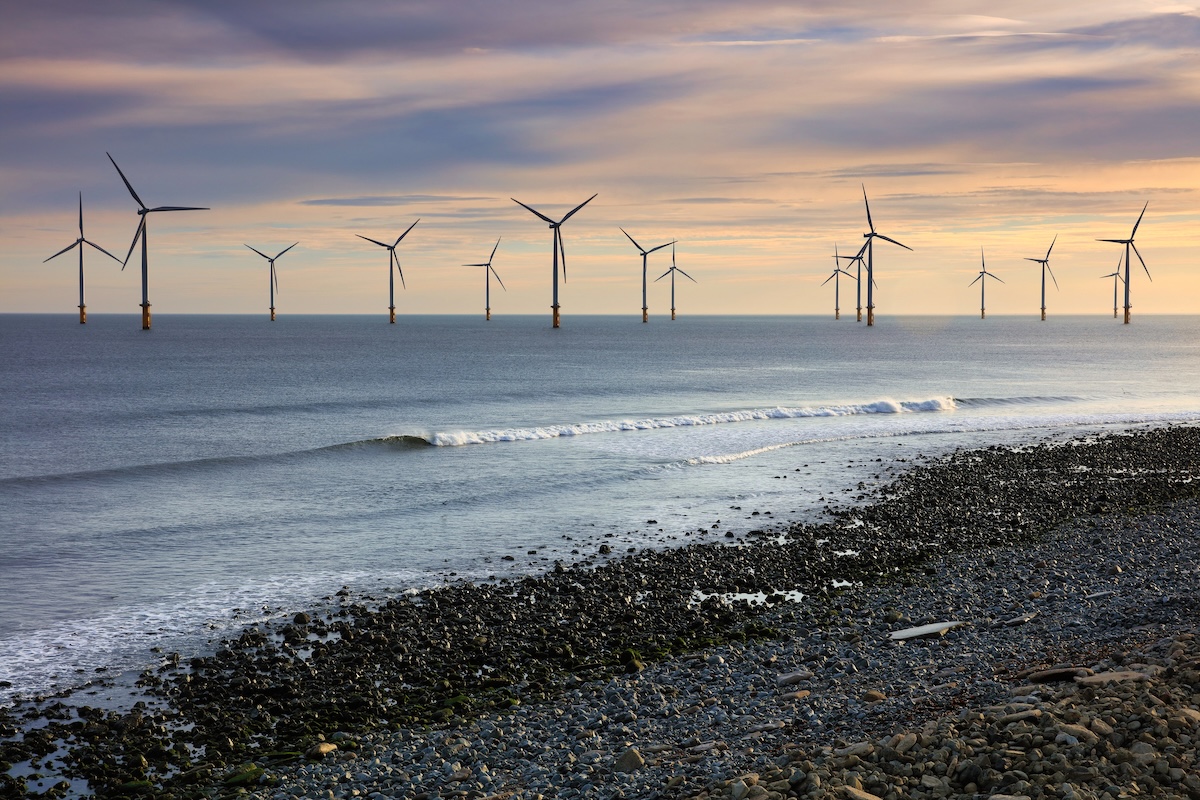
A federal judge this week swept away the last of five stop-work orders the Trump administration had slapped on US offshore wind projects in December. The restart of the projects, including Ørsted’s Sunrise Wind project off of New York’s Long Island, will allow projects totaling 5.8 gigawatts of power to proceed.
That gives at least a temporary boost to beleaguered US offshore wind developers.
The Trump administration’s somewhat perplexing hostility to wind power has shifted much of the action to Europe, where diversification of power supplies has been a priority since Russia’s invasion of Ukraine in 2022. Last year, wind and solar generated more power than fossil fuels in Europe for the first time and accounted for 30% of the bloc’s power, according to research firm Ember. Last month, a series of storms boosted wind generation in the UK, powering a record January.
China, meanwhile, is on a path to scale up wind capacity and drive down costs the same way it did with solar power. Some two-thirds of new wind capacity last year was deployed in China.
But the growth of wind power is not inevitable. Projects have grown more costly as inflation and tariffs have taken a bite. After a record 170 gigawatts of new wind capacity globally last year, wind development is expected to decline by 6% this year, according to research firm Wood Mackenzie. Europe’s offshore build-out will account for a large share of the 160 gigawatts of wind capacity expected to be added globally this year, Wood Mackenzie said.
“European manufacturers like Ørsted and others are in a period of consolidation,” Ember’s Dave Jones told ImpactAlpha.
This week, Copenhagen Infrastructure Partners picked up Ørsted’s European on-shore wind business for $1.7 billion. The purchase gives the Danish infrastructure investor over 800 megawatts of operational capacity and a development pipeline of wind, solar and battery storage projects in Ireland, the UK, Germany and Spain.
For CIP, which raised €12 billion ($14 billion) for its fifth flagship fund, the acquisition represented a portfolio and pipeline “in Europe’s most attractive markets with very strong demand growth,” said CIP’s Nischal Agarwal. CIP will stand up the onshore business as a standalone entity with a new company name and brand.
“Wind generation is substantial globally,” says Jones. “It’s far from dead.”
European demand
Ørsted, which has seen its stock plunge by about 85% from its 2021 peak, has been raising capital to survive the volatility. In October, it issued new stock to raise $9.4 billion. In 2024, it sold a £1.75 billion ($2.3 billion) stake in four Ortsed wind farms in the UK to the infrastructure giant Brookfield. That followed the $2.5 billion investment in Ørsted by Norwegian oil and gas company Equinor.
The scramble for power to fuel data centers is fueling large-scale expansion of capacity, and renewables are key, Brookfield’s Connor Teskey on the company’s earnings call last week. “Solar and onshore wind will play a critical role given their speed to market and low cost.” Teskey cited permitting slowdowns in the US, but said, “Projects are still getting done.”
Last month, KKR formed a joint venture with German offshore wind developer RWE to co-develop and operate two offshore wind projects that need over $15 billion in capital to begin delivering power to 3 million homes in the UK by 2030. KKR will have a 50% equity stake in the Norfolk Vanguard East and Norfolk Vanguard West wind farms.
KKR’s Vincent Policard cited “the central role offshore wind will play in advancing the country’s energy transition.” The UK government has set a goal to double its offshore wind capacity over 10 years. Today, about 20% of the country’s electricity generation comes from offshore wind.
Last fall, Apollo Global Management took a 50% stake in Ørsted’s Hornsea 3, the largest offshore wind development in the world, located on the UK’s east coast. The New York-based private equity firm will also fund half of Hornsea 3’s remaining construction costs. The deal was “the latest large-scale transaction in Europe, where we are investing behind energy, critical infrastructure and transition assets,” Apollo’s Marc Rowan said at the time.
When the wind farm is completed in 2027, it is expected to have a generation capacity of 2.9 gigawatts — enough power to provide low-cost, renewable electricity for more than 3 million UK households.
US headwinds
Earlier this week, federal Judge Royce Lamberth found that the administration did not show that offshore wind was such an imminent national security risk that needed to be halted. The government had said the turbines and tower caused radar “clutter” that could hide attacks.
The decision allowed work to resume on Ørsted’s Sunrise Wind, a 924-megawatt project that aims to provide clean power to roughly 600,000 homes in New York starting next year. The project has been on pause since December, costing the developer about $1.3 million per day.
Ørsted’s Revolution Wind project for Rhode Island and Connecticut, which was 80% completed before it was ordered to stop, has also been allowed to resume.
Other projects that have won reprieves in court include New York’s Empire Wind by Norwegian developer Equinor. Massachusetts’ Vineyard Wind (15 miles south of Martha’s Vineyard and Nantucket) is being developed by Avangrid and Copenhagen Infrastructure Partners. Coastal Virginia Offshore Wind is a project by Dominion Energy Virginia.
For projects already planned and financed, developers are rushing to beat accelerated deadlines under last year’s One Big Beautiful Act legislation, which accelerated deadlines for wind and solar projects. To lock in production tax credits, projects must begin construction no later than July 4 of this year. Developers could risk losing the production tax credit altogether if projects aren’t operating by the end of 2027.
Trump has called wind power “a scam” and argued that “windmills,” as he calls the giant turbines on offshore projects, could pose national security risks. Misinformation is one of the biggest challenges, said Jones.
“It’s creating a lot of pushback on public opinion for wind,” Jones of Ember told ImpactAlpha. New developments are unlikely in the US without a change in policy direction, he said.
“The risk levels have obviously gone through the roof.”