
More than 30,000 wildfires have burned through nearly 1.3 million acres in the US since the start of this year, according to the National Interagency Fire Center. Forest fires are becoming more severe and harder to contain. In Southern California, gusting winds fueled the flames that burned Los Angeles neighborhoods for 24 straight days earlier this year.
“The time to adapt to extreme weather events is now,” said Sonia Kastner of Pano AI, which since 2020 has worked with electric utilities, local government agencies and other first responders in the US, Canada and Australia to detect where wildfires are being sparked.
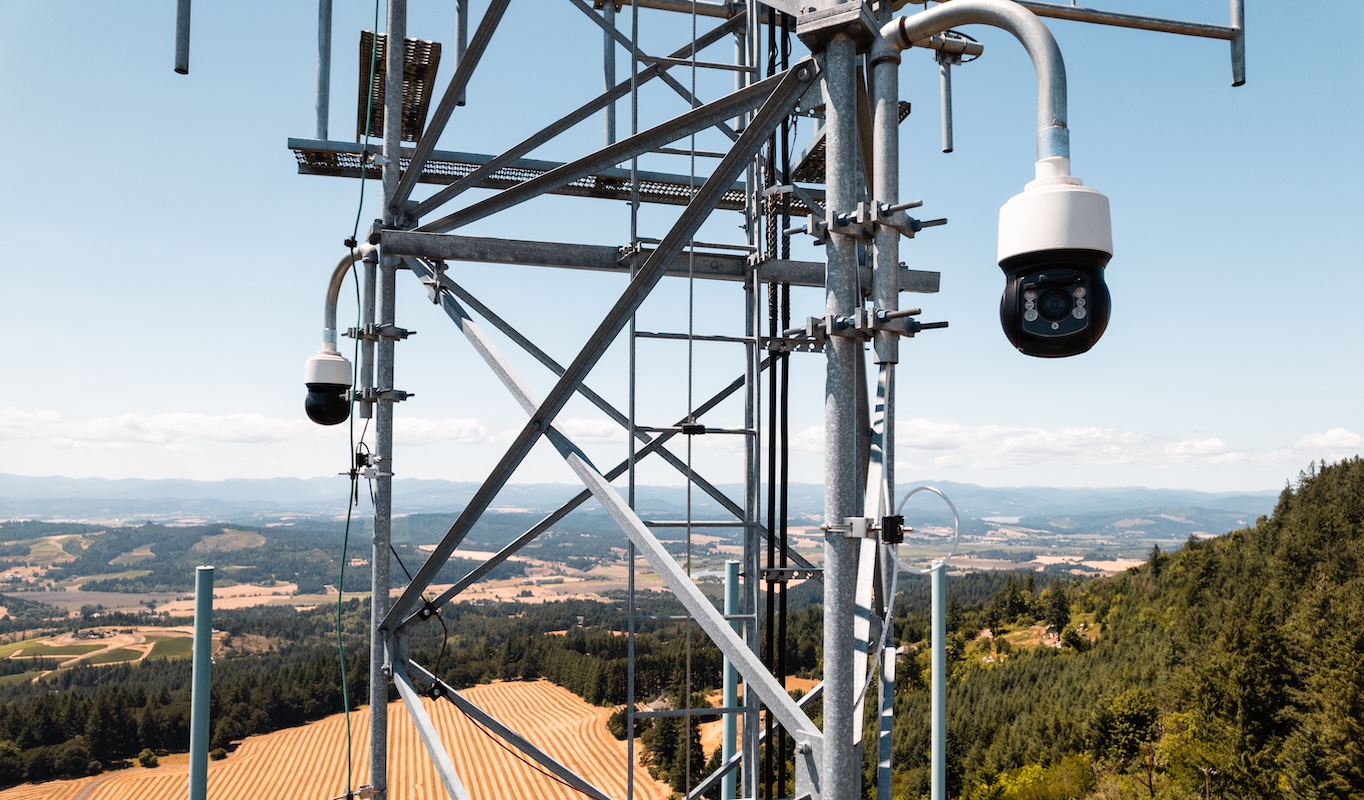
Pano AI’s wildfire detection device uses cameras, satellite feeds and artificial intelligence to pinpoint fires, alerting firefighters and other first responders more quickly to their locations. The San Francisco-based company is part of a new wave of wildfire tech startups pushing early-detection hardware and software, which could help contain some fires, but not all (see, “In the age of fire, tech solutions can help but not heal”).
Pano AI has helped launch the Association of Firetech Innovation to support next-generation technology for wildfire detection, prevention and response.
Corporate impact
Pano AI will use the Series B financing, led by Giant Ventures, to accelerate the adoption and deployment of its technology at scale.
Corporate backers included Salesforce Ventures, the Tokio Marine Future Fund of global insurance conglomerate Tokio Marine Holdings, and Liberty Mutual Strategic Ventures, Liberty Mutual Insurance’s corporate venture arm, which invested via its $200 million fund.
One of the earlier backers of Pano AI was T-Mobile Ventures, T-Mobile’s sustainability-focused venture arm. Pano AI uses T-Mobile’s 5G network, which covers over two million square miles in the US, to collect and analyze more data in real-time for faster wildfire detection and response.
Use cases
“In today’s wildfire environment, every minute counts,” said Mike Alexander, who led Colorado’s Douglas County’s emergency response last June when a lightning strike ignited a mountain fire.
“Pano AI gave us early confirmation and precise coordinates that allowed us to launch a rapid aerial and ground attack in a remote watershed that provides drinking water to over one million people,” Alexander said. “That critical lead time helped us contain the Bear Creek Fire before it became a more destructive event.”
Across the country, other Pano AI clients are also finding success detecting wildfires. Portland General Electric’s Maria Pope says Pano AI is “a critical element of our broader strategy to protect people, infrastructure and essential service during increasingly complex fire seasons.”