
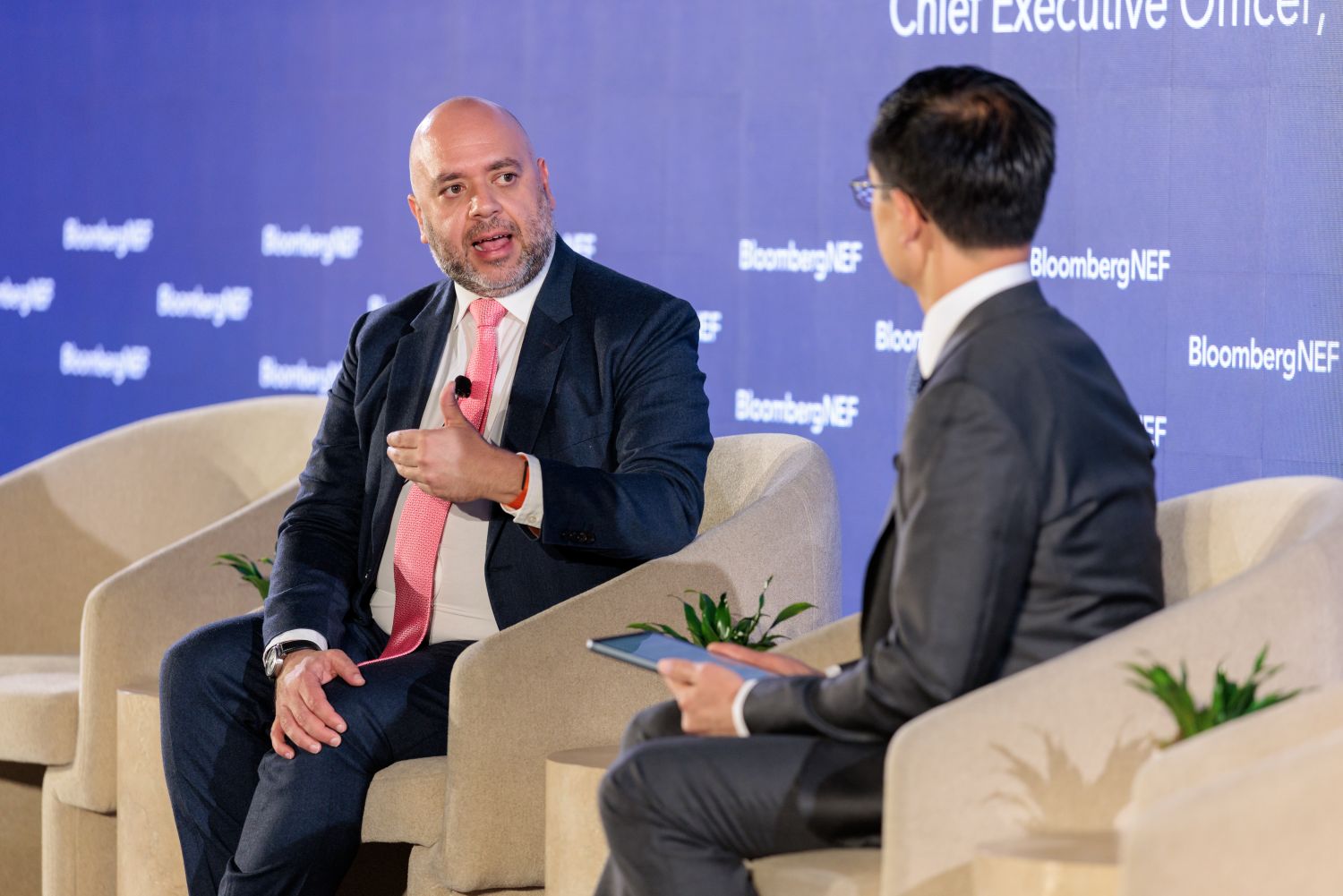
It felt like a time capsule from another era.
At last week’s Catalyst event in Sacramento, officials from California’s two major public pension plans, CalPERS and CalSTRS, repeatedly made the case that emerging and diverse fund managers can and do outperform.
Their recommitment to diversity, equity and inclusion practices would have been unremarkable several years ago. In 2025, it counts as downright courageous.
“Now’s not the time to be quiet,” CalPERS CEO Marcie Frost told California’s Emerging & Diverse Investment Manager Forum.
The two California pension funds have long been outliers compared to most of their institutional peers. But as the No. 1 and No. 2 largest pension funds in the country, they’re big outliers. The state’s public employees retirement system had $506 billion under management as of last June. The teachers retirement system managed $350 billion as of March 31.
Rather than a blast from the past, CalPERS and CalSTRS may be a signal for the future. Under the state’s Proposition 209, passed by voters in 1996, the pensions are barred from making investment decisions based on racial, ethnic or gender characteristics. Instead, they’ve learned how to spot outperformance, which just happens to come from emerging and diverse fund managers.
“We’ve been operating under this environment for 30 years,” said CalPERS Miguel Silva. “We’re still full speed ahead on the programs that we’re operating, so it’s no change for CalPERS.”
In the hallways, dozens of general partners lined up to get a few minutes each with managers of the two funds’ alternatives allocations, including real estate, infrastructure and private equity. CalPERS, as part of a strategy change in 2022, moved away from buyout funds and toward growth equity and venture capital, which also means investing in smaller-sized funds.
“There has been a migration to smaller funds,” said Anton Orlich, CalPERS’ managing investment director for private equity. “And I think by and large, better opportunities in those spaces tend to be with smaller funds.”
Sundial Group’s Richelieu Dennis, who has been investing in funds ever since he sold Sundial Brands to Unilever in 2017 for $1.6 billion said in a lunchtime conversation with California Controller Malia Cohen that data and experience shows, “Diverse managers are outperforming their non-diverse managers.”
“At the end of the day, if your job is to get an outsized return for your investors, this is the place to do it, because this is who’s delivering the outsized returns,” Dennis said. “Diverse managers, managers that come from different backgrounds, different perspectives. And it’s not to exclude anybody, it’s to include everybody.”
Peak ambiguity
The current fundraising environment is “incredibly difficult,” said Pamela Pavkov of TPG Next, the emerging manager platform of the $250 billion TPG, which two years ago won a $500 million allocation from CalPERS to develop a portfolio of diverse and emerging managers.
Earlier this month, TPG Next’s fifth check went to Paris-based Ardabelle Capital, a woman-led private equity firm targeting sustainable solutions for corporate supply chains. Pavkov expects to help launch another three or so fund managers – out of a pipeline of 677.
“Unfortunately, the reduction in capital availability has disproportionately hurt new firms,” she said. TPG NEXT has raised just $64.5 million of additional capital since CalPERS’ commitment. “This ecosystem, in our view, has so much potential for generating outsized returns and yet continues to lack access to capital.”
That hasn’t deterred fund entrepreneurs, however. “The itch to build your own GP is an all-weather itch,” Pavkov said. “It happens to the very best, talented investors in our industry, regardless of the macro environment.”
The venture firm General Catalyst has been active in seeding and staking first-time fund managers for more than 15 years. For a GP developing a first time fund, “It is a really scary and treacherous market environment,” said the firm’s Tracy Fong. “We’ve institutionalized the process and continue to drive support in our ecosystem, in our communities, at a time where there is peak ambiguity.”
Out of the 170 managers Muller & Monroe screened on behalf of CalSTRS over the past year, less than a third of them were invited to a first meeting. Four of these managers were considered for a commitment from CalSTRS. Only two received an allocation from the $350 billion public pension fund.
“It’s a very tough, very narrow gate to get through. You have to be stubborn, and you have to believe that you’re special,” said Muller & Monroe’s Andre Rice.
Co-investment reset
CalPERS may have carried its search for no-fee, no-carry investments too far.
The ability to offer “co-investments” has become a central feature of fundraising for private equity and debt funds and other investment vehicles, as institutional LPs pushed their fund managers for more access to direct investments – and for lower fees.
But CalPERS co-investments underperformed its fund investments over a couple decades. “I think what was going on was there was an effort to, as the primary goal, get co-investment volume,” said CalPERS’ Orlich. “Essentially, we were allocating more of our capital to lower-conviction managers on the promise of the fee-with-carry savings.”
The pension fund reset its policy to focus on manager selection first, with co-investment as a bonus. The difference in returns on a manager in the top quartile of all funds and one at the 50th percentile is double any savings on fees, Orlich said.
Indeed, the offer of co-investments won’t rescue even a more experienced manager who doesn’t deliver returns.
“I think the hardest spot today to sit is in a fund three through five GP that has had second- to third- quartile performance,” said GCM Grosvenor’s Elizabeth Browne, referring to middle-of-the-pack fund managers.
She said Grosvenor looks for specialists in specific sectors, particularly with operating experience, and especially those raising their first or second funds.
“When you look at who has an edge or right to win in this market, it’s really clear that It’s those who are able to navigate regulatory complexity, who understand stroke-of-the-pen risk if they’re in a heavily regulated sector,” she said.
Browne added, “LPs are a lot less patient than they used to be.” With the growing range of alternative investments and tightening budgets, “Every dollar you put out the door, there’s higher bar for the value of that capital.”
Emerging real estate managers
Belay Investment Group, a woman-led real estate investment manager, since 2021 has co-invested in first-time and emerging real estate funds alongside CalSTRS. The Los Angeles-based firm and CalSTRS three years ago backed SoLa Impact, a Black-led real estate firm that invests in affordable housing in Black and brown communities, primarily in southern LA.
“There are a lot of capital sources that are still putting out capital for emerging managers,” Belay’s Eliza Bailey said during a panel discussion. She advises emerging managers to find strategic LPs “that will ride or die with you.”
Having a track record is a key prerequisite for real estate managers raising capital from institutional investors, locking out many first-time, emerging and diverse managers. Just 13% of institutions expect to allocate capital to first-time real estate managers this year, according to Hodes Well & Associates’ latest Institutional Real Estate Allocations Monitor.
Belay is focusing on smaller-scale managers that offer access to differentiated investment opportunities, where larger real estate managers overlook smaller, specialized deals. Through its programmatic joint ventures, Belay writes checks between $50 million to $100 million to form long-term partnerships with local, specialized real estate managers.
“We scale that based on what their investment pacing is, so that doesn’t push them to grow too fast,” Bailey said. “It allows them to do exactly what they do well, in a measured but scalable way.”