A decades-old festival in Brazil celebrating Black culture and creatives has been canceled due to lack of sponsorships.
The news has sparked discussions in the impact community about whether the Trump administration’s stance against inclusion policies and environmental agendas is influencing private investing and business abroad.
“I don’t notice any major investment practice shifts,” said GSG Impact’s Elizabeth Boggs Davidsen at last week’s Impacta Mais 2025 in Sao Paulo. There could be “less communication and spectacle,” she said, but “for environmental, social and governance risk managers, it’s a good business.”
The cancellation of the Festival Feira Preta, which was scheduled to take place in São Paulo in May, is likely a symptom of another issue in Brazil’s impact ecosystem: investors’ failure to grasp the strategic economic role of Brazil’s Black culture and arts, and other social sectors.
The last Feira Preta festival generated 14 million reais ($2.4 million) in sales of Brazil’s Afro-entrepreneurs’ products and services alongside performances by renowned Brazilian artists. (The next festival is slated for November in the majority-Black city of Salvador, whose culture, literature and music is internationally recognized.)
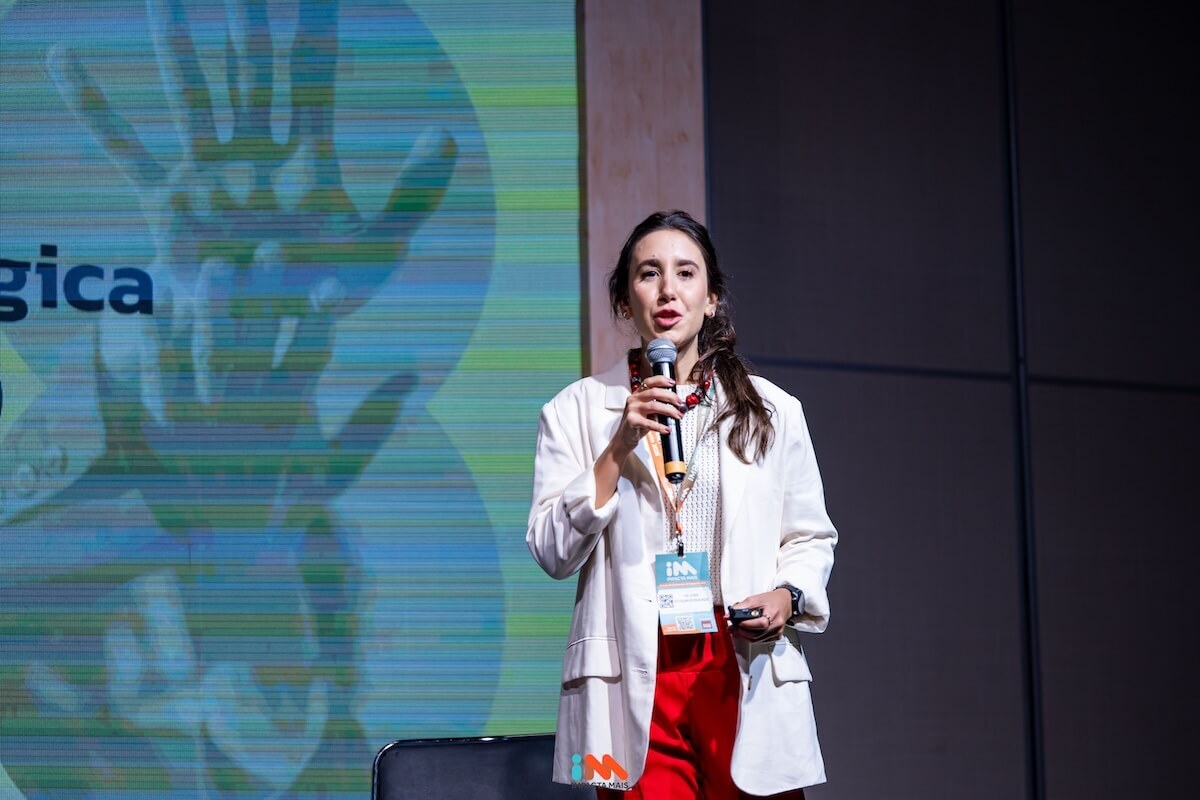
But investors supporting such under-represented entrepreneurs do so with “a social impact lens, not an economic impact lens,” Feira Preta’s founder Adriana Barbosa said at Impacta Mais. “The issue is social, but it needs to address the economic dimension. What we are discussing cannot be confined to ESG agendas.”
Building an impact ecosystem
Impacta Mais, hosted last week in São Paulo by Impact Hub Brazil and Instituto Cidadania Empresarial, showcased the duality of challenges and opportunities in Brazil’s maturing impact ecosystem, especially ahead of the COP30 climate summit, which takes place in Belem in November.
The backdrop of the convening of 1,200 impact delegates: a global “competitiveness” shift, wherein the US is retreating on sustainability and climate commitments, and China is increasing its commitments, observed Lucas Maciel of Brazil’s Ministry of Development, Industry and Commerce. China last year introduced its Sustainability Disclosure Standards for companies operating in the country.
“China will continue gaining ground, and I think China will be a significant inducer of the green agenda,” Maciel predicted.
Domestically, Brazil has sizeable opportunity to increase its impact investing activity. The country has transacted 18.7 billion reais ($3.2 billion) in impact deals, against nearly $1.6 trillion globally.
To identify and leverage more impact opportunities, the government set up the National Impact Economy Strategy, Enimpacto, in 2023. The public development bank BNDES is also stepping up its strategic role with a dedicated impact program. Its climate fund, which supports enterprises supporting climate mitigation and adaptation, recently surpassed 10 billion reais in assets under management. BNDES is also actively working to connect startups to investors.
Engenho, for example, is a company in Macapá, Amapá, that produces “açaí coffee” by reusing discarded pits from the fruit’s supply chain. Its work directly impacts 250 families through production, which is then sold to the Amazombai Cooperative. Last year, the business secured its first major international contract: a five-year agreement to supply 2.5 tons to the US for a new energy drink, shared founder Lázaro Gonçalves at a BNDES-hosted roundtable at Impacta Mais. Engenho is actively fundraising private capital for the first time; until now it has relied on public financing calls to fund its growth.
Gonçalves shed light on the challenges agri-focused businesses like Engenho face raising capital in Brazil. Investors, he said, “think a bioeconomy company will take too long to scale, while tech companies promise quicker returns.”
Innovative agri-finance
Investors willing to look at Brazil’s underinvested bio- and agri-economies will find no shortage of ways to plug in – and potentially earn meaningful returns, both financial and impactful. The country is one of the most biodiverse in the world. Entrepreneurs and fund managers are bringing to market creative solutions to remake Brazil’s agricultural and agroforestry sectors in ways that restore and nurture land, natural ecosystems, and rural and Indigenous communities.
One instrument they’re using: tax-advantaged Agribusiness Receivables Certificates, or CRAs – a type of security backed by receivables from rural producers.
The consortium behind Kawá Fund is tapping CRAs to raise private capital to spur investment in regenerative, family-run cocoa production. The Arapyaú Institute, Violet, Tabôa Fortalecimento Comunitário and MOV Investimentos are aiming to secure one billion reais ($174 million) to lend to farmers by 2030.
Another consortium is using CRAs to restore forestland in the Amazon. Conexsus, an NGO, in partnership with Santander, Grupo Gaia and agroforestry company Belterra raised 21.5 million reais through a three-year “Green CRA” issued in 2023 to help Belterra plant two million trees on degraded land. The blended-finance product is aligned with the Innovative Finance for the Amazon, Cerrado and Chaco initiative, and supported with catalytic philanthropic capital from Good Energies Foundation in the subordinated tranche and Fundo Vale in the mezzanine tranche.
Sixty percent of the capital has been directed to Belterra’s agroforestry operations, and 40% went to 26 cooperatives and community organizations growing and processing Brazil nuts, cassava, açaí, banana, cocoa, and organic rice and beans.
Grupo Gaia, a company specialized in developing strategies that mobilize resources in the capital market to finance community businesses with social and environmental impact, is gearing up to launch its seventh CRA Cooperativas MST instrument, which will support the Coana Cooperative run by the Landless Workers’ Movement, or MST, in the southern state of Paraná. The 40-year-old movement supports production and distribution of agrarian products to urban markets.
Grupo Gaia’s previous CRA Cooperativas MST instrument raised 10 million reais for Cooperoeste, a dairy production cooperative in southern Brazil.
And VOX Capital announced plans to partner with The Nature Conservancy to launch the Catalytic Capital for Agricultural Transition fund for rural producers and sustainable land use in the Amazon and Cerrado biomes. Their goal is to reach a first close toward an $80 million target by COP30.
If there’s an upside to macro-challenges to the global impact and climate agendas, its that they will surface impact’s truly committed stakeholders, expressed Daniel Izzo of VOX Capital, one of Brazil’s veteran impact fund managers. “I think it’s a moment that will sort those truly committed from those speaking out just as a trend.”