
TGIF, Agents of Impact!
- Roundup: Future-proofing strategies
- The Call: Black wealth and collective prosperity
- Plugged In: Spotting overlooked opportunities for impact
- Spotlight: Testing Africa’s public markets
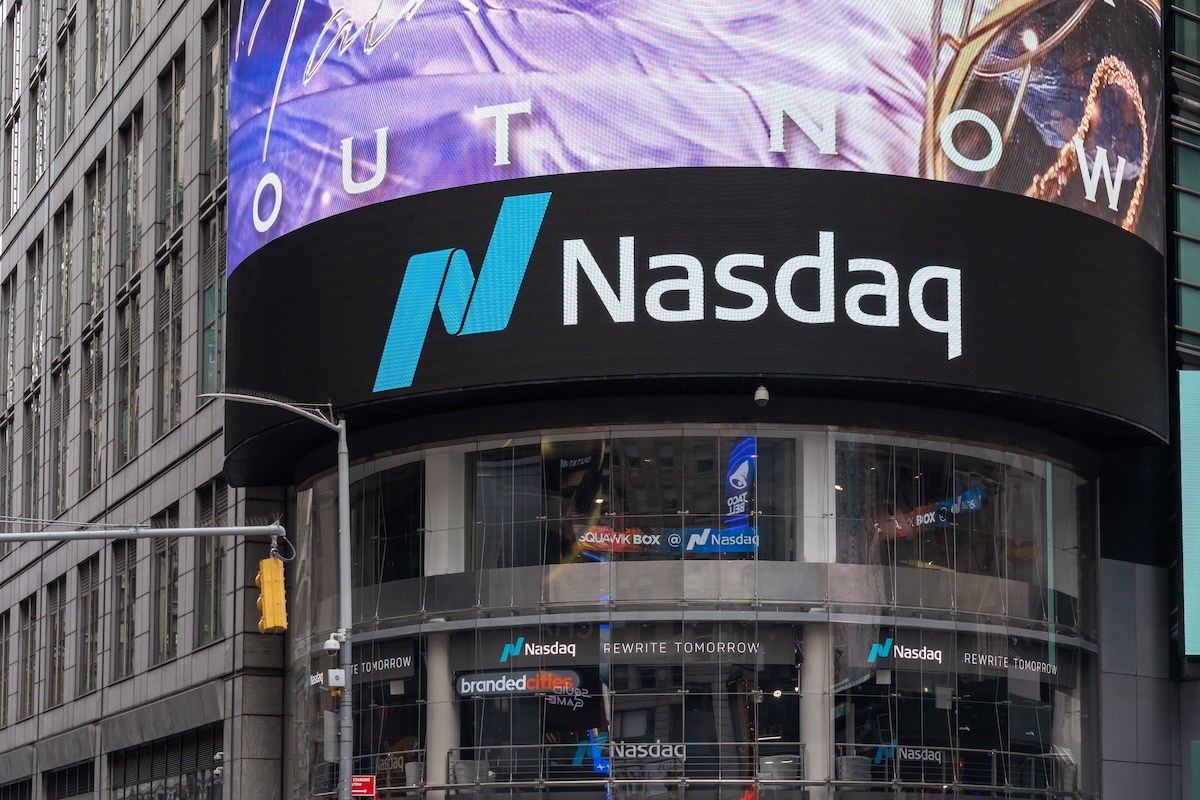
🗣 Term insurance. It was a short trip for Wall Street executives like Goldman Sachs’s David Solomon and Citigroup’s Jane Fraser, who were among the CEOs cheering Donald Trump as he rang the bell to open the New York Stock Exchange as Time’s Person of the Year. It didn’t cost anything for Time’s owner, Marc Benioff of Salesforce, to gush to the president-elect, “This marks a time of great promise for our nation.” For Amazon and Meta, $1 million contributions to next month’s inauguration are well worth it if it helps Jeff Bezos and Mark Zuckerberg get on Trump’s good side. It’s not only billionaires that are scrambling to safeguard their interests in the period ahead. “For a climate tech conference, there was little talk of, well, the climate,” ImpactAlpha’s Amy Cortese reported from the US Energy Department’s “Deploy” conference (the new talking points: creating jobs, cutting prices and beating China.)
Some impact investors are seeking a middle way between unctuous ingratiation and futile resistance. A new community of wealthy families and limited partners is gathering around “policy-enhanced impact investing,” lobbying for policies that enhance the impact, and perhaps the returns, of their portfolios. “Investment portfolios can’t exist in a political vacuum, and impact theses can’t exist in a political vacuum,” Blue Haven Initiative’s Liesel Pritzker Simmons told me in a candid interview. “So let’s just be honest about that and then say, ‘Are we using all the tools in the tool belt?’ We are admitting at Blue Haven that we haven’t been and we should.”
The most effective way to future-proof a portfolio, of course, is to deliver consistent performance and irrefutable benefits, as Include Ventures’ Taj Eldridge suggested on this week’s Plugged In call with Sherrell Dorsey (see below). On ImpactAlpha this week, Second Muse’s Todd Khozein detailed the New York model for building climate tech ecosystems, which helped the city’s climate startups attract at least $664 million in venture or growth funding last year. CrossBoundary’s model for financing commercial and industrial solar installations in Africa is now attracting bank capital to the fast-growing sector, as ImpactAlpha’s Lucy Ngige reports. RSF Social Finance’s Jasper van Brakel interviewed Betty Francisco of Boston Impact Initiative and Trailhead Capital’s Mark Lewis about hacking finance for regenerative returns.
In San Francisco, Community Vision’s financing for youth centers, small businesses and health clinics keeps neighborhoods resilient and locally-owned, Roodgally Senatus reports. In a companion post, Justice Capital’s Christina Hollenback and Nonprofit Finance Fund’s Aisha Benson cite community ownership strategies, such as the Indigenous-owned, commercial-scale Anpetu Wi wind farm that will generate tens of millions of dollars in revenues for community benefits for the Standing Rock Sioux Tribe over the next 25 years. The wind will keep blowing. While corporate CEOs seek short-term shelter, Agents of Impact are future-proofing impact strategies for the decades ahead. – David Bank
The Week’s Podcast
🎧 This Week in Impact. Host Brian Walsh takes up ImpactAlpha’s top stories with editor David Bank. Up this week: How family offices are using lobbying and advocacy to pursue “policy enhanced impact investing”; how community ownership models can combat displacement and share the wealth; and how securitization of commercial solar installations could accelerate clean energy in Africa.
- Listen to the new episode of This Week in Impact. Get the podcast in your feed by subscribing on Apple or Spotify.
The Week’s Calls
Agents of Impact Call No. 67: Equity and ownership. Speaking through his text-to-voice “eye pad,” Napoleon Wallace joined the discussion after the exclusive screening of ImpactAlpha’s mini-documentary, “Napoleon Wallace and the Reconstruction of Black wealth” (watch the trailer). Wallace invited Agents of Impact to Durham, NC, in April (details tbd). “Together, we’ll explore pathways to economic mobility, social justice and political empowerment, building on the powerful legacy of fusion politics,” Wallace said. Wallace’s collaborators, including Brittany Bennett Weston, Talib Graves-Manns, Wilson Lester, Homero Radway and Keith Beverly, sketched the outlines of what might be called the North Carolina model for economic reconstruction and collective prosperity. “Napoleon, you think bigger, you think quicker, and you think more expansively than almost anybody else I know,” said Kimberlee Cornett of the Robert Wood Johnson Foundation, which supported the 20-minute film. “He is unintimidated by complexity. He is unintimidated by structural racism. He is unintimidated by ideas that seem improbable. And he is able to rally the ideas, the people and the capital to really do something bold and not incremental.”
- Share this post and watch the post-film discussion.
Plugged In: Taj Eldridge on spotting overlooked opportunity for impact in 2025 (video). Some see first-time and diverse fund managers as “emerging.” Include Ventures’ Taj Eldridge sees fresh talent with unique lived experience, able to spot overlooked opportunities for innovation and impact. On the last Plugged In call of the year, the omnipresent investor said the key to delivering impact alpha in the Trump era is to lean in, not out, with investments in historically underrepresented managers and founders, sectors and geographies, and embracing talent at all education levels. “It’s time to separate the wheat from the chaff,” Eldridge told host Sherrell Dorsey. “Those companies that are going to be true to the idea of diversity, those companies that are going to be true to the idea of sustainability and climate – my hope is that they will be more competitive than others and show the real value of that.”
- Read the recap – watch the replay.
The Week’s Deal Spotlight
Africa’s early growth-stage companies are going public. Going public is typically an exit strategy for large companies seeking expansion capital and returns for their investors. A small group of companies in Africa is testing the public markets as an early-growth strategy. Agrifood investor Africa Eats is now a listed entity along with two of its portfolio companies on the Stock Exchange of Mauritius. The goal: to help its portfolio of small and mid-sized food businesses – and itself – overcome Africa’s financing gap for companies needing growth capital. That capital gap is especially hard on non-tech businesses that don’t qualify for venture capital, says Africa Eats’ Luni Libes. “Finding a way to list these companies on the stock exchange would be especially crucial for businesses that need short-term funding to meet orders or unexpected expansion and which cannot afford to wait on long investment cycles,” Libes told ImpactAlpha in an interview about the strategy earlier this year.
- Designing a market. Africa Eats debuted on the Mauritius exchange on Tuesday, Dec. 4 at $2.25 per share. It trades under the ticker symbol EATS. Its portfolio company Ziweto in Malawi, which runs a veterinary services network for smallholder livestock farmers and trades as ZWTO, opened on the same day at $1.60 per share. Rwandan meat processing and export company Paniel Meat Processing, trading as ELIT, opened at $1.85 per share. Africa Eats worked with the Stock Exchange of Mauritius to launch a subset of the exchange, called SEM X, for small and growing African businesses. The companies have a set trading time between 2:00 and 2:30pm local time on Tuesdays to encourage investor participation and address concerns that small companies would have too little trading activity, said Libes.
- Primed for growth. Africa Eats is looking to help at least five more of its portfolio companies list on SEM X. To qualify, a company must be profitable, show at least 25% compound growth over the last five years, and have minimal debt. To encourage investors to support the fledgling market, Africa Eats is looking at new strategies to facilitate trading, including an app that will allow traders to place bids on new IPOs. Investors in the US and Mauritius are eligible to participate. The goal is to open up the opportunity to a broader set of African investors. “We talked to investment banks, pension funds, insurance companies, fund managers and wealth advisors – everybody who makes the capital market work in Mauritius,” said Libes. “And with rare exceptions, they were all on board.”
- Keep reading, “Early growth-stage companies are going public – in Africa,” by Lucy Ngige on ImpactAlpha. Catch up on all of this week’s dealflow reporting.
The Week’s Talent and Jobs
💼 See and share more than a dozen new impact jobs posted this week on ImpactAlpha’s Career Hub and view hundreds of more jobs in impact investing and sustainable finance. Have a job listing to post? Submit it here.
The Global Fund for a New Economy added Gina Dalma, previously with Silicon Valley Community Foundation, as chief development officer… JFF Ventures added six new members to its Corporate Innovation Council, including Pilot Company’s Jocelyn Caldwell, Mari Sifo of Host Hotels and Resorts, Kathy Tague of Northwestern Mutual, and Amazon’s Tammy Thieman… Incofin added managing partner Serkan Alhan to its management board… Mike Ilardi, previously with S&P Global, joined Dunya Analytics, a biodiversity and nature risk analytics firm, as chief commercial officer.
That’s a wrap. Have a wonderful weekend.
– Dec. 13, 2024