
Greetings Agents of Impact! Cheers to the vibrant crowd at last night’s “Step up, step out” SOCAP side event, which ImpactAlpha co-hosted with Candide Group and Partners in Equity at the Hawthorn SF Nightclub and Lounge. And a special thanks to Candide’s Morgan Simon and the Iya Lingua Quartet for setting the good vibes.
In today’s Brief:
- Why immigration is an asset, not a liability, for investors
- Pre-series A funding for Indian hydrogen production
- Working with indigenous communities to de-risk mining
Featured: Inclusive Economy
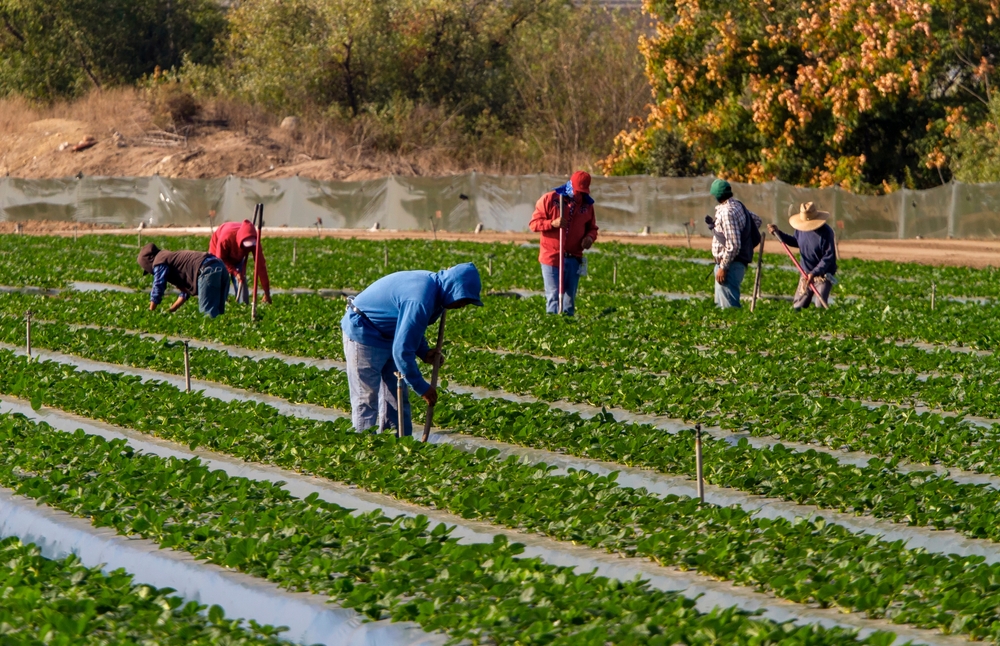
Immigration is an asset, not a liability, for investors and the economy. In cities across the US, ICE agents, short for Immigration and Customs Enforcement, are seizing people from their vehicles, homes and workplaces. Many of those detained are American citizens or immigrants with legal status. More than 70% of the nearly 60,000 people held in ICE detention last month had no criminal conviction. Many of the others have committed only minor offenses, such as traffic violations. The Trump administration’s crackdown is not only dubious on moral and legal grounds, it is also bad for the US economy and for investors’ portfolios, Zevin Asset Management’s Marcela Pinilla and Philip Hergel write in a guest post on ImpactAlpha.
The National Foundation for American Policy this month reported that the Trump administration’s war on legal and illegal immigration would result in 6.8 million fewer US workers by 2028 and 15.7 million fewer by 2035, reduce GDP by $1.9 trillion in the near term and $12.1 trillion over the next decade, and increase federal debt by $1.4 trillion. As fiduciaries, “We have a duty to address the long-term social and economic risks and impacts of immigration policies on the labor force employed by the companies we invest in,” write Pinilla and Hergel. Deportations and raids, they say “threaten the well-being of immigrant communities as well as the economic and social systems on which our portfolio companies—and our economy—depend.”
- Demographic dividend. Immigrants, both documented and undocumented, pay significant taxes and serve to mitigate long-term risks, including aging populations and declining birth rates. Halting immigration would “shrink the labor force, erode economic output, and increase fiscal strain on public programs,” say Pinilla and Hergel. Social Security relies on the contributions of an expanding population of younger workers. Investors like Unshackled Ventures and One Way Ventures have found “alpha” in immigration, building their portfolios around immigrant-founded startups (see, “Latino immigrants are an increasing share of new U.S. entrepreneurs”). Pinilla and Hergel say, “We see immigration as a powerful driver of economic innovation and long-term value creation.”
- Keep reading, “Immigration is an asset, not a liability, for investors and the economy,” by Zevin Asset Management’s Marcela Pinilla and Philip Hergel.
Dealflow: Climate Tech
Transition VC leads $5 million round in Hydgen’s green hydrogen production. Indian clean energy investor Transition VC led the $5 million pre-Series A financing of Hydgen, a green hydrogen startup that was spun out of National University of Singapore. Cloudberry Pioneer Investments, Singapore-based deeptech investor Moringa Ventures and family offices from India and Singapore joined the round. Hydgen’s low-cost electrolyzer generates green hydrogen on site for food processing, mobility, pharmaceuticals and fertilizer production, reducing transport and sourcing costs. “Hydgen’s approach to decentralized hydrogen production can reshape the global supply chain by making hydrogen generation efficient, resilient and accessible at the point of use,” said Moringa Ventures’ Khoong Hock Yun.
- Hydrogen demand. Global hydrogen demand increased by 2% in 2024 to reach 100 million tons. Hydrogen is an industrial staple, used from fertilizer production to chemicals. It also can be used for renewable energy storage and transportation of fuel. Production of green hydrogen grew by 10% in 2024, although it accounts for less than 1% of global production. The financing follows Hydgen’s $1.5 million seed round in February led by Cloudberry with participation from the National University of Singapore, Thai VC TK & Partners and angel investors. The fresh funding will support the automation of Hydgen’s production plant in India and its expansion into Japan, Europe and the Middle East.
- Gift this post.
Concordia University invests $25 million in Realize Capital as part of shift to sustainable investments. Montreal-based Concordia University has committed $25 million to Realize Capital’s inaugural fund, one of the largest investments a Canadian university has made in a private impact vehicle. The university’s investment is part of a third close for Realize. The fund-of-funds has raised $85 million in private capital to pair with $135 million in government seed funding from Canada’s Social Finance Fund. The federal initiative, launched in 2023, is designed to unlock private capital for the country’s emerging impact investing ecosystem. Realize, a subsidiary of Toronto-based asset manager Rally Assets, is one of three managers delivering the Social Finance Fund’s mandate (see, “Canada’s Social Finance Fund aims to build an investment ecosystem with ‘wholesale’ impact”). “We’re getting institutional capital that would certainly have been unlikely to invest in many of the underlying managers that we invest in,” Realize’s Lars Boggild told ImpactAlpha. The intent, he said, is to create a “turnkey, diversified platform that addresses much of the Canadian impact investing market in the private context.”
- Endowment shift. The commitment is part of Concordia’s broader plan to move its entire $500 million endowment into sustainable investments, a transition it completed in April. The university joins a growing cohort of Canadian institutions realigning their portfolios. The University of Guelph just completed a five-year fossil fuel divestment program, while McGill University has pledged to eliminate all direct holdings in Carbon Underground 200 companies by 2025.
- More.
Dealflow overflow. Investment news crossing our desks:
- Portugal’s SeaForester, which restores seaweed forests and other marine vegetation, secured $1.9 million from the World Wide Fund for Nature and the Schmidt Family Foundation via the Schmidt Marine Technology Partners. The funding will support the further rollout of its restoration technologies and market expansion. (We Are Aquaculture)
- Japanese vehicle manufacturer Honda Motor acquired India’s OMC Power which provides solar solutions for commercial users, utilities and rural mini-grids, to jointly develop clean energy storage batteries. (BioEnergy Times)
- CRDB Bank Burundi received a $25 million loan from Finnfund and the Austrian development bank OeEB to lend to 4,000 micro and small businesses. Nearly a third of the financing is earmarked for women-led businesses. (Ecofin Agency)
- The Arab Fund for Economic and Social Development issued a $25 million subordinated loan to the Capital Bank of Jordan, to lend to small businesses and climate-related projects. The financing is part of a larger $135 million package arranged by the European Bank for Reconstruction and Development, alongside the ILX Fund, the OPEC Fund for International Development, the Green for Growth Fund, and the SANAD Fund for MSME. (MENA Startup Digest)
Signals: Climate Finance
Putting an Indigenous lens on energy-transition financing. More than half of the minerals needed for the green global economic transition are found on or near Indigenous lands. “Indigenous inclusion is not a matter of ethics or compliance — it’s a strategic imperative for investors seeking to strengthen due diligence, performance and impact,” write US SIF’s Maria Lettini and First Peoples Worldwide’s Rebecca Adamson in a guide for investors. Mining accounts for the greatest share of all environmental conflicts involving Indigenous peoples worldwide. The report cites a study from Harvard’s Kennedy School of Government that found that conflicts with Indigenous communities can cost large-scale mining operations up to $30 million per week. “Companies need Indigenous peoples to manage their risk,” Adamson tells ImpactAlpha.
- Wealth sharing. The report contrasts cases of mining companies that have excluded Indigenous communities from their business plans, and the consequential risks, with companies that have designed projects collaboratively, including through ownership and wealth-sharing models. Lettini and Adamson write that Indigenous peoples “sit at the intersection of nearly every capital market industry. Economic growth across many sectors depends on Indigenous land stewardship, traditional knowledge, and equitable collaboration.”
- Business case. CIBC Global Asset Management has designed their responsible investment frameworks to align with the UN Declaration on the Rights of Indigenous Peoples and other international standards. At the portfolio level, investors can screen holdings with ties to Indigenous territories using tools like the Rebecca Adamson Indigenous Risk Index, a forthcoming data repository by First Peoples Worldwide and the Wharton School of Business. At the project level, investors’ due diligence should include verification of “free, prior and informed consent,” an established principle affirming Indigenous peoples’ right to give or withhold consent for projects that may affect their lands, resources and livelihoods.
- Keep reading, “Financing the energy transition with an Indigenous lens,” by Erik Stein on ImpactAlpha.
Agents of Impact: Follow the Talent
Enterprise Community Partners is recruiting an impact and evaluation program manager in Columbia, Md… Ownership Works seeks a partnerships senior associate and a director of client advisory services in New York… Also in New York, Malk Partners is looking for an ESG advisory associate.
Morgan Stanley is hiring a vice president of employee investing programs… Gates Foundation has an opening for a senior officer for diversity, equity and inclusion and Seattle… The Massachusetts Clean Energy Center is on the hunt for a director of economic growth and partnerships in Boston… Vanguard seeks an investment stewardship voting and engagement analyst.
VentureWell is recruiting for a short-term program officer… CareQuest Innovation Partners is hiring an impact investing director… Systemiq has an opening for a nature and food strategy associate in Amsterdam… Energy Impact Partners is looking for a Europe-focused investor in Oslo… 2X Global seeks a program director.
👉 View (or post) impact investing jobs on ImpactAlpha’s Career Hub.
- Add team members to your subscription. Save with substantial group discounts. Start here.
- Lead the conversation. Sponsor a beat, newsletters or calls with ImpactAlpha. Get in touch.