
Greetings Agents of Impact!
In today’s Brief:
- Previewing the 2026 proxy voting season
- Loans and grants for North Carolina hemp producers
- Upstart Co-Lab backs overlooked authors
- RJ McGrail on aligning capital with people and place
Featured: Proxy Preview
Dear Shareholders: Your votes and your voice are needed more than ever. Just when major companies appeared to be taking shareholders’ concerns more seriously, the Securities and Exchange Commission is giving corporations license to blow them off. The total number of shareholder resolutions filed ahead of this season’s annual general meetings has fallen by nearly half from last year, and a number have been withdrawn by shareholder activists, often after private meetings and other engagement with executives. Companies are trying to avoid messy debates and public votes on shareholder resolutions over matters ranging from climate action, to political contributions, to workplace conditions, to technology risks. In November, the SEC announced that it would no longer review shareholder resolutions that companies exclude from the voting process, giving companies a freer hand and reducing shareholder activists’ leverage. “The fundamental tenet of capitalism has not changed. When you own a share of a company, you own a piece of that enterprise,” As You Sow’s Andy Behar writes in a letter to shareholders on ImpactAlpha. “And with that ownership comes a basic property right – the right to ask questions about material risks and opportunities that affect long-term value.”
- Protecting the vote. The SEC decision, made after most proposals for the 2026 proxy season had been filed, triggered lawsuits by investors and shareholder activists. As You Sow and Interfaith Center on Corporate Responsibility last month challenged the SEC’s move in court, arguing that it violated the Administrative Procedure Act governing how federal agencies establish regulations. Investors also directly sued companies, including AT&T, Axon, Chubb, BJ’s Wholesale and PepsiCo, to force consideration of their proposals. Nathan Cummings Foundation recently settled with Axon over its exclusion of a proposal for greater disclosure of political spending; the company agreed to disclose its policies and governance framework for electoral spending and political contributions. “We took this step reluctantly,” wrote the foundation’s Laura Campos. “It felt like our only option in the wake of a recent departure from decades of standard practice.”
- Director elections. Obstacles to shareholder resolutions are shifting the action from resolutions to elections of corporate directors, which unlike advisory resolutions, influence elections of corporate boards of directors. The proxy advisory firm Glass Lewis recommended shareholders vote against the election of BP board chair Albert Manifold after the company excluded a shareholder proposal seeking BP’s strategy for the long-term decline in oil and gas demand. CalPERS public pension fund this month tightened its voting guidelines to take a tougher stance against directors who abuse the SEC rules to exclude shareholder proposals. Majority Action has prepared a roster of directors at oil and gas companies that are expanding fossil fuel use to meet data-center demand. Shareholder advocates argue that free debate surfaces risks and increases accountability, raising shareholder value.
- Political influence. The SEC rule changes “have set the stage for more private negotiations and fewer public filings,” As You Sow predicts in its annual “Proxy Preview,” produced with Proxy Impact. The report tracks roughly 180 shareholder proposals related to companies’ environmental, social and governance practices. The political atmosphere in the US has made corporate political influence the biggest category, with investor proposals relating to lobbying expenditures, spending misalignments, and lobbying alignment to climate commitments and corporate values. Nathan Cummings Foundation filed additional political influence proposals at Lululemon and Cheniere Energy. Trillium Asset Management asked Elevance Health to assess the impact of banning partisan political spending.
- Defining moment. Proxy voters will also consider AI and Big Tech, biodiversity loss and “forever” chemicals, along with the impacts of systemic injustice. “Even as these risks grow clearer, the mechanisms for shareholder dialogue are being constrained,” Behar writes in his letter. “What could go wrong?” Behar says he is confident that shareholders will continue to engage companies to foster transparency, resiliency and value creation. “We are navigating a period of turbulence as the economy transitions – from a Milton Friedman model of extraction to a Joseph Stiglitz vision of a regenerative, inclusive system,” he writes. “These shifts are never smooth. Resistance is inevitable.”
- Keep reading, “Dear Shareholders: Your votes and your voice are needed more than ever,” by As You Sow’s Andrew Behar. As You Sow and Proxy Impact are presenting “Proxy Preview” today at 10am PT / 1pm ET.
Dealflow: Catalytic Capital
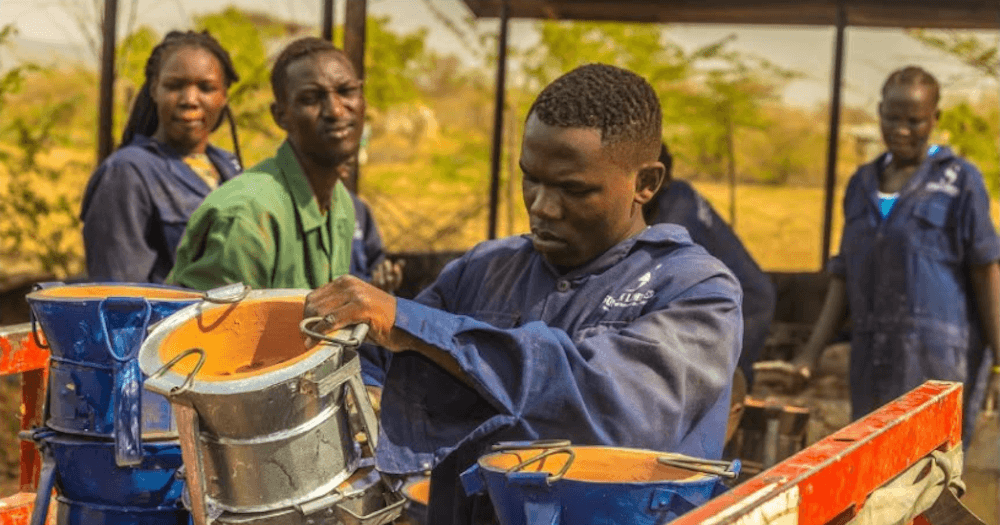
Fibers Fund and Invest Appalachia provide loans and grants for hemp production in North Carolina. Washington, DC-based Fibers Fund provided a low-interest, three-year loan to Renaissance Fiber, which uses an environmentally friendly process to convert raw hemp fiber into textile fiber. Invest Appalachia provided a recoverable grant from its catalytic capital pool. Renaissance Fiber, in turn, leveraged the investments to qualify for working capital from the US Small Business Administration. The new injection of capital will enable the North Carolina company to buy raw hemp fiber from growers and ramp up its production to meet growing demand from local mills and other buyers. “By working directly with our regional farmers and processing fiber right here in North Carolina, we’re keeping value in the community at every step of the chain,” said Renaissance Fiber’s Daniel Yoannes. “That means real, lasting impact for the people of this region.”
- Hemp economy. Hemp fiber, stripped from the outer layer of a hemp plant’s stalk, outperforms cotton and synthetic polyester not just on sustainability, but also on durability, breathability and strength. The company’s process uses less water and energy than other methods of fiber processing and production. “It’s important to us that the revitalization of this traditional fiber is a huge opportunity to support community revitalization and build local wealth,” Fibers Fund’s Sarah Kelley told ImpactAlpha. Fibers Fund has also backed Indigenous-led hemp producer Winona’s Hemp and Heritage Farm on the White Earth Reservation in Minnesota.
- Share this post.
Upstart Co-Lab backs Bindery Books to bring overlooked authors to bigger audiences. Tastemakers, bloggers, reviewers and other influencers are underused channels for promoting books. San Francisco-based Bindery Books is looking to help them monetize their online audiences to disrupt traditional book publishing and get overlooked authors in front of larger audiences. “Discovering and empowering new, diverse voices and serving highly engaged, passionate online reader communities is an enormous business opportunity that also addresses many inequities and inefficiencies in the current publishing landscape,” said Ward Wolff of Upstart Co-Lab, which invested in Bindery Books (see, “Upstart Co-Lab’s pipeline of creative economy deals is now an investable impact strategy”). Upstart Co-Lab says it is Bindery’s first impact investor. Markus Dohle, former CEO of Penguin Random House, is also an investor.
- Creative economy. Bindery Books’ mission is to create a publishing industry that is more creative, independent and equitable. It allows book influencers to build online reader communities and become acquiring editors and book publishers. Bindery offers advances on book sales and handles production and distribution. Authors receive half of net royalties, the online creators who acquire their books receive 25%, and Bindery retains the rest. Hundreds of thousands of readers currently are buying books such as Deena ElGenaidi’s novel, “Dust Settles North,” which follows two young Egyptian-American siblings after their mother’s passing. Bindery’s Matt Kaye says the company wants to help “overlooked and marginalized authors break through on the power of their stories, not the size of their platform.”
- Share this post.
Dealflow overflow. Investment news crossing our desks:
- Wallenberg Investments, Temasek and IMAS backed a €1.4 billion ($1.7 billion) financing round for Sweden-based Stegra for construction of its green steel plant in Boden. Just Climate also participated. (Stegra)
- Michigan-based Slate Auto secured $650 million for a just-the-basics electric pickup truck it plans to launch at a price of around $25,000 – cheaper than most other models on the market in the US. (TechCrunch)
- Clean Food Group in the UK secured £4.5 million ($6.1 million) from Clean Growth Fund, New Agrarian and other investors, as well as a £700,000 grant from Innovate UK, to make sustainable, fermented palm oil in a lab. (Clean Food Group)
Impact Voices: Power in Place
Rewiring community investment to align capital with people and places. In the US capital, DC Water financed green stormwater infrastructure through an environmental impact bond that tied the bond’s returns to a reduction in flooding and sewer overflows. The structure links investor outcomes to improvements in land and neighborhood conditions, “turning land‑based value creation into a predictable funding stream for community resilience,” Lincoln Land Institute’s RJ McGrail explains in a guest post. In Denver, public investment in the redevelopment of Union Station was paired with development agreements to capture a portion of rising property values around the station. Those revenues helped fund the transit hub and surrounding infrastructure, “ensuring that growth spurred by public investment recycled back into the district rather than flowing exclusively to private landowners,” says McGrail. Such land‑based finance allows communities to capture a share of investment value and channels it back into local priorities.
- Playbook for shared prosperity. The examples highlight what McGrail calls a “multi-capital” approach to local investments that allows communities “to design for deals that fit local priorities, draw in co-investors, and endure political change because communities have a real stake in success.” Regions written off as “too small” or “too risky” often hold underpriced assets, strong anchor institutions and residents deeply committed to success, says McGrail. “With the right structures and partners, these markets can deliver resilient, long-term returns while advancing broadly shared prosperity.” The playbook: Building investment practices around place, advancing multi-capital approaches, fostering innovative finance structures, and strengthening connections between asset holders and communities. “We need a community investment system rooted not just in dollars and deals, but in people and places.”
- Keep reading, “Rewiring community investment to align capital with people and places,” by Lincoln Land Institute’s RJ McGrail.
Agents of Impact: Follow the Talent
Jory Cohen will step down as Inspirit Foundation’s director of finance and impact investment to launch Silk Pin Capital, an impact investing consulting firm… Joe Meginnes, previously with Calvert Impact, joins The Nature Conservancy’s impact legal team as a senior attorney… Claude Grunitzky steps down as CEO and managing partner of The Equity Alliance. Greg Parsons will take on the CEO role… Upaya Social Ventures has an opening for a strategic giving lead in Seattle… Boston Impact Initiative is recruiting an impact investing associate.
👉 View (or post) impact investing jobs on ImpactAlpha’s Career Hub.
Thank you for your impact!
– April 16, 2026