
Greetings Agents of Impact!
In today’s Brief:
- Diversified – and rated – carbon credit portfolios
- Mining battery materials with plants
- Asia Ocean Fund unites Norway and Singapore
- Foundations ‘unite in advance’ of political attacks
Featured: Climate Finance
Rubicon’s ‘all of the above’ plan to diversify and rate the market for carbon credits. The voluntary carbon market was meant to be a game-changer — a $200 billion engine for private climate investment paid for by companies looking to offset their emissions. That peak of inflated expectations has given way to a trough of disillusionment. For three consecutive years, transaction volumes and market values have both plummeted – stories of phantom forests, inflated emission reductions and paper projects spooked the market. Tom Montag, the Wall Street heavyweight who once ran Bank of America’s trading operations, believes he has a way to march the voluntary carbon markets up the slope of enlightenment (to conjure Gartner’s famous hype cycle one more time). His plan: Bring bond market practices to the Wild West of carbon trading. Montag leads Rubicon Carbon, the carbon credit platform launched with a $300 million commitment from TPG Rise Climate. Rubicon sources credits from projects around the world and bundles them into portfolios, called Rubicon Carbon Tonnes, for buyers seeking high quality offsets (for background see, “Corporate buyers nudge voluntary carbon markets toward higher-quality projects”).
- Time value of carbon. Rubicon Carbon Tonnes include carbon removals, nature-based avoidance, and industrial avoidance credits. That diversification, along with a ratings schema, could address growing skepticism around avoidance credits, which make up the majority of available credits. “We believe in an all-of-the-above approach where high-quality credits are available across all categories, including reduction, avoidance, and removal,” Montag told ImpactAlpha. Just as money today is worth more than money tomorrow, Montag argues that offsetting emissions today delivers more environmental value than waiting decades for perfect solutions. “If I ask, ‘Do you want $1 today or $1 in 20 years?’ you’d take it today. Investing in carbon credits today is more valuable than waiting until 2050. It compounds over time.”
- Proof points. Rubicon made its debut with one of the largest single-buyer transactions ever, facilitating Microsoft’s purchase in May of 18 million tons of carbon removal credits generated by planting and reestablishing forests and vegetation. More recently, Rubicon brokered a 100,000-ton sale of nature-based credits to ByteDance, the parent company of TikTok — suggesting that corporate buyers will engage the voluntary carbon market when they trust the quality of the credits and understand the risks.
- Wall Street playbook. Montag rose through the ranks at Goldman Sachs before taking the helm of Bank of America’s Global Banking & Markets division post-financial crisis. He’s taking Rubicon’s diversification one step further with the company’s newest product, the Rubicon Rated Tonne, one of the industry’s first rated carbon portfolios. The “AAport” rating from BeZero Carbon conveys “very high” confidence that each credit will deliver one ton of actual CO₂ avoidance or removal. “In the financial world, many people say, ‘I’ll only buy an AA bond or an AAA bond,'” Montag said in an interview. “If we can get buyers more comfortable with that terminology when evaluating carbon credits, we can help develop a real financial market where more people are investing.”
- Keep reading, “Rubicon’s ‘all of the above’ plan to diversify and rate the market for carbon credits,” by Erik Stein on ImpactAlpha.
Dealflow: Climate Tech
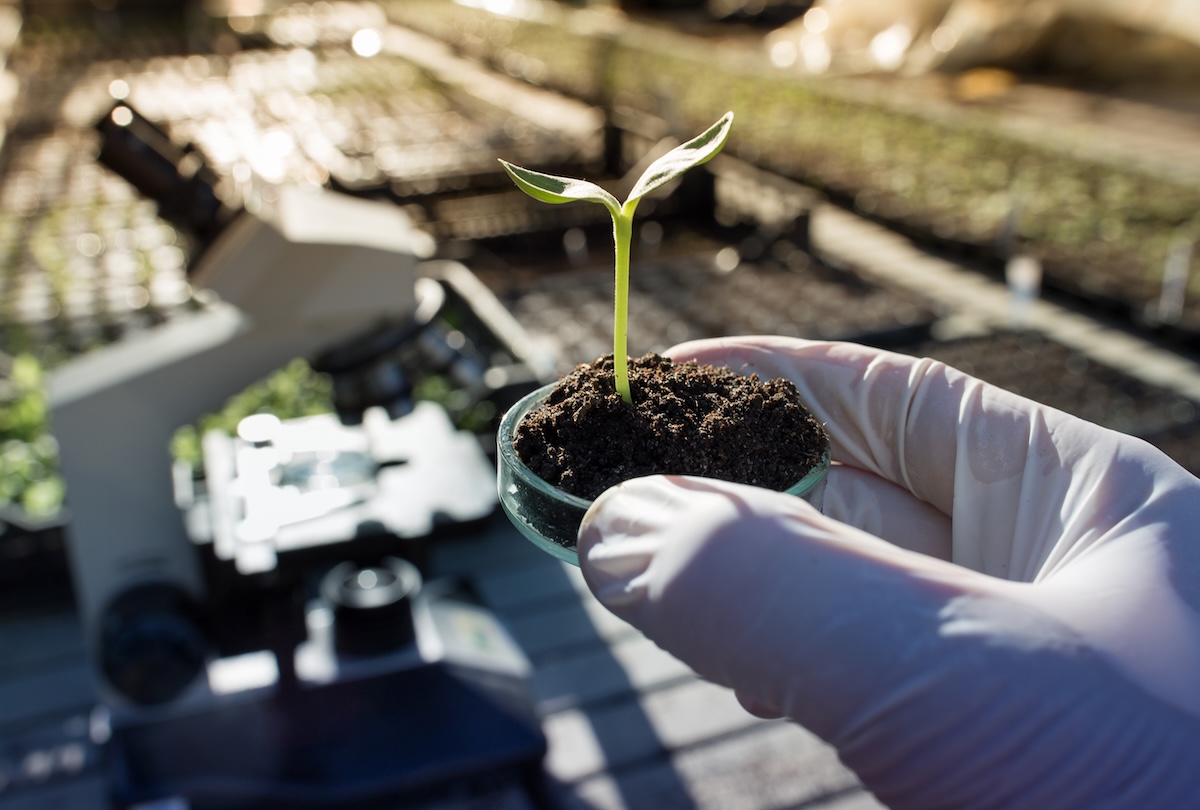
Genomines raises $45 million to extract critical metals with bioengineered plants. Amid a push for more sustainable mining, a Paris-based startup is extracting nickel, cobalt and other critical metals from plants. Genomines’ phytomining process deploys genetically-modified plants to absorb into their tissues metals and contaminants from soil. Genomines says the “hyperaccumulator” plants yield battery-grade metals faster, cheaper and more sustainably than traditional extraction. “Genomines unlocks an entirely new set of resources for battery materials, starting with nickel,” said Michael Kearney of Engine Ventures, which co-led Genomines’ latest Series A round with Forbion BioEconomy.
- Green infrastructure. Genomines has proof of concept projects underway with automakers including Jaguar Land Rover and Hyundai Motor Group, which invested in the Series A round. Other investors include DeepTech & Climate Fonds, Teampact Ventures, Prospect Innovation, Raise Phiture and AlphaTech Investment Group, and existing backers Elemental Impact, Lowercarbon Capital and Entrepreneurs First. The company has raised $62 million to date. The new capital will go towards field demonstrations to attract refiners, battery manufacturers and commodity traders. Genomines says it has already secured large commercial offtake contracts for its metals.
- Share this post.
VoLo Earth raises $135 million for its second climate tech fund. Venture capital fundraising is at decade lows. Against that backdrop, VoLo Earth Ventures clinched its second fund at $135 million, a 50% increase over its inaugural fund in 2021. The fund targets climate tech companies that can both reduce emissions and cut costs for customers. Its predecessor has already delivered two exits above book value in 2025. The Snowmass Village, Colo.-based firm secured investments from Voloridge Investment Management, Carbon Equity, Morgan Stanley Graystone, Cathay InnoSquare, and WovenEarth Ventures, among others. The firm’s first fund invested in “better products and services that saved money,” VoLo Earth’s Kareem Dabbagh told ImpactAlpha “Fund II is about doubling-down on those fundamentals, in an even more challenging time.”
- Operator mindset. VoLo focuses on what Dabbagh calls the “backbone” sectors of the energy transition: grids, materials, and industrial systems. VoLo has begun deploying capital from Fund II, with investments in XGS Energy, a next-generation geothermal company, Cambium Carbon’s cost-effective mass timber, and, most recently, Reframe Systems, which is applying AI and robotics to the housing crisis.
- More.
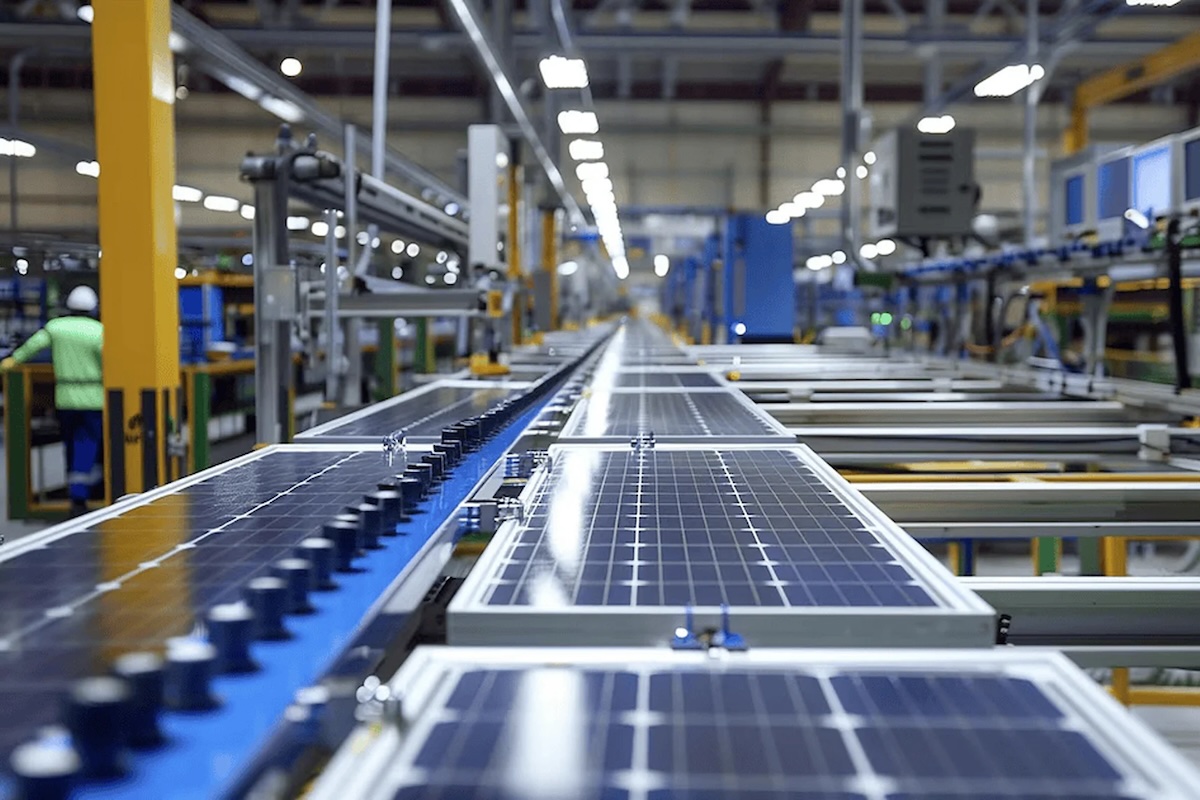
Feld.Energy raises $12 million for agricultural solar installations. Solar panels are sprouting on farmland. Agricultural photovoltaic systems generate energy and do double-duty providing shade to protect crops and livestock from heat and other extreme weather elements. Feld.Energy, an agrivoltaic startup in Germany, has installed more than 120 megawatts on more than 200 farms. Under Feld.Energy’s model, farmers lease their land to the company for 20 years and receive up to €3,000 ($3,500) per hectare (2.5 acres) annually.
- Dual use. The company raised a seed round exceeding €10 million ($11.6 million) from German early-stage tech investor HV Capital, which led the company’s €1.7 million pre-seed round last year. Future Energy Ventures, German impact and climate fund AENU and Angel Invest joined in. “Agri-PV” addresses “the growing land competition for food and energy production, offering win-win solutions for farmers through diversified income and enhanced crop resilience, all while driving the green energy transition forward,” said Jan Palasinski of Future Energy Ventures.
- Share this story.
Octave Capital and Katapult launch $75 million ocean fund. Octave Capital, Tsao Pao Chee’s in-house impact fund, and Norway-based Katapult Ocean today stood up the $75 million Asia Ocean Fund, one of the region’s largest “blue” funds. Asia’s ocean sector produces most of the world’s seafood, manages more than two-thirds of global maritime trade, and supports millions of livelihoods. The ocean “has an abundance of resources, the fruits for humanity, if we can only make it thrive and learn how to harvest in a positive way,” Katapult’s Tharald Nustad said at Impact Week in Singapore this week.
- Oslo to Singapore. Tsao Pao Chee is the maritime company of Singapore’s impact-oriented Tsao family (see, “From Singapore, Tsao Family Office expands the LP pool for impact strategies in Africa”). The Asia Ocean Fund will make 20 investments over the next five years in startups with solutions to maritime decarbonization, ocean renewable energy, green shipping infrastructure and other ocean themes.
- Gift this article.
Dealflow overflow. Investment news crossing our desks:
- XL Batteries raised $7.5 million in investment from family office Merrin Investors for its long duration energy storage. XL simplifies the supply chain by using low-cost electrolytes instead of scarce, expensive vanadium for its flow batteries. (XL Batteries)
- Dria Ventures raised $8 million from Spring Point Partners, General Catalyst, Next Legacy Partners and other limited partners to back early stage founders focused on healthcare and Main Street productivity. (Dria Ventures)
- responsAbility extended a line of credit to India’s Qul Fruitwall for helping smallholder farmers in the country’s Himalayan region transition to sustainable, climate-smart agriculture. (responsAbility)
Signals: LP = Leadership Potential
Foundation leaders ‘unite in advance’ of expected attacks on spending and speaking. Philanthropic foundations appear to have taken to heart the adage often attributed to Ben Franklin: “We must all hang together, or assuredly we shall all hang separately.” An open letter posted Wednesday that was signed by at least 135 foundations “reject(s) attempts to exploit political violence to mischaracterize our good work or restrict our fundamental freedoms, like freedom of speech and the freedom to give.” Trump administration officials in recent days have singled out George Soros’ Open Society Foundations and the Ford Foundation as examples of supposedly left-leaning institutions that will be coming under attack in the aftermath of the assassination of Charlie Kirk. The foundation letter condemned “heinous acts” of political violence “as affronts to the fundamental principles and health of our nation.”
- Solidarity campaign. The apparently impending attack on philanthropic foundations is not unexpected. This spring, as law firms and universities were targeted for disruption and picked off one by one, foundations began to organize a collective response. In April, the McKnight Foundation’s Tonya Allen, John Palfrey of the MacArthur Foundation and Deepak Bhargava, president of the Freedom Together Foundation, launched Unite in Advance with a public solidarity campaign in support of philanthropy’s freedom to give. That statement now includes 723 charitable organizations from across the US. “We in the philanthropic community must not wait like sitting ducks,” the trio wrote at the time.
- Freedom to invest. The attacks – or the fear of them – have caused some foundations to pull in their horns, pause their funding and scrub their website of references to topics such as diversity, equity and inclusion. Others have leaned in, instead, and even increased their grants and investments. “When you’re in a crisis, that’s a time when you should be bolder,” Allen told ImpactAlpha in July. “This is not a time when you should shrink.” McKnight has raised its grant budget and increased its allocation to program-related investments to $100 million. “I believe we have the freedom to give, to invest, and we should have the freedom to be able to speak on the things that we value. If that requires group or collective action to help other people feel comfortable in that space, then we want to create that for them.”
- Keep reading, “Foundation leaders ‘unite in advance’ of expected attacks on spending and speaking,” by David Bank on ImpactAlpha. (Disclosure: The Ford Foundation is an investor in ImpactAlpha. Through the Catalytic Capital Consortium, the MacArthur Foundation is a sponsor of ImpactAlpha’s coverage of catalytic capital. Several other signatories of the letter are past or present sponsors of ImpactAlpha.)
Agents of Impact: Follow the Talent
Ben & Jerry’s co-founder Jerry Greenfield is stepping away from the brand after 47 years, his co-founder Ben Cohen shared in a post on X. Greenfield cited a fallout with Unilever, the ice cream company’s owner, over its social activism… Blueprint Capital Advisors appoints Erica Madrid, former head of DEI and client engagement at Morgan Stanley, to lead the firm’s Power100 initiative… Bracewell adds three new partners to the firm’s energy finance and infrastructure division: Jeeseon Ahn, Jared Joyce-Schleimer and Jason Lewis.
The California Community Foundation welcomes Sax Agency’s Tamara Keller, Malcolm Johnson of Langdon Park Capital and Primestor Development’s Arturo Sneider… Aligned Climate Capital adds Erin Grenier, previously with North American Renewables, as construction project manager… Madison Freeman, former senior advisor to John Kerry, the Biden administration’s climate envoy, joins Heron Power as senior policy and business development manager… Kiva is hiring a director of impact philanthropy… Diana Tremblay steps down as chief program officer of ICA Fund.
Energy Impact Partners is looking for an associate vice president of research and innovation in Atlanta… RF Catalytic Capital is recruiting a program manager in Washington, DC… Mercy Corps seeks a San Francisco-based associate VP of high-impact philanthropy… JPMorgan Chase has an opening for a clean energy and sustainable investing-focused research associate… CareQuest Innovation Partners is hiring an impact investing director… Nationwide is on the hunt for a renewable energy investment associate.
👉 View (or post) impact investing jobs on ImpactAlpha’s Career Hub.
Thank you for your impact!
– Sept. 18, 2025