
Greetings Agents of Impact!
In today’s Brief:
- Africa’s impact ecosystem looks for a fresh start at Mastercard Foundation
- Glenmede’s outlook for sustainable investing
- Early stage financing in Central America
- Industrial carbon removal
Featured: Pathways to Growth
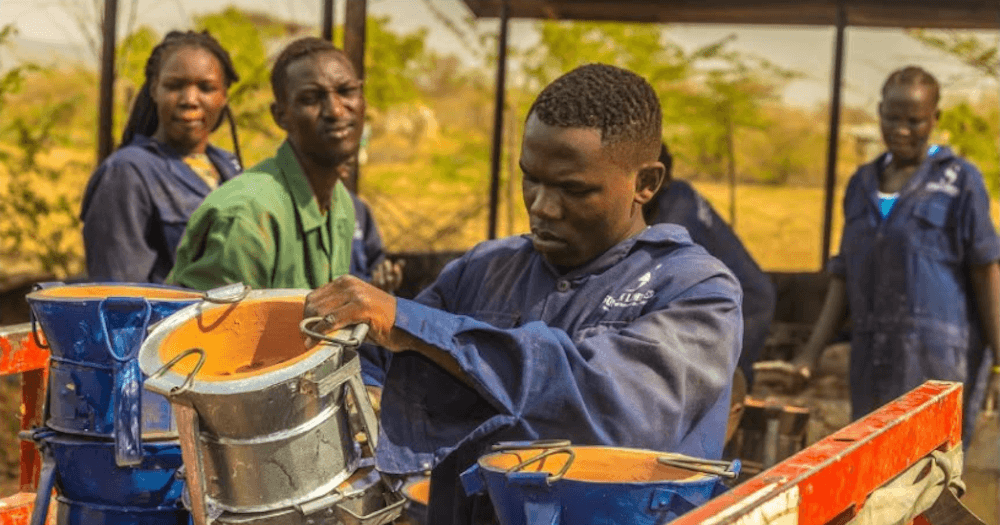
Challenge for new CEO of Mastercard Foundation: Restore trust and clarify strategy in Africa. The difficulty of working with the Mastercard Foundation has for years been a poorly kept secret in Africa. The Toronto-based foundation, with approximately $55 billion in assets, is one of the largest philanthropies in the world, and one of few of its scale working primarily in Africa. “African operators consistently describe long decision cycles, repeated consultations with different MCF teams, and guidance that changes depending on whom they speak to,” InSight54’s Karim Mohamed, a Nairobi-based development finance strategist and advisor, writes in a guest post. He cites founder surveys, like those by Sunlight Reviews, that rank MCF near the bottom of recipients’ ratings of funders. “MCF has a tendency to ‘waste’ your time as I’ve seen happen multiple times,” one reviewer shared. New CEO Sewit Ahderom took the helm of the foundation in January, succeeding Reeta Roy, who had led the institution for 18 years. Three months in, Mohamed says, participants in Africa’s growth story are hoping the foundation’s new CEO “will usher in increased transparency, efficiency and catalytic philanthropy for the institution.”
- Mission creep. The foundation was established in 2006, in conjunction with Mastercard Inc.’s initial public offering, as a Canada-based philanthropy that operates separately from the payments giant (view Mastercard Foundation’s profile on ImpactAlpha Edge). When the foundation began its work in Africa, it focused on a single theme: expanding education and economic opportunity for young Africans. Under Roy’s direction, MCF’s strategic footprint grew to include education reform, financial inclusion, climate change, and country-specific plans that now stretch across 29 of the continent’s 54 countries. “The result is a strategy that is wide but not sharply anchored,” Mohamed argues. “The challenge for the foundation, and its new leadership, is to refocus attention on a few problems that it can truly help solve, and to realign its initiatives with clarity around those goals.” The foundation distributes about $2.5 billion each year.
- Foundation response. “We always try to get the balance right between the diligence that responsible stewardship of philanthropic capital requires and the speed and clarity that our partners, often lean and ambitious organizations, need from us. These are real operational challenges that we are always actively working to address,” Peter Materu, the foundation’s chief program officer, said in written responses to questions from ImpactAlpha. “Over the past year, we have taken concrete steps to streamline grant-making pathways, reduce the number of internal touch points partners must navigate. We do not think the answer is to abandon rigor – the responsible use of charitable resources demands it – but we recognize that rigor and agility are not opposites, and we have more work to do on that balance.”
- Big bets. Among the foundation’s large, high-profile commitments was a $106 million grant to 54 Collective, once one of Africa’s most active startup investors. The partnership collapsed into a legal battle, with the studio provisionally liquidated after allegedly diverting grant funds to for-profit affiliates. Staff was fired and over 40 portfolio startups were left without support overnight. MCF told ImpactAlpha that a liquidator has been appointed and that it is not able to share further details because of the continuing litigation.
- Founder experience. Mohamed says Ahderom, the founder of climate tech venture Gro Intelligence, has walked in the shoes of many MCF grantees. “She’s done the hard work and faced the pressures of building an impactful African startup from scratch,” he writes. That includes facing growth challenges and cash crunches. Gro Intelligence ultimately shut down and was mired in lawsuits related to employee wage claims, investor disputes and allegations of financial mismanagement. Ahderom’s tenure as co-founder and chief operating officer ended in February 2024, and she “was not party to or named in any of the legal disputes during or after the wind-down of the company,” Materu said. “MCF plays an important role in Africa’s development ecosystem,” writes Mohamed. His hope is that Ahderom “can identify what matters, and reestablish clarity and focus to that work with the honesty and discipline it deserves.”
- Keep reading, “Challenge for new CEO of Mastercard Foundation: Restore trust and clarify strategy in Africa,” by InSight54’s Karim Mohamed.
Sponsored by Glenmede
Three megatrends shaping sustainable investing now. Sustainable investing is evolving, from broad values-based frameworks to targeted thematic strategies driven by economic shifts. That requires a more precise lens, grounded in structural demand drivers, regulatory realities, and measurable long-term outcomes. Philadelphia-based wealth management firm Glenmede’s “2026 Sustainable Investing Outlook” highlights three megatrends that are converging to create meaningful opportunities for investors: health equity, the ownership economy, and energy infrastructure for the artificial intelligence economy. A common thread: “The need to deploy capital toward expanding access, capacity and durable growth in systems under structural strain,” Glenmede’s Mark Hayes writes with members of his sustainable investing team.
- Navigating uncertainty. The rapid growth of AI-driven data centers is transforming the US electricity market, creating regionally concentrated demand that is influencing power prices, grid investment needs, and infrastructure opportunities for investors. In healthcare, Glenmede points to demographic shifts and funding gaps in women’s health, care for aging populations, and mental health. And ownership models – from employee ownership, to shared real estate, to small business capital – are emerging as scalable pathways to broaden wealth creation and strengthen economic resilience amid growing wealth disparities. “Capturing these opportunities requires disciplined research, careful assessment of regional and regulatory dynamics, and thoughtful implementation,” the authors say. “When grounded in financial materiality and long-term demand drivers, thematic investing can provide a pragmatic framework for navigating uncertainty while positioning portfolios for the years ahead.”
- Read the whole post.
Dealflow: Impact in Latin America
Innogen Capital snags $2.5 million for early stage ventures in Central America. IDB Lab, the venture arm of the Inter-American Development Bank Group, invested $2.5 million in El Salvador-based Innogen Capital’s first Central America-focused fund, one of the few venture vehicles dedicated exclusively to the region. Innogen Delta Fund will back up to 25 early-stage companies in El Salvador, Guatemala and Honduras, with a focus on financial inclusion, healthcare and agriculture tech. At least one-quarter of the fund’s capital will go to women-led enterprises. The fund has raised $11 million to date, and the team has revised its target to $15 million from its initial $10 million. Innogen brought regional corporations such as Grupo Agrisal and Grupo Steiner into its LP mix. Each corporate LP holds voting rights on the fund’s investment committee for deals within its respective industry. The structure is designed to create clearer paths to exit, including potential acquisitions. “We can hack scalability in Central America by having [portfolio companies] jump into other countries alongside big corporations,” Innogen’s Christián Quiñónez told ImpactAlpha.
- Corporate partnership. The corporate partnership model is picking up steam among Latin American impact investors. Solfium, based in Mexico City, is leveraging a partnership with Coca-Cola to provide solar solutions to the soft drink giant’s small-business distributors. In Peru, Lululemon is supporting Cotton Nation, an organic cotton grower. “Many impact companies avoid talking to big corporations because they see them as evildoers,” said Felipe Fernández of CO_ Capital, a Mexico-based impact firm that manages funds, supports accelerators and seeks to mobilize family offices and corporates for impact investing. “We need to integrate them into this way of thinking.”
- More.
Sequestra lands €3 million to scale industrial carbon removal. Vienna-based Sequestra wants to decarbonize hard-to-abate industries like metal production by locking carbon emissions into industrial waste. The company raised €3 million ($3.5 million) in seed financing, led by Austria-based VSE Beteiligungs, a return investor. The fresh funding will help the company move from R&D into commercial pilots, Sequestra’s Roberto Lerche said. He added that the company is getting closer to “unleashing the carbon storage potential of large-scale, available, but underutilized mineral materials.” Sequestra’s roster of LPs includes Germany-based impact investor Carbon Drawdown Initiative, which backs carbon removal startups, and Climate Founders.
- Industrial waste. Steel, iron and cement production industries are some of the world’s top pollutants. Sequestra’s accelerated carbonation technology mimics the natural process of mineralization, in which carbon reacts with minerals to form stone. The process binds carbon dioxide to industrial waste like steel slag or incineration ashes to produce carbonates, which can be used for construction materials like bricks, tiles and road filler. The company says its technology is able to lock up to one- third of a ton of carbon dioxide per ton of residue, depending on the feedstock. In 2024, Switzerland-based Neustark, which also binds carbon dioxide into waste, raised $69 million from BlackRock and Temasek’s joint investment platform, Decarbonization Partners, along with Blume Equity, financial services group UBS, Siemens Financial Services and others.
- Gift this post.
Dealflow overflow. Investment news crossing our desks:
- Kenya-based Jacaranda Maternity, an affordable maternal healthcare provider, secured $600,000 from Swedfund to boost its neonatal intensive care capabilities. (Swedfund)
- Scotland-based Earth Blox secured £6 million ($8 million) to support banks and other financial institutions in understanding risks and underwriting nature-based projects. (Scottish Enterprise)
- Eternal.ag, based in Germany, €8 million ($9.2 million) for its tomato harvesting robots, which are designed for use in high-tech greenhouses. Such automation for food production is increasingly needed because “climate change, labor shortages and rising demand are pushing food production to its limits,” said Niklas Leske of Simon Capital, which invested in Eternal.ag. (Eternal.ag)
- View the latest impact allocations from LPs on ImpactAlpha Edge.
Agents of Impact: Follow the Talent
Don’t miss these upcoming ImpactAlpha partner events:
- April 27-29: Mission Investors Exchange, Atlanta.
- May 13-14: Total Impact Summit, Philadelphia. Save $600 with code IMPACTALPHA.
- May 19-21: ReFed Food Waste Solutions Summit, Charlotte, NC.
- May 26-29: GLI Forum Latam, Lima, Peru. Save 15% on a Horizonte Global ticket with code IMPACTALPHAGLI26.
- May 27-29: Katapult Future Fest, Amsterdam
- June 1-5: Sustainable Finance Initiative’s Impact Week, Hong Kong. Early bird pricing is now available. Apply for tickets.
University of Michigan’s William Davidson Institute appoints Gagandeep Bakshi, formerly with Intellecap, as senior director of impact investing… Elemental Impact is recruiting a chief financial officer… Farmland investor Dirt Capital is recruiting two summer associates… KKR is looking for an Asia-focused lead and a Europe-focused lead for its Human Capital Center… Alexander “Brave Journey” Sterling of Native-led Turtle Island Community Capital joins the team at BioFi Project to discuss community development financial institutions’ role in biocultural regeneration and thriving Indigenous communities, tomorrow, March 24.
👉 View (or post) impact investing jobs on ImpactAlpha’s Career Hub.
Thank you for your impact!
– March 23, 2026