
Greetings Agents of Impact!
In today’s Brief:
- Perspectives from Africa’s biggest mining convention
- Streamlining the business of healthcare in India
- Tech solutions for agriculture in Brazil
- Impact investing in the AI tech stack
Featured: Overheard at the African Mining Indaba
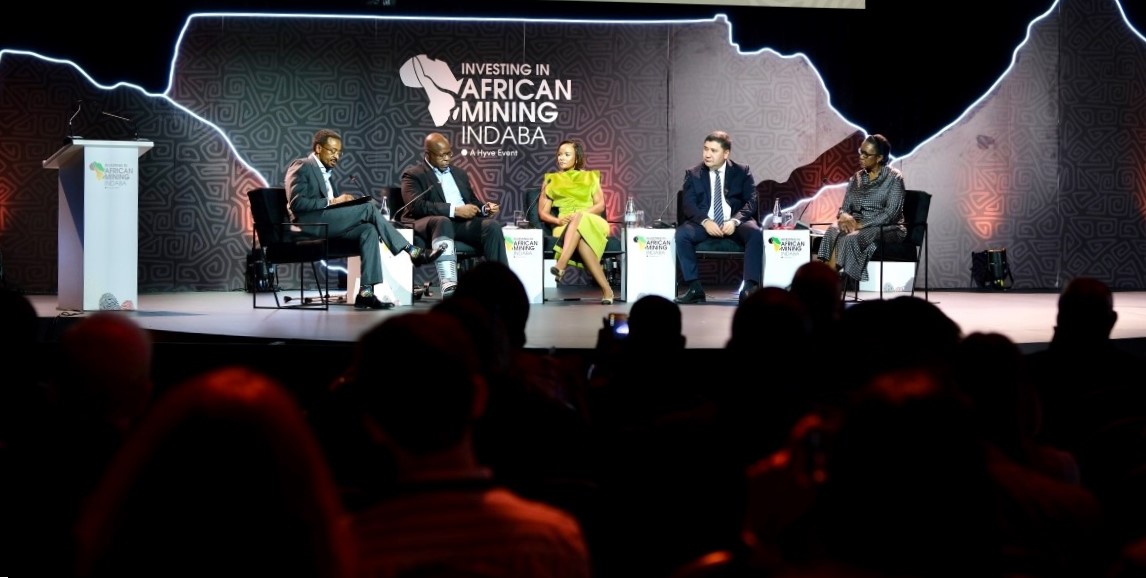
Demand for critical minerals creates new opportunities to put Africa first. Africa is at the center of a new geopolitical scramble for valuable mineral resources. The prize is no longer gold or diamonds. It’s copper, lithium and other minerals deemed critical for global defense, energy security and artificial intelligence. The imperative at this week’s Investing in African Mining Indaba, or convention, in Cape Town: Seize the moment to turn the extraction of the continent’s mineral wealth into a driver for sustainable economic development and shared prosperity. Nearly 11,000 mining executives, policymakers, academics and other stakeholders gathered for the largest annual convening of Africa’s mining sector under the theme, “stronger together.” “Africa must define what ‘critical’ means for us. Critical minerals are not those demanded by global supply chains, but fundamentally, they are those materials essential to fueling African economies,” Mining Indaba’s chairman Frans Baleni declared to kick off the four-day conference. “It demands foresight, sustained investment and above all, a political commitment to ensure Africa’s mineral wealth leads to a shared prosperity.”.
- Value-add. Last week’s agreement between US President Donald Trump and President Felix Tshisekedi of the Democratic Republic of the Congo served as a counter-example. The deal gives American companies access to the largely untapped minerals in eastern Congo, which are estimated to be worth up to $24 trillion. Local opponents have charged that the deal undermines national sovereignty and does little to stop the fighting with Rwanda-backed rebels who have seized major cities. Zambia is trying a different approach. The country, which has sizable copper and cobalt reserves, is making a push to formalize informal and small-scale mines to ensure that local companies benefit from the demand for Zambia’s minerals. It also requires that mining companies operating in the country spend at least 20% of their procurement budgets with local suppliers. “Africa should not continue exporting raw materials as the main business,” said Zambian President Hakainde Hichilema in a keynote address. “It is imperative that value addition become part of the agenda.”
- Financing sustainable mining. In a separate post on ImpactAlpha, Dalberg Advisors’ Shyam Sundaram and Jeff Berger warn that the rush to secure critical minerals is prioritizing speed and geopolitical control at the expense of human rights and environmental safety. “It is an old script: Dig fast, ask later,” say Sundaram and Berger. “The results are predictable and costly.” In mining, aggressive approaches often lead to community resistance, project delays and financial risk, as evidenced by recent examples in Chile, Sweden and the Philippines. For a resilient supply chain, Sundaram and Berger suggest investors tie their capital to verified social performance and find innovative ways to finance small-scale miners currently excluded from formal credit. Digital verification tools and blended-capital facilities can ensure that mineral extraction is ethical and efficient. “Working with communities creates resilience,” write Sundaram and Berger. “Working around them creates risk.” Read more.
- Keep reading, “Demand for critical minerals creates new opportunities to put Africa first,” by Jessica Pothering.
Dealflow: Investing in Health
Care.fi lands $8 million to help hospitals in India run better and faster. Care.fi provides software to help hospitals in India process insurance claims faster, optimize billing and manage electronic health records. The Gurgaon-based startup is riding the growth of India’s health insurance market by helping health businesses streamline their insurance claims and cashflow management. “Care.fi is not just solving today’s liquidity pain, it’s aiming to build the infrastructure for a more resilient, tech-enabled healthcare ecosystem across emerging markets,” said Rahil Rangwala of Accion Ventures, which participated in Care.fi’s $8 million funding round. The $5 million Series A equity portion was led by early-stage VC firm July Ventures and also included Peak XV Partners and Sadev Ventures. The debt portion came from Trifecta Capital and Vivriti Asset Management.
- Embedded finance. Last month, Care.fi acquired the billing and discharge automation services provider Aldun, to provide faster patient discharging in 300 hospitals and clinics. Care.fi works with three private lending companies, including Hindon Mercantile, to offer unsecured loans, working capital and salary advances for medical practitioners and their suppliers in seven Indian states. The new funding will help Care.fi develop its AI-enabled products and expand into the US and Middle East.
Brazil’s SP Ventures snags $50 million for tech solutions for agriculture. SP Ventures, a São Paulo-based venture capital firm focused on agriculture and climate technology, reached a $50 million second close for its third agriculture tech fund this week. The fund will invest in Latin American startups working on solutions that replace chemical farm inputs with biological alternatives, expand financial services for farmers, and digitize agricultural supply chains. Investors included IDB Lab, which allocated $8 million, along with Japan’s development agency JICA and Belgian family office Nest. The fund also counts AGCO Corp., FMC Corporation, BASF Venture Capital, Minerva Foods, and Morocco-based fertilizer producer Office Chérifien des Phosphates among its backers. The close follows an $8 million investment from the Soros Economic Development Fund last week.
- Valley of death. The fund raise comes during an especially tough period for Brazilian venture capital firms. Record interest rates have driven out domestic investors, helping dethrone Brazil as Latin America’s largest VC market. SP Ventures says it succeeded because of its track record and support from key investors such as IDB and Meraki. “You had to demonstrate why, even though you were successful in fund two, you would be able to continue in a much tougher environment marked by volatility and broad uncertainty,” SP Venture’s Francisco Jardim told ImpactAlpha. “Every single investor wanted to sit down and say, ‘It’s a very different macro outlook, and we want to know why we should continue to back this region.’”
- More.
Dealflow overflow. Investment news crossing our desks:
- Delta40, a venture studio and fund launched by emerging market-focused climate investor Factor(E) Ventures, raised $20 million. (Delta40)
- Boulder, Colo.-based Vision Ridge Partners raised $2.4 billion for its fourth sustainable asset fund. (WSJ)
- Norfund invested $4 million in Vietnam-based Circular Plastics Company to scale PET plastic recycling and produce pellets for local and European markets. (Norfund)
- UAE-based ThrowMeNot, which runs an online marketplace for expiring and surplus food products, raised $550,000 in pre-seed funding from a local family office. (Waya)
- Singapore and Thailand-based electric scooter maker Sleek EV secured $8.5 million in Series A financing, led by Kwang Yang Motor’s private equity arm, KYMCO Capital. (TNG)
- London-based Global Innovation Fund invested in 4G Capital to drive working capital and financial literacy training to micro and small enterprises in Kenya and Uganda. (GIF)
Impact Voices: Shaping the Algorithm
Beyond the hype: How investors are rethinking alpha, risk and demand in the AI stack. As capital pours into AI, the terms of engagement are beginning to shift among fund managers and investors with long-term exposure. Today’s system-design choices around data control, model dependency, interoperability and accountability are shaping downstream outcomes that affect not just individual companies but entire portfolios. That’s putting a premium on AI systems that are more open, resilient and aligned with human agency by design. “Issues once treated as governance or compliance concerns are reemerging as binding commercial constraints,” Paul Fehlinger of Project Liberty Institute writes in a guest post. “Architecture is becoming an investable variable. Control is becoming a source of competitive advantage.”
- Shaping the algorithm. Fehlinger will join next week’s Agents of Impact Call to sketch an emerging investment thesis and suggest how institutional allocators can invest in “good AI.” To kick off ImpactAlpha’s “Shaping the Algorithm” beat, in partnership with Siegel Family Endowment, Siegel’s Katy Knight, Mozilla Ventures’ Mohamed Nanabhay, Omidyar Network’s Chris Jurgens and other (human) Agents of Impact will discuss how capital can influence the data, infrastructure, ownership and ethos that reinforce human agency, social resilience and the public good. Answer the Call, Wednesday, Feb. 18, at 10am PT / 1pm ET / 6pm London. RSVP today.
- Systemic approach. LPs are increasingly concerned not only about individual portfolio companies, but about systemic effects across labor markets, economic agency and the future size and diversity of investable markets themselves. In a survey by ReframeVenture and Project Liberty Institute, three of four institutional LPs expressed serious concern about AI-related risks. Some are starting to apply AI risk frameworks such as NIST, AI Act or OECD standards in side letters and ongoing GP engagement. But the technology is developing faster than principled approaches can keep up. Some LPs are beginning to explore systemic approaches to investment across AI infrastructure, applications, and assurance. “The next phase of opportunity in AI will not be defined by who can move fastest, but by who can remain viable longest,” Fehlinger writes.
- Diligence tool. A small but growing group of impact-oriented GPs is beginning to treat investments in the AI stack as a commercial opportunity. LPs are pressing GPs to explain how AI-related risks and regulatory exposure are managed at the portfolio level. Governments, large companies and end users are signaling demand for a different class of AI products where safety, accountability and agency are requirements. ReframeVenture, ImpactVC and Project Liberty Institute introduced an AI due diligence tool for VCs in December as a step toward “a clearer articulation of how value is created, protected and captured across the AI stack, and how those dynamics translate into concrete investment decisions,” says Fehlinger. “That gap is becoming the next agenda for investors.”
- Keep reading, “Beyond the hype: How investors are rethinking alpha, risk, and demand in the AI stack,” by Project Liberty Institute’s Paul Fehlinger.
Agents of Impact: Follow the Talent
Lina Srivastava, founder of the Center for Transformational Change, joins Proximate as interim executive director… Catalyst Fund is hiring an analyst intern in Kenya or Nigeria… Open Society Foundations is recruiting a program manager in Senegal… Enterprise sustainability platform Watershed is on the lookout for a sustainability advisor… Arena Group has an opening for a regional head of ESG and sustainability for Europe, the Middle East and Asia… Village Capital, in partnership with Posner Foundation of Pittsburgh, is accepting applications for the Reshaping Food Systems LatAm 2026 accelerator program through Friday, March 27.
👉 View (or post) impact investing jobs on ImpactAlpha’s Career Hub.
Thank you for your impact!
– Feb. 12, 2026