
Greetings Agents of Impact!
In today’s Brief:
- Heifer International’s catalytic capital for African agriculture
- Native tree reforestation in Brazil
- Battle for green bank funding
- How NatureVest builds impact into nature investing
Featured: Financing Farmers
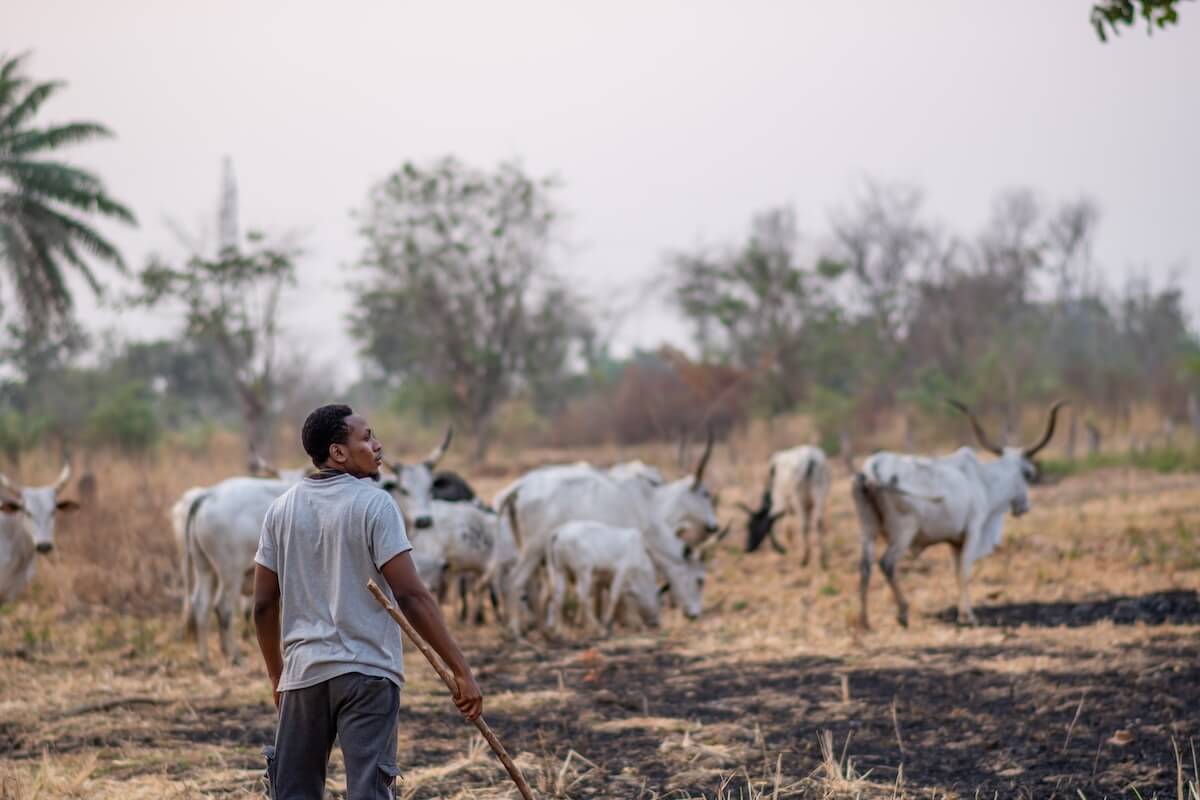
How Heifer International is using grants and loans to show African agriculture is investable. Animal feed production in central Kenya. Dairy production in the nearby Rift Valley. Tractor financing for Kenyan and Nigerian farmers. Global agriculture NGO Heifer International isn’t known as an impact investor, but with these and other projects, it’s applying catalytic impact financing tools to demonstrate the investability of Africa’s farmers, agriculture businesses and startups. A $90,000 loan to Ainabkoi Farmers Cooperative, a dairy cooperative in Kenya’s Rift Valley, has helped the cooperative triple its farmer network and daily production. It also helped the cooperative start a vehicle financing program so farmers could purchase vehicles to deliver their milk. A $4.5 million grant to tractor leasing startup Hello Tractor allowed the company to start a pay-as-you-go tractor financing program for hundreds of farmers in Kenya and Nigeria. “Our job is to support them to become bankable,” Heifer International’s Surita Sandosham tells ImpactAlpha. Then the organization works to help businesses attract capital from banks, corporations and private investors.
Heifer International has been leveraging the grant, lending and technical assistance tools at its disposal as a global nonprofit through its investment arm, Heifer Impact Capital, since 2018. Its impact investing work is taking on greater urgency. “Things are changing. Foreign assistance has been cut, USAID has basically pulled out,” says Sandosham. “It’s in the interest of corporations that are dealing with the value chains we care about to participate in a more partnership-like way, and involve the farmers.” Hello Tractor’s pay-as-you-go program paved the way for a partnership with farm machinery giant John Deere. Heifer and other agriculture nonprofits are vulnerable to funding cuts, and are looking for new sources of capital for the markets they serve. Sandosham says such organizations’ big-picture view helps them identify places where private investors, banks and corporations can direct capital and resources. “The challenge is figuring out where along the value chain they’re interested in investing and plugging in.”
- Keep reading, “How Heifer International is using grants and loans to show African agriculture is investable,” by Lucy Ngige on ImpactAlpha.
Dealflow: Investing in Infrastructure
Blue like an Orange invests $15 million to support internet access in Peru. Blue like an Orange Sustainable Capital, through its second Latin America private credit fund, provided a long-term loan to internet provider MiFibra to increase affordable access to high-speed internet outside of Lima. As part of the loan agreement, MiFibra will implement an action plan to manage environmental and social risks in its business. Blue like an Orange aims “to contribute to economic development and education access” by expanding access to fiber optic internet in Peru’s underserved cities, said the firm’s Rashad Kaldany. MiFibra provides free internet access to 30,000 students in Peru’s public schools.
- Digital inclusion. Peru’s rugged geography has made it difficult to expand fiber optic internet lines in areas north of Lima. Since MiFibra launched in 2020, the company has provided internet access to over a million homes and businesses, mostly in the northern cities of Piura, Lambayeque, Trujillo and Ancash. MiFibra will use a portion of the loan to develop its infrastructure in targeted cities. The company is majority-owned by Scale Capital, a Chilean global private equity firm that specializes in telecommunications and digital infrastructure in Latin America. It is also backed by IDB Invest.
- Check it out.
Dealflow overflow. Investment news crossing our desks:
- New York-based Crux, which provides tax credit data and streamlines financing for clean energy projects, raised $50 million in a Series B round from Lowercarbon Capital, Andreessen Horowitz, Ardent Venture Partners and others. (Crux)
- Seattle-based venture capital firm Stepchange closed its first fund at $7 million to invest in startups focused on clean transportation and energy, and climate adaptation and resilience. (GeekWire)
- South Africa’s New GX Capital and RMB Ventures reached a $120 million first close for their Airnergize Capital Fund I to support renewable energy, gas and water infrastructure projects in Africa. (Zawya)
- London-based Flock Mobility, which makes software to optimize shared electric vehicle rides, raised €1.1 million ($1.2 million) from the family office and Gareth Williams, who founded the flight aggregation site, Skyscanner. (EU Startups)
Signals: Policy Corner
Green bank grantees may get access to federal funds – for now. Blink and you might miss the action in the ongoing skirmish between grantees of Biden-era climate funds and the Trump administration, which has blocked and attempted to terminate billions of dollars worth of congressionally appropriated grant awards. A series of fast-moving legal actions this week might crack open a small window for grantees of a federal “green bank” program to access funds that have been frozen in a Citibank account for more than eight weeks. A federal judge in Washington, DC, late Tuesday night ordered that $20 billion in funds be released. The grants were intended to fund loans for energy retrofits, community solar, EV charging and other projects to lower costs and clean the air in communities across the US. The judge’s order gave Citibank, the financial custodian of the funds, until 1pm ET today to comply. The decision “gives us a chance to breathe after the EPA unlawfully – and without due process – terminated our awards and blocked access to funds that were appropriated by Congress and legally obligated,” says Climate United’s Beth Bafford. The EPA has appealed the judge’s ruling and filed a motion to stay the injunction.
- Green lending. The Greenhouse Gas Reduction Fund, part of the Inflation Reduction Act, was designed to seed a nationwide network of green lenders – a sort of distributed green bank – to fill a gap for such loans, especially in underserved communities. Grantees are hoping they will be able to access at least some of the $625 million in delayed requests to fulfill loans they have already approved and to cover staff and operational expenses before EPA’s next legal move. “Any efforts to undermine [Wednesday’s] ruling will jeopardize local projects already under construction and cost thousands of good-paying jobs,” says Bafford.
- Legal challenge. Separately, a federal judge in Rhode Island ordered the EPA, the Department of Energy, and other agencies to release climate-related grant funds awarded under the Inflation Reduction Act and bipartisan infrastructure law. That suit, brought by a half-dozen community groups represented by the legal nonprofit Democracy Forward, rests on many of the same legal arguments EPA has made in the GGRF case. “Agencies do not have unlimited authority to further a President’s agenda, nor do they have unfettered power to hamstring in perpetuity two statutes passed by Congress during the previous administration,” Judge Mary McElroy wrote.
- Keep reading, “Green bank grantees may get access to loan funds – for now,” by Amy Cortese on ImpactAlpha.
Impact Voices: Conservation Finance
NatureVest: Building impact into investment structures (Q&A). The in-house impact investing and sustainable finance arm of The Nature Conservancy has committed $3.5 billion over the last decade to deals in forestry and carbon, water and agriculture, fisheries and aquaculture, and infrastructure and renewable energy, alongside other conservation-related categories. In a Q&A shared with ImpactAlpha ahead of NatureVest’s latest impact report, The Nature Conservancy’s Cat Burns spoke with NatureVests’s Glen Jeffries about the fund’s approach to deal development, balancing financial returns with impact expectations, and structuring deals for impact.
- Collaborating for impact. NatureVest works with private investors as well as the public sector. That might mean “structuring the investment product and designing the decision-making protocols” to maximize impact, says Jeffries. NatureVest also supports partners “in investor market testing and fundraising.” Last year, NatureVest, alongside Hatch Blue, closed The Blue Revolution Fund, which invests in sustainable aquaculture. The fund has committed to a set of environmental and climate targets that it must achieve, and has “measurable outcomes built into every investment it makes,” Jeffries says. The fund’s take of profits, or “carry,” also includes impact-linked compensation.
- Read the full interview.
Agents of Impact: Follow the Talent
Asset Funders Network adds Elaine Mule of Charles Schwab to its board of directors… IMPACT Community Capital promotes Alex Asaturian to senior associate of investments… BlueHub Capital welcomes Hana Migliorato, previously with MassHousing, as director of strategic initiatives… Reinvestment Fund seeks a program manager for early-childhood capacity building and capital access.
The NYC Commission on Racial Equity is recruiting a senior fiscal associate, a senior special projects associate, a senior compliance associate, a senior fiscal associate, and multiple research and policy interns… Dovetail Impact Foundation is accepting applications for its 2025 accelerator program, which supports small nonprofits in Africa working in health, livelihoods, justice and education.
👉 View (or post) impact investing jobs on ImpactAlpha’s Career Hub.
Thank you for your impact!
– April 17, 2025