
Greetings Agents of Impact!
In today’s Brief:
- Energea’s crowdfunding for solar in Africa and Latin America
- XSML’s small business lending in the DRC
- Home ownership help as an employee benefit
- Top cities and states for home ownership preservation
Featured: Climate Finance
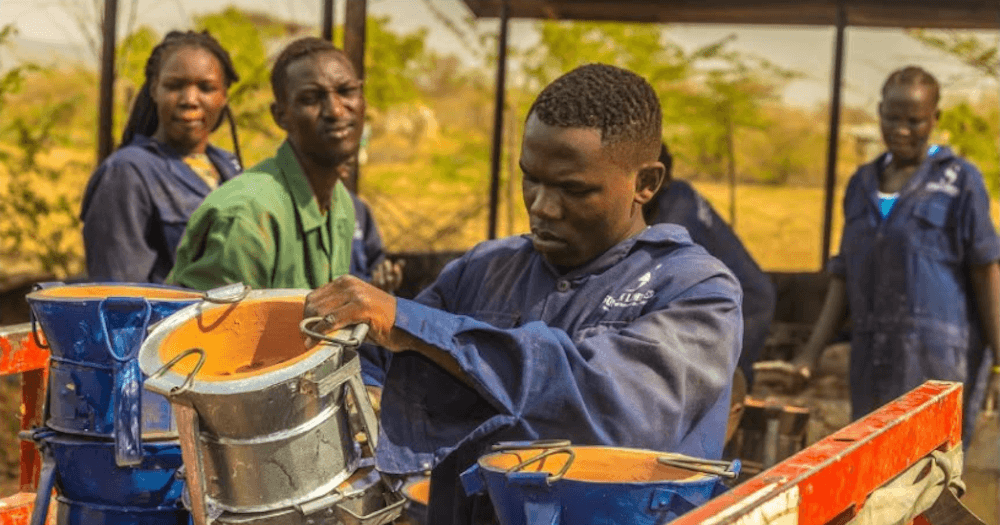
Solar projects in Africa and Latin America pay dividends to US retail investors. In Johannesburg, South Africa, a solar microgrid serves a 101-unit residential complex in the ultra-wealthy neighborhood of Sandton. In Brazil, more than two dozen community solar projects lower the cost of electricity for households and small businesses. And in Colombia, a pilot solar and storage project is bringing electricity to Indigenous communities that have never had access to electricity. The wide-ranging solar projects are being financed in part by 4,000 non-accredited investors in the US, who have put down as little as $100 in one of several private energy infrastructure funds offered by Energea, a Connecticut-based sustainable infrastructure investor that launched its online investing portal in 2020. The crowdfunding platform says it has deployed $463 million since its first offering in 2019, delivering realized returns, net of fees, of more than 12%. Rather than developing projects from scratch, Energea acquires equity stakes in fully operational solar assets and generates revenues from electricity sales. “We collect the money from the offtakers, we pay the bills every month, and we distribute the rest to the investors,” Energea’s Chris Sattler tells ImpactAlpha. Investors “all get their pro rata share every month of monthly dividends.”
- Retail crowdfunding. Energea isn’t the only clean energy financing play for retail investors, who have too few opportunities to make a direct impact with their money. California-based Climatize Earth allows small investors to invest in projects in the US with as little as $10, offering fixed returns over a set time and repayment schedule. Climatize secured $1.8 million in pre-seed financing in 2024 from Myriad Venture Partners, Climate Capital and others; it says it has invested more than $12 million in nearly 30 projects. Sweden-based Trine has crowdsourced €112.7 million ($135.3 million) for projects in Africa, Latin America and Asia. Energea says its Solarize Africa portfolio has returns of 9.8% annually, versus 13.9% for its Community Solar portfolio in Brazil and 7.2% for its projects in the US. “What retail provides is broad participation and democratization, which results in a more predictable and smoother capital raise and liquidity cadence,” Sattler says.
- Upmarket and down. This month’s $462,000 acquisition of the Sandton project is the first microgrid in Energea’s Solarize Africa portfolio, which includes utility-scale and rooftop solar for schools, healthcare facilities, small businesses and residential clients. The company says the portfolio of projects provides “economic security” in a country with an ongoing energy crisis and frequent outages. In rural Colombia, Energea’s project serves Indigenous communities that have never been connected to the grid. The government has started disbursing payments to Energea, providing a steady revenue stream. “It’s a very impactful program,” Sattler says. Energea is seeking to raise $150 million to scale the Latin America program. Retail investors can invest as little as $100, and institutional investors can start at $100,000. Energea says it has nearly 100 megawatts of projects in its pipeline. Exposure in emerging markets, Sattler says, “provides broader diversification and potentially higher long-term return profiles.”
- Keep reading, “Solar projects in Africa and Latin America pay dividends to US retail investors,” by Lucy Ngige.
Dealflow: Pathways to Growth
XSML Capital lands $142 million to provide private credit to businesses in Africa. Netherlands-based XSML Capital provides mezzanine and debt financing for small and medium-sized businesses in Angola, Zambia, Uganda, the Democratic Republic of the Congo. It also takes minority equity stakes in some companies. The firm closed its fourth African Rivers Fund at $142 million with backing from responsAbility’s Swiss Investment Fund for Emerging Markets, multiple development finance institutions and two German family offices (for background see, “Private investors warm to small business investments in Africa’s most underserved markets”). “Performance has been good overall in the funds and that helps in raising a new fund,” XSML’s Barthout van Slingelandt told ImpactAlpha.
- Market fit. Fund four will invest $300,000 up to $10 million each in 50 companies in manufacturing, retail, beverages, food and pharmaceuticals. The fund had already deployed 60% of its capital, nearly $85 million, by the end of last year, almost half of it in the DRC. Van Slingelandt said XSML is seeing demand for growth capital, especially private credit. “We know that our upside is capped a bit because we do more credit,” he said. “If you manage your downsides well and your investments efficiently, you can get very decent returns for investors and that means they come back. That liquidity element is important.” XSML is also in the market with a climate fund.
Oro raises $3 million to bring homeownership and housing benefits to the workplace. Los Angeles-based Oro raised $3 million to help companies provide homeownership and housing benefits to employees. Venture firm Slauson & Co. led the round, with participation from insurance giant Northwestern Mutual’s venture fund and community development financial institution Bronze Valley. Oro’s platform offers one-on-one housing support to employees, reports rent payments to credit bureaus to help build credit scores, provides homebuyer education classes, and connects employees to down-payment assistance programs. “We believe housing is the next frontier in employee benefits,” said Slauson & Co.’s Austin Clement.
- Benefits gap. US-based companies have expanded benefits packages in recent years to include healthcare, fertility treatments and student loans. Housing support has lagged, even as housing represents the largest monthly expense for most workers. “Most companies have a gap in their benefits package, and it’s as big as a house,” said Oro’s George Fatheree. The company helps employers develop housing support programs for down payments, closing costs and interest rate buy-downs. In a pilot, Oro helped eight employees become first-time homeowners. It supports more than 1,200 employees.
- More.
Dealflow overflow. Investment news crossing our desks:
- Nevada-based Redwood Materials raked in $425 million in Series E funding from Capricorn, Goldman Sachs, Google and other investors, as surging demand for AI data centers, manufacturing and electrification drives energy storage growth. (Redwood Materials)
- IDB Invest and Finance in Motion’s LAGreen Fund invested in El Salvador’s first blue bond, issued by Bancoagrícola to finance responsible water management and marine ecosystem conservation. (IDB Invest)
- SJF Ventures, Gratitude Railroad and Blue Venture Fund backed the Series B financing round of Origin, a Los Angeles-based women’s health startup focused on pelvic floor physical therapy. (Origin)
Signals: Ownership Economy
Philadelphia tops the chart of US cities in preserving homeownership. Buying a home is hard. Keeping it can be harder. High interest rates, rising taxes, insurance premiums, repair costs and utility bills are squeezing US homeowners, forcing many out of the homes they owned. Philadelphia topped the new Keepingly Homeownership Index, which ranked cities and states based on the systems they’ve put in place to sustain long-term homeownership and support wealth building. Los Angeles and New York were runners-up among US cities because of their cross-sector collaboration and homeownership protection and support programs. “Philadelphia ranked no. 1 because it treats repair as infrastructure, not charity, and backs that approach with capital, programs and execution,” says Daniel Smith, who founded Keepingly five years ago to help first-time, low-income homeowners track and document the maintenance of their properties (see, “Worker solutions, community insurance and other strategies for shared prosperity”). Philadelphia Mayor Cherelle Parker’s $2 billion Housing Opportunities Made Easy, or HOME, initiative aims to support the creation, repair and maintenance of 30,000 homes to help residents protect their equity. Parker plans to issue $400 billion in housing bonds this year to finance the program.
- Climate adaptation. Keepingly’s homeownership index highlights cities helping lower-income and first-time homeowners weather economic and climate shocks. In LA, some residents whose homes were destroyed from last year’s wildfires have received up to $20,000 in mortgage support grants from the CalAssist Mortgage Fund. California Gov. Gavin Newsom increased the CalAssist fund’s income limits in October last to expand access to higher-earning families rebuilding after the wildfires. California ranked no. 1 among states on the index, followed by Massachusetts, Washington and Maryland.
- Homeownership management. Keepingly is raising a $2 million pre-seed round to work alongside housing counselors and city and state government housing agencies to reach homeowners who might be leaving wealth-preservation on the table. Smith says Keepingly “has built the infrastructure layer: a neutral, persistent system of record that produces standardized snapshots, verified repair history, long-term continuity, homeowner access and audit-ready outputs that help protect and preserve generational wealth.”
- Share this post.
Agents of Impact: Follow the Talent
Mystery man. The first annual He for She awards, hosted by Nia Impact Capital, recognized men who champion women in asset management. Awardees R. Paul Herman of HIP Investor and Scott Saslow of One World Investments joined the San Francisco gathering yesterday; US Sen. Cory Booker beamed in by video. The fourth winner, an advocate for women at a major financial institution, was represented only by a blank profile because he could not be named due to legal compliance concerns. Investment firms majority-owned by women manage only about 0.7% of all assets under management. “We know it’s going to take all of us to shift these numbers,” said Nia’s Kristin Hull (see, “How I invest in environmental sustainability and social change”). Anton Orlich, who runs CalPERS’ private equity group, said the country’s largest pension fund had worked to increase its allocations to women-led firms because such diversity is a “return enhancer.” “Say that again,” prompted Red-Horse Financial’s Valerie Red-Horse Mohl. “Return enhancer.”
John Hoeppner is promoted to head of strategic relationships and active ownership at Builders Vision… Noveena Padala, former summer fellow at CapShift, joins New Leaf Climate Partners as an investment associate… Zenith Wealth Partners welcomes Nina Milligan, previously with Sponsors for Educational Opportunity, as an associate advisor… The Philips Foundation appoints Bert van Meurs of Image Guided Therapy to its board of directors.
The Ford Foundation is recruiting a director to work with its chief innovation officer… Catholic Relief Services is looking for a manager for its Bahamas Seagrass Blue Carbon initiative… British International Investment has an opening for an infrastructure and climate development impact associate… WEAV Capital is on the hunt for a program manager and value-creation lead… Acumen is looking for an investment readiness program lead… MSCI seeks a sustainability and climate specialist… Connecticut Innovations is hiring a senior associate for its climate tech fund.
👉 View (or post) impact investing jobs on ImpactAlpha’s Career Hub.
Thank you for your impact!
– Jan. 29, 2026