European policymakers increasingly recognize the arts as a catalyst for social change and democratic growth, but cultural industries are still regarded as a financial drain in Europe, rather than as assets to invest in.
It’s a narrative Fran Sanderson, who heads up Figurative, a UK-based impact fund focused on the cultural and creative sector, knows all too well. “Our core hypothesis is that these are under-exploited assets,” Sanderson tells ImpactAlpha. “The sector hasn’t had access to the kind of investment capital that would allow it to develop and scale the ideas that sit within the cultural sector.”
Sanderson, a former banker and investment director at Better Society Capital, is convinced that creative economies matter more than ever – and that capital markets are missing a major opportunity.
Figurative two years ago was spun out of Nesta, the UK innovation agency for social good, where Sanderson was a director of the arts and culture investments and programs team. It has managed three investment portfolios, and raised more than £30 million ($41 million) in investment capital from more than 60 organizations. Now, as an independent not-for-profit, Figurative’s goal is to bring impact investing discipline to arts funding and build financial resilience across the cultural and creative sector.
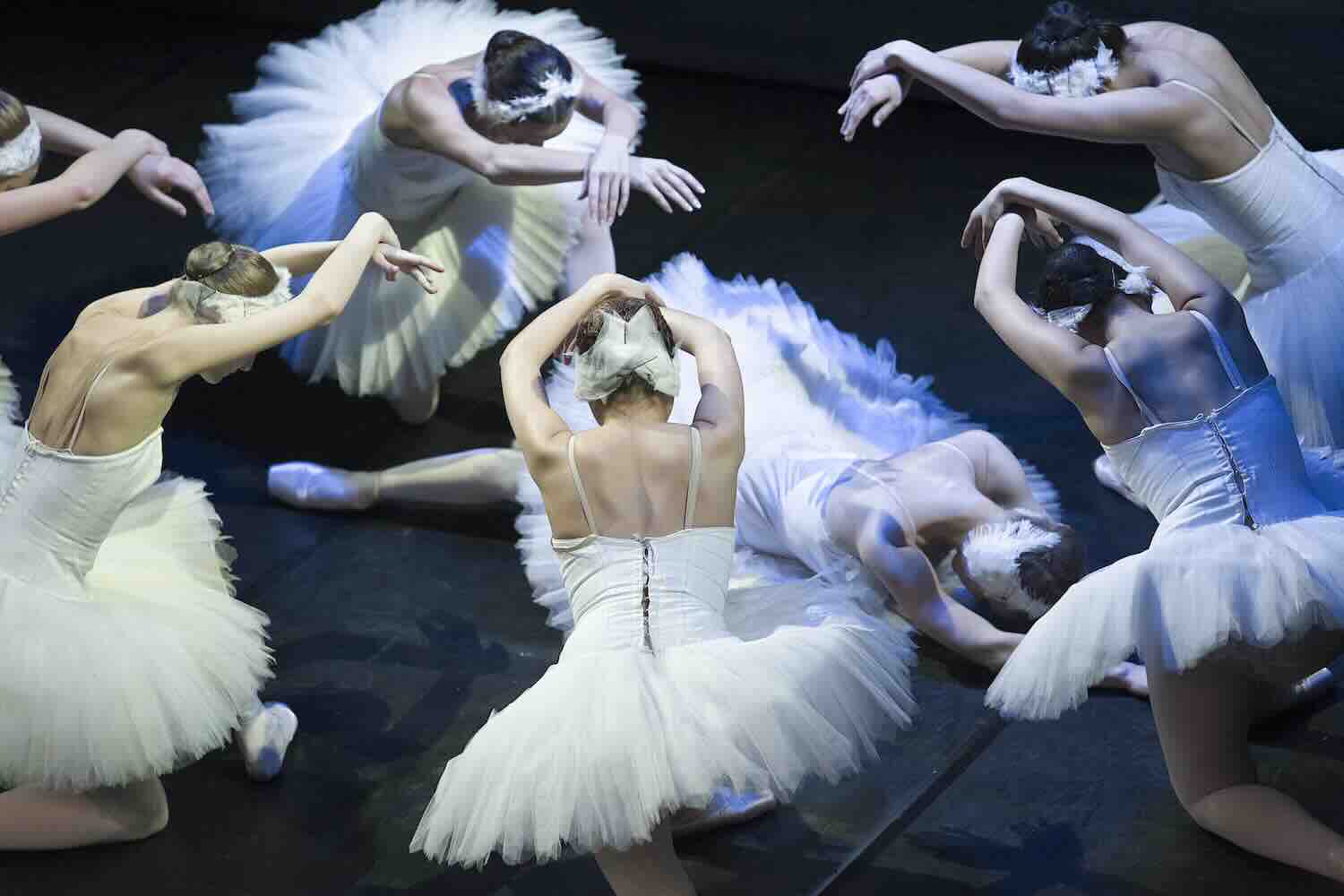
Figurative’s £16 million ($22 million) Arts & Culture Impact Fund provides affordable loans to cultural organizations. Backers of the fund include Nesta, Esmée Fairbairn Foundation and Better Society Capital. The fund has supported organizations including the Royal Shakespeare Company; Rambert, Britain’s oldest dance company; and the Creative Land Trust, which secures long term, affordable space for artists and creatives.
Sanderson is currently developing a new fund which will help Britain’s cultural organizations decarbonize their buildings, in a new twist on creative finance. She aims to raise between £30 million ($41 million) and £50 million ($68 million) for a first close anticipated in the summer of 2027.
Multiplier effect
Creative industries writ large – including film, fashion and music – represent from 2% to 7% of GDP where they are most developed, according to the International Finance Corp., and are a key driver of economic growth. Every dollar spent on the arts generates 2.5x that in broader value for the economy. Upstart Co-Lab, a New York-based group that has championed the creative economy and runs an $18 million fund, has identified more than 100 funds that at least partially support creative industries.
Fully dedicated creative funds, however, are still scarce. Figurative is among a crop of new impact funds supporting the creative arts in the UK and Europe.
The Dutch Doen Foundation, alongside impact investor Opes-Lcef and the Moleskine Foundation in Italy, is recruiting a team in preparation for the debut of an impact fund dedicated to culture, creativity, and imagination.
Headquartered in Milan, the fund will invest in “a new generation” of European entrepreneurs “who prove the cultural and creative sectors have real growth and scaling potential, from seed to series A,” Merijn ten Thije of Doen Ventures wrote on LinkedIn earlier this year. (Ten Thije was unavailable for comment when contacted by ImpactAlpha).
The European Institute of Innovation and Technology three years ago stood up its €131.6 million ($133 million) EIT Culture & Creativity fund to provide grant funding and mentorship for Europe’s creative industries. The same year, Austria-based New Renaissance Ventures launched an investment fund for technology-driven startups in visual arts, performing arts, new media and cultural heritage.
“The hybrid cultural and commercial value of creative tech is not yet being served by traditional venture capital investors,” Deloitte wrote in its Arts and Finance Report 2025 report. “This presents a unique opening for impact investors to shape investing at the intersection of creativity and tech to be ethical and sustainable.”
Deloitte tallied some 21 venture capital and impact funds that invest in the creative economy in Europe, which generates 5.3% of European GDP and provides 8.7 million jobs, or 3.8% of the bloc’s total workforce. In the UK creative industries employ close to 8% of the workforce.
The grande dame of creative funding in Europe is the French public investment bank Bpifrance, France’s financial platform for cultural and creative industries. Its funding ranges from concessional funding to guarantees, loans and equity. Its $470 million La French Touch Capital fund, which supports French creativity, has invested in nearly 50 companies.
In December, Bpifrance teamed with the EIT Culture & Creativity fund to pursue joint funding mechanisms and co-investment opportunities.
The Good Fashion Fund in the Netherlands, which is backed by the Laudes Foundation, invests in enterprises in Vietnam and Bangladesh with more sustainable dyeing and finishing processes and textile recycling. Such enterprises often employ local artisans.
In Finland, the €13.5 million ($16 million) Finnish Impact Film Fund supports high-quality films and TV drama, including a 2025 adaptation of the celebrated Finnish novel, “The Summer Book,” starring Glenn Close.
Of the 21 funds active in Europe, five are from the British Isles, including Creative UK, the national membership body for cultural and the creative industries that has invested £100 million ($136 million) into small and mid-sized enterprises across the UK since it was founded in 2021.
Bridging the cultural financing divide
When people go to a theater, they don’t necessarily know whether it’s a commercial theater or a charitable theater, says Figurative’s Sanderson, which is why “the dichotomy between the commercial creative industries and the subsidized cultural sector” strikes her as “a bit spurious.”
“Impact capital,” she add, “is the perfect bridge between those two.”
At a recent convention in Italy, Figurative’s Sanderson recalled a board member of a UK cultural institution describing the British Isles as a “gold mine” with storied institutions such as the Royal Ballet and the London Philharmonic. From the inside, though, Sanderson said it rarely feels that way as Britain grapples with an ailing economy and soaring inequality.
“The cost of living disproportionately affects us, because we have lots of low-wage earners,” she noted. “Everything feels constrained.” This makes it even harder to view arts organizations as investment assets, she said.
Figurative’s mission to transform the funding environment of the sector has been affected by the Covid-19 pandemic and Britain’s economic challenges post-Brexit.
For an industry used to grants and government subsidies, making a switch to repayable finance is “a massive mindset shift,” Sanderson said. Yet the benefits can be transformative. “A lot of what we’re doing is really about increasing freedom and independence at arts organizations.”
Sanderson is now applying that same logic to climate and energy, with its climate-focused fund, provisionally called the Decarbonisation of Cultural Assets Fund, in the summer of next year. The new vehicle, which Sanderson dubs “Decaf,” will focus on financing energy-saving upgrades such as LED lighting and solar panels in cultural buildings.
Figurative analyzed case studies of seven arts organizations, both commercial and subsidized, that had already made energy investments. “We looked at the return on investment in terms of what they saved and their energy bills, and looked at the reduction in carbon, and it basically showed us that this is an investable product,” Sanderson said.
With some of the country’s most iconic venues facing six-figure increases in annual energy bills in recent years thanks to price spikes, according to Sanderson, the prospect of cutting costs, slashing emissions and strengthening resilience is compelling.
“The core imperative for us is, how are we adding value?,” Sanderson says. “We can think about upskilling the sector, peer support, shared knowledge, best practice, networks, even things like collective purchasing. Maybe a fund can buy 10,000 solar panels rather than an arts organization negotiating to buy 200.”
Impact capital is “a perfect opportunity,” for the creative sector, Sanderson says. “If we can do demonstration projects that are showing that, then we can pull a lot more investment into the sector.”