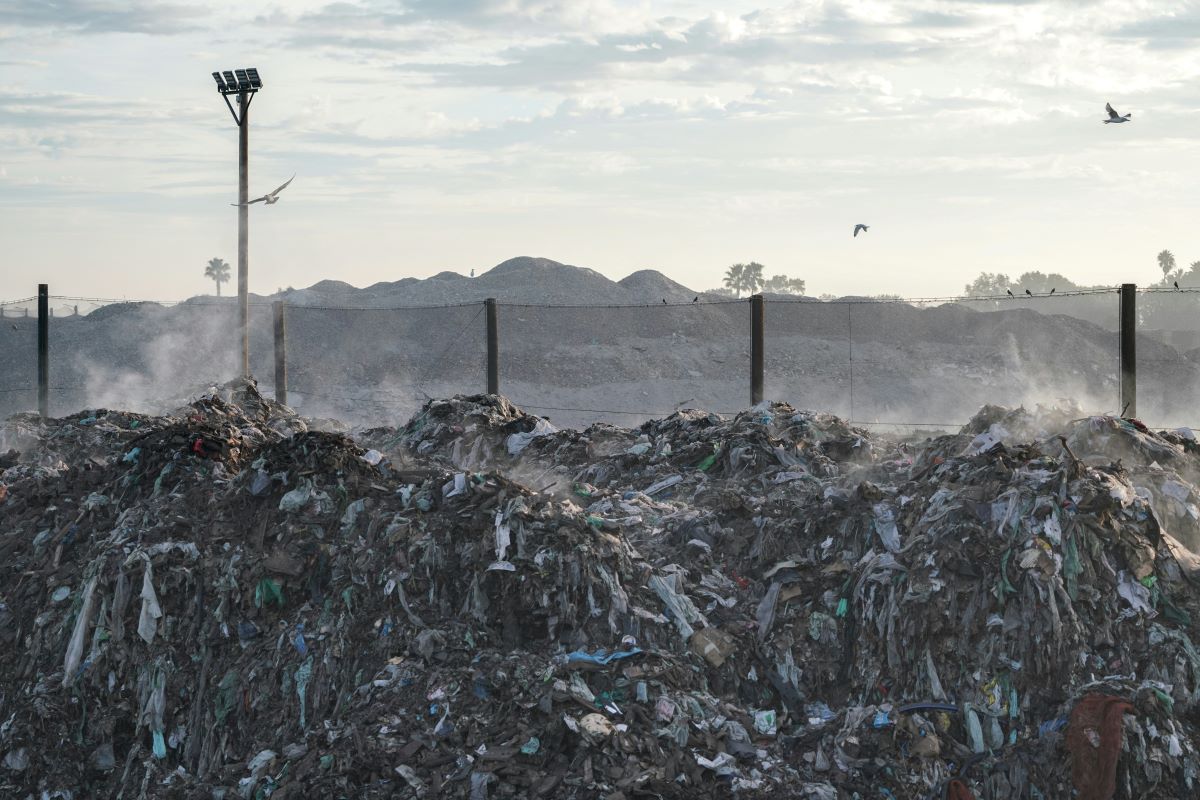
Singapore-based Circulate Capital eight years ago developed a novel approach to tackling Asia’s rampant plastic waste problem: raise capital from corporations with both a presence in the region and large plastic footprints to invest in local recycling infrastructure and capacity.
For large corporations like Coca-Cola Company and Procter & Gamble, “it was a frantic time of looking for solutions to ocean plastic. Our original fund was a good potential partnership and solution for many of them,” recalled Circulate’s Rob Kaplan.
“All of them are now much smarter about their strategies. They’re more specific. They know where their gaps are and are looking for clearer strategic alignment with their goals,” he told ImpactAlpha.
The Singapore-based firm has raised $220 million for its second Asia-focused fund, with key strategic investments from Coca-Cola, P&G, Danone and Dow. All four companies backed Circulate’s first fund, which raised more than $100 million and invested in 17 companies.
For fund two, Circulate has had conversations with Coca-Cola about sourcing recycled PET for its bottled beverages, and with Dow about a low-density polyethylene, which is used in plastic wraps and other types of flexible packaging. Some of its corporate partners have pinpointed country-specific challenges, in say, Vietnam or Indonesia.
Regional tailwinds
Asia has long been the center of the global plastic waste crisis; nine of the top 10 biggest producers of plastic pollution are based in the region. Policymakers were in the early stages of developing laws and regulations to address the problem when Circulate launched its first fund.
Now, says Kaplan, “we are seeing a lot of pretty aggressive developments on the regulatory and policy side.”
India, Vietnam and the Philippines have all passed Extended Producer Responsibility laws that mandate recycling from plastic manufacturers and importers; Malaysia and Thailand are developing similar policies.
Strengthening Asia’s circular economy has taken on greater importance with the string of recent geopolitical and climate shocks, from Covid to the war in Iran, that have massively disrupted global supply chains.
“Our work in Asia is really about developing healthy regional supply chains and economies so that there’s less reliance on global trade,” said Kaplan.
Proof points
Circulate is aiming to raise $300 million for its second Asia fund. Its long list of LPs that contributed to its first close includes Allianz Global Investors and Achmea Investment Management, which invested on behalf of an unnamed Dutch pension fund; the International Finance Corp., the European Investment Bank and development finance institutions from the UK, France, Australia, Denmark; family offices Builders Vision, Stella and Clotho; and also responsAbility, Wire Group and Fondation Prince Albert II de Monaco.
“The number one question that we get asked is what is the strength of the current portfolio?” says Kaplan of conversations with LPs. “We’ve shown that we can exit some of the companies.”
Circulate’s first Asia fund has made one full exits and two partial exits. It fully exited Recykal, a company in India connecting waste generators to processors and recyclers. Its partial exits include Tridi Oasis, a woman-led company in Indonesia that specializes in PET plastic recycling, and India-based Lucro, which specializes in flexible plastic recycling.
Circulate is beginning to see more growth-stage opportunities in the region, Kaplan noted. “The market has matured significantly in the last five years.” But, he added, “there’s a lot of low hanging fruit.”
Circulate has also expanded into Latin America, and last year closed its first fund for that region.
On the impact side, Kaplan notes that Circulate’s portfolio has prevented an estimated one million tons of plastic pollution and two million tons of greenhouse gas emissions. “Those numbers speak for themselves.”
Closed loop
Circulate Capital spun out of New York-based Closed Loop Partners, a private equity firm that invests in recycling infrastructure in the US. Closed Loop today announced a new investment, taking a majority stake in Seattle-based Sutter Metals. Sutter Metals is helping salvage critical metals like copper, brass and aluminum from electronic waste and industrial waste. Its investment will support Sutter Metals’ processing capability and reach in the US.
“The need for a stronger domestic metals supply chain has come to the forefront, with used metals and minerals an underutilized, yet critical supply source,” Closed Loop said in a statement.
Circulate, meanwhile, is looking to support e-waste and critical metal recycling in Asia through its second fund.