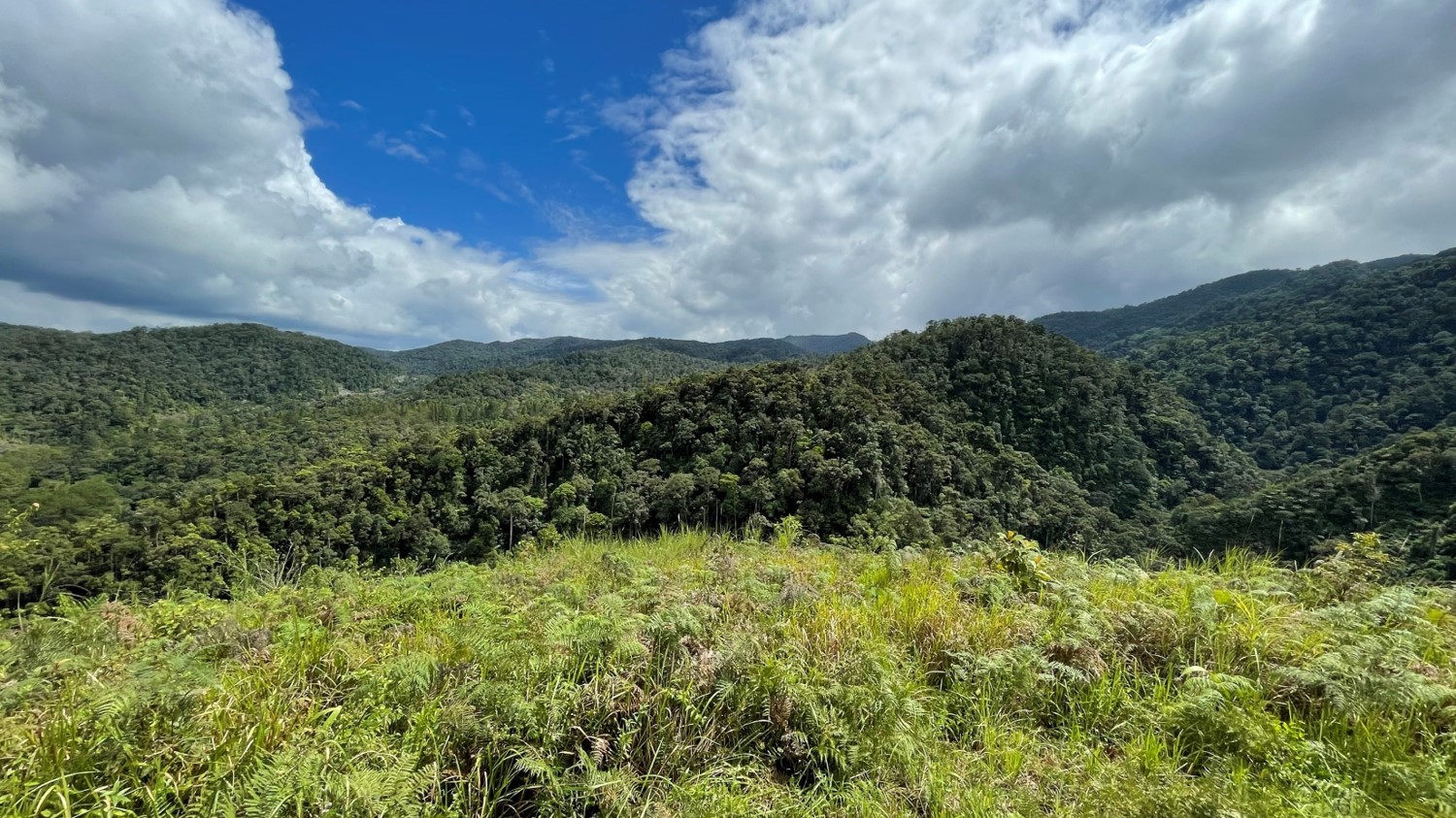

The world cannot meet its climate goals without nature. Forests, peatlands and mangroves absorb carbon at unmatched rates, while also mitigating disasters, sustaining livelihoods and improving well-being. Nature-based solutions are emerging as one of the most cost-effective and scalable strategies for tackling climate change. Studies show nature-based solutions, if properly safeguarded, could deliver over a third of climate change mitigation needed by 2030.
Investors are taking note: Private finance for nature has surged elevenfold from $9.4 billion in 2020 to more than $100 billion in 2023. Yet this is still less than a quarter of what is required for nature-based solutions to reach their full potential.
Southeast Asia is an indispensable piece of the puzzle. It is home to around 34% of the world’s mangrove forests, the coral triangle housing 76% of the world’s coral species, and some of the most carbon-dense peatlands and tropical forests. Protecting and restoring its peatlands and mangroves could cut Southeast Asia’s land-use emissions by half, which would be equivalent to 16% of global land-use emissions.
Bridging the finance and implementation gaps
Given Southeast Asia’s rich natural assets, the region does not lack opportunity. On-the-ground initiatives are working to prepare projects for scale, investment and certification. I have seen the pipeline firsthand in my work with the Southeast Asia Climate and Nature-based Solutions Coalition, a collaboration between leading environmental nonprofits to scale up the supply of and demand for high-quality nature-based projects in the region.
Through our nature-based solutions tool alone, frontline civil society organizations, NGOs, cooperatives, local communities and Indigenous peoples have scoped out more than 340 projects. Our platform supports these projects with data analysis, project documentation and investor readiness.
For example, the Coalition is supporting the Philippine Eagle Foundation and Indigenous communities to protect and manage ancient forests designated as Indigenous Peoples’ and Community Conserved Areas and Territories. With an estimated carbon benefit potential of about 530,000 tons from avoided deforestation and 360,000 tons from restoration, it will help enhance habitat protection for threatened species such as the Philippine eagle and Southern Philippine hawk-eagle. Supported by the Coalition’s Nature-based Solutions Incubator, which offers tailored project development funding and technical expertise, the project has completed a pre-feasibility assessment, together with four other projects in Cambodia and Indonesia, and is now at the legal assessment stage.
A pipeline of nature-based solutions projects exists in Southeast Asia, but it is nascent. Myriad barriers prevent projects from reaching their full scale and impact, often because local organizations lack the technical expertise or upfront capital required to become feasible. In my experience, it can take three years and seven-figure financial commitments for projects to move from initial scoping to submission to recognized carbon registries.
Private investors, in turn, hesitate to commit without proof of commercial viability and credibility. It is a classic chicken-and-egg problem: Investors want mature projects, but projects cannot mature without early investment.
To resolve this, project owners, policymakers and investors need to pool our resources to bridge the gaps between ambition and action. An ecosystem approach is needed to align capital, expertise and policy support so that projects can move from potential to reality. That means investing not only in the projects themselves, but also in the enabling environment around them: capacity building for local organizations and policymakers, increased access to data to strengthen monitoring, and concrete pathways to develop investor-ready projects. By connecting these elements, Southeast Asia’s nature-based solutions pipeline can become an investable portfolio of projects that deliver measurable climate impact, habitat protection and community resilience.
Regional consensus and policy frameworks are key
Governments are an integral part of the nature-based solutions ecosystem, and several in the region are already showing great momentum at the national level. Indonesia, for example, is on pace to have rehabilitated a total of 670,000 hectares (about 2,500 square miles) of mangrove forests between 2019 and 2025. The Philippines this year has kicked off its National Blue Carbon Action Partnership to develop a national roadmap for leveraging the 700 billion metric tonnes (about 770 billion US tons) of carbon sequestered in the country’s coastal habitats.
The success of nature-based solutions depends not only on projects in the field, but also on the robustness and credibility of the markets that sustain them. Governments are making progress matching corporate demand for carbon credits with high-quality nature-based solutions, creating a trusted marketplace that channels value back into the region’s natural assets. Singapore has signed carbon trading agreements with ASEAN counterparts Thailand and Vietnam, helping to signal confidence and drive more activity into the region’s nature-based solutions landscape.
Yet, more could be done at a regional level to develop formal policies around carbon sales, including a shared framework on nature-based solutions and carbon credits, or an ASEAN-led carbon market or joint regional statement.
There is precedent: ASEAN’s coordinated approach to ocean plastic pollution saw the establishment of the Southeast Asia Regional Program on Combating Marine Plastics, which pooled resources to prevent land- and sea-based marine plastics pollution. A similar regional consensus on nature-based solutions could provide the clarity and scale that would drive investors to respond with more confidence and accelerate the flow of capital and technical expertise into nature-based solutions projects that individual countries could not achieve alone.
Positive signals from the government can also go beyond policymaking to leverage financial instruments — from de-risking projects through blended finance to offering concessional loans or guarantees — that would catalyze greater capital from private investors. Here, we can learn from what the Brazilian government is doing with its Eco Invest program that offers banks low-cost financing to incentivize more nature-based project lending, unlocking nearly six times the funds from private capital.
Local stewardship will lead to collective impact
Today, only 20% of nature finance flows to developing countries, despite the fact that these countries offer 90% of the planet’s nature-based solutions investment opportunities. The potential in Southeast Asia is undeniable: Research predicts that the carbon market could generate nearly $268 billion in annual revenue for ASEAN. We should do more to center Southeast Asia in the global climate story, with its potential on par with the Amazon or the Congo Basin.
Yet this cannot be done without placing national NGOs, local communities and Indigenous peoples at the heart of such ambitions. The SCeNe Coalition aims to support frontline organizations with knowledge building tools, guidance for investor readiness and bottom-up incubation to develop a pipeline of high-quality, triple-benefit, nature-based projects in Southeast Asia.
High-quality solutions are emerging in the region. Governments are paying attention, and investors are seizing opportunities. Now is the time to connect players across the entire ecosystem to ensure our natural landscapes are protected, restored and thriving for generations to come.
Edwin Seah is the nature-based partnerships lead at the Southeast Asia Climate and Nature-based Solutions Coalition.
Guest posts on ImpactAlpha represent the opinions of their authors and do not necessarily reflect the views of ImpactAlpha.