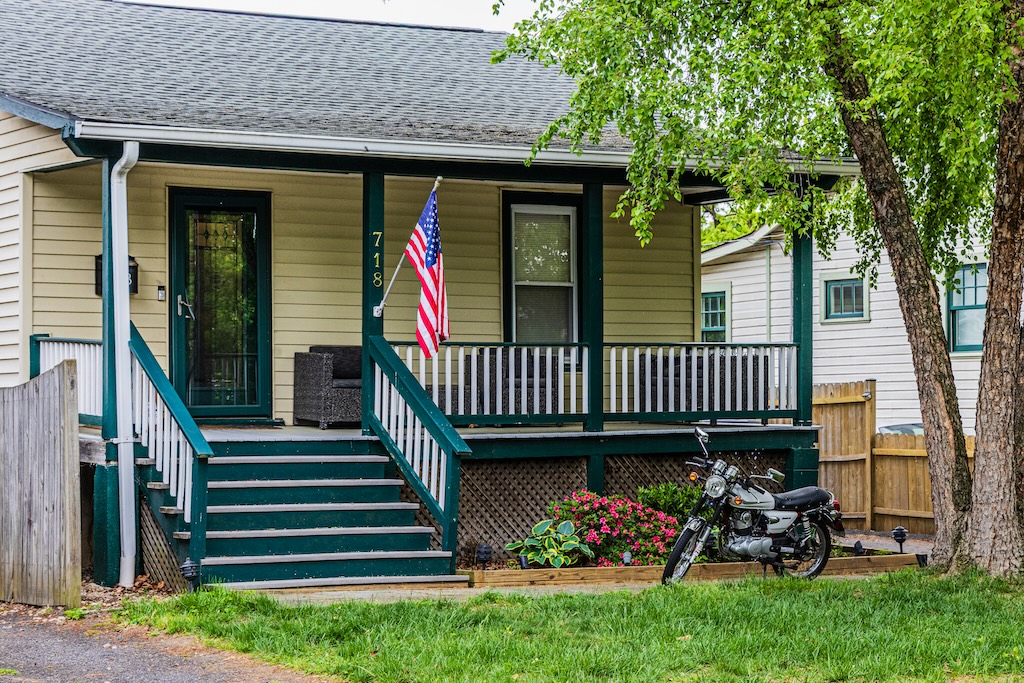

Ownership has long been at the center of the American dream. Home ownership is a hallmark of the middle class and small business ownership offers a pathway to economic mobility.
The ownership economy has received growing attention from philanthropy in recent years as an antidote to rising income inequality and an opportunity to generate wealth for the many Americans for whom home or business ownership feels like a pipe dream. Advocates point to the important role philanthropy and impact investing can play in unlocking opportunities for ownership in housing, employment, and other assets.
A less-discussed outcome of democratized and expanded ownership is its potential to seed the conditions for a stronger democracy. In a post on ImpactAlpha earlier this month, Fran Seegull posed that we consider “investing in the economic determinants of a healthy democracy,” pointing to financial empowerment as essential for democratic empowerment.
What do we know about the relationship between the economy and democracy, and what does it mean for impact investors who care about democracy? At the Woodcock Foundation, we’ve been thinking deeply about this relationship. The evidence and examples are growing:
- Economic inequality is a predictor of where and when democracy erodes, and improvements to economic equality strengthen democratic systems.
A large, cross-national study at the University of Chicago found that “economic inequality is one of the strongest predictors of where and when democracy erodes—even wealthy and longstanding democracies are vulnerable if they are highly unequal,” and that “policies that improve income equality may have the political effect of also strengthening democratic systems.”
Homeownership continues to be the biggest wealth creator, and employee ownership is also associated with increased household wealth and employment stability. According to a Harvard Business School paper, if businesses shifted to being 30% worker owned, Black household wealth would increase up to 400%.
As a lever for greater economic equality, ownership redistributes power and increases economic security, thereby strengthening democracy. For example, those with greater financial security are more likely to believe their vote matters and are more likely to volunteer.
As investors in the Dearfield Fund, we’re supporting mortgage gap financing for first-time homeowners in the Denver area, making the American Dream accessible for an expanded population by removing the barrier of existing wealth as a precursor to wealth creation. As of March of this year, the Dearfield Fund had provided $9,179,269 in down payment assistance, helping 243 Black families move into homeownership.
- Ownership roots people in place and in community, incentivizing community engagement and civic participation.
Homeownership is linked to increased community involvement, more diverse social capital resources, and greater civic engagement, including voting in local elections. Habitat for Humanity reports that economic opportunity leads to higher community care and engagement, including increased civic participation among Black and Hispanic/Latino adults. Similarly, employee ownership increases the likelihood of volunteering for local causes, participating in community-building events, and civic engagement.
One of Woodcock’s most recent investment commitments is to Prospera, a project in Baltimore that will create affordable homeownership access through block-by-block redevelopment. Prospera will incentivize community and civic engagement throughout the Penn North Community by increasing safety and driving ownership and wealth creation.
- Ownership models that involve shared governance create a template for collective action/
Shared ownership, such as community-owned real estate and land trust models, as well as many types of employee ownership models, require a model of governance that builds a skillset that can be translated to civic leadership.
The New Hampshire Community Loan Fund’s ROC-NH program provides financing for resident-owned communities, whereby manufactured home owners can collectively own the land on which their homes sit. Along with financing, the program offers training on attending and running membership meetings, electing a board, making collective budget decisions, and interfacing with regulators and local government. The establishment and practice of these civic competencies lowers the barrier to broader civic participation.
Scaling for impact
In order to achieve meaningful impact—both to reduce inequality and strengthen democracy— ownership and other wealth creation strategies must scale, underscoring the opportunity for impact investors. Based on median American home price and a 10% downpayment, it would take $400 billion in investment to enable 10 million families to buy their first home— or $40 billion annually for a decade. While a large number, this level of investment is attainable. It’s a fraction of the $1.8 trillion in US foundation assets and a drop in the bucket of the $7-8 trillion U.S. private investment market.
As long-term investors, philanthropy and other impact investors can seed, and begin to scale, the ownership economy. A decade from now, the conversation—and the voices at the table—might be different.
Stacey Faella is the executive director of the Woodcock Foundation. Woodcock is a founding partner of Impact LP, ImpactAlpha’s platform for asset owners for whom LP stands for “leadership potential.”