Juneteenth is often described as a celebration of freedom. And it is.
But freedom was not the end of the journey. The harder challenge was transforming legal freedom into economic freedom.
As a Black man, an impact investor, and a partner at Candide Group — an impact investment advisory firm focused on deploying capital toward a more equitable economy — I think about the distance between promise and reality a great deal. On Juneteenth, that distance feels most acute. This piece is my attempt to name it honestly, and to challenge my own community to “lock in,” as the young folks say.
The debt we have never reckoned with
As we mark Juneteenth — the day in 1865 when Union troops arrived in Galveston, Texas to inform enslaved people that they had been freed two years prior — I find myself thinking not just about that belated announcement of liberation, but about what freedom should have meant for those freed Americans.
In his 1967 speech “The Other America,” Dr. Martin Luther King Jr. captured this cruel irony with piercing clarity: “America freed the slaves in 1863 through the Emancipation Proclamation… but gave the slaves no land, or nothing in reality to get started on. And so emancipation for the Negro was really freedom to hunger. It was freedom to the winds and rains of heaven. It was freedom without food to eat, a land to cultivate, and therefore it was freedom and famine at the same time.“
Nearly sixty years after King spoke those words — and more than 160 years after emancipation — the question remains largely unanswered. Have we made meaningful progress in curing the economic legacy of slavery?
In 1863, just before emancipation, Black Americans held approximately 0.5% of national wealth. Today, more than 160 years later, that number has crept up only to roughly 1.5%. The average white family now holds more than four times the wealth of the average Black family — a gap that, for those born in the 1940s and 1950s, widened from $181,000 in 1983 to over $1.4 million by 2022. The racial wealth gap is not closing. By many measures, it is growing.
As a country, we have never truly faced the real legacy of that history head-on and applied ourselves completely to correcting it. Somewhere between outright denial on the right side of the aisle and performative speeches on the left, we have refused to approach these inequities as an economic puzzle that must be solved and gather our best solutions and resources to tackle it head-on, literally until it statistically no longer exists.
A challenge to “Us,” not just “Them”
I want to be direct here about who I am speaking to — I am talking to us: the impact investing community, the philanthropy world, the fellow travelers who have made equity and justice central to our professional identities.
Black America needs help now. Not ideas that, however well-intentioned, are unlikely to arrive at the scale or speed required. Black America needs resources and meaningful modifications to a system that has been stacked against it since 1865 — the tools and capital to close gaps that slavery created and that policy has perpetuated for generations.
And yet too often, our community seems more interested in finding the next new thing — the next idiosyncratic experiment that gets covered in the trade press, the next model that makes for a compelling panel discussion — rather than using the equivalent of a scientific method to iterate on what we know works and find the most effective, scalable implementation of these solutions for communities that need change today and tomorrow. We celebrate encouraging early-stage experiments but rarely commit to scaling what works.
The question we need to ask ourselves is a hard one: Are we here to entertain — and to be entertained ourselves — or are we here to solve problems and change lives?
Three levers that work
There is no mystery about the pathways to closing the racial wealth gap. The evidence points clearly to three:
Homeownership. With a 30-point gap in homeownership rates between Black and white Americans, and home equity representing the single greatest source of wealth for middle-class families, this is the most direct lever available. Policies and capital that expand access to homeownership in Black communities are not charity — they are the most efficient wealth-transfer mechanism we have at our disposal.
Entrepreneurship and employee ownership. Business ownership and equity participation are among the fastest paths to wealth creation. This includes not just traditional entrepreneurship but employee stock ownership plans, or ESOPs, and other cooperative models that extend ownership into communities that have historically been kept on the labor side of the capital divide. I speak from personal experience here. As a partner at Candide Group, and in my prior work building a solar development business, I have lived the difference that ownership makes — not just financially, but in terms of agency, identity and the ability to build something that endures.
Education. Black students need access not just to higher education, but to the full K–12 pipeline, early childhood investment, and — critically — affordable pathways that do not saddle Black graduates with disproportionate debt loads that erase the economic gains a degree should provide. The wealth gap between Black and white households actually increases with education level when student loan debt is factored in. That is an indictment of a system, not of the individuals within it.
These are not new ideas. But they require us to prioritize depth over novelty. When something works, we should be doubling down on it — not pivoting to the next experiment.
This is bigger than Black America
The economic precarity that was built into Black America’s foundation has become a broader American condition. While the disparities faced by Black families are the most acute and the most directly traceable to deliberate policy, the financial fragility is spreading.
Total US household debt now stands at nearly $18 trillion. The average household carrying revolving credit card debt owes over $10,000 on those cards at interest rates averaging 23%. More than four in five Americans carrying credit card debt say they struggled to make ends meet in 2024. Inflation has hit essential categories hardest — food, healthcare, housing — while wage growth has not kept pace for the broad middle of the income distribution. This is not the America that was promised to the people who built it.
The rising tide of economic insecurity across racial lines does not erase the specific, traceable harm done to Black Americans — it amplifies it. And it ought to expand the coalition of people who understand that closing the racial wealth gap is not a zero-sum proposition. A more economically empowered Black America is a more economically robust America, period.
The cost of inequality is political as well as economic
The failure to close these gaps is not merely a moral and economic problem, it is also tearing the fabric of our democracy.
The evidence is now overwhelming: economic inequality and political polarization are not separate phenomena — they reinforce one another in a destructive cycle. Research from Princeton University found that income inequality has a large, statistically significant causal effect on political polarization at the state level. A landmark study published in the scientific journal PNAS by the University of Chicago found that economic inequality is one of the strongest predictors of democratic erosion — and that even wealthy, longstanding democracies are vulnerable when inequality runs high. The correlation between partisan polarization in the US House and the Gini coefficient of income inequality from 1947 to 2015 was a striking 0.96 — near-perfect lockstep.
In the impact investing community, we have been generating worthy ideas for structural political reform — ranked-choice voting, an end to gerrymandering, independent redistricting commissions. These ideas have merit. But they are downstream of the underlying condition. A more economically secure and financially literate citizenry is the prerequisite for any of these reforms to take hold and last. You cannot build durable democracy on a foundation of financial precarity.
The pendulum will swing — let’s be ready
On this Juneteenth, the political moment is difficult. But political pendulums swing, and when this one does, the communities and capital networks that have done the patient, unglamorous work of building real economic opportunity will be positioned to make it last.
The hard work is not glamorous. It does not generate the same conference buzz as a moonshot idea or a novel financial instrument. It requires us to look unflinchingly at what the data shows works — homeownership expansion, equitable education investment, broad-based entrepreneurship and ownership, and other interventions — and to commit the resources and time to doing those things at scale, relentlessly and without distraction.
That is the real meaning of Juneteenth: not just the memory of freedom delayed, but the ongoing obligation to make that freedom substantive. Let’s get to work.
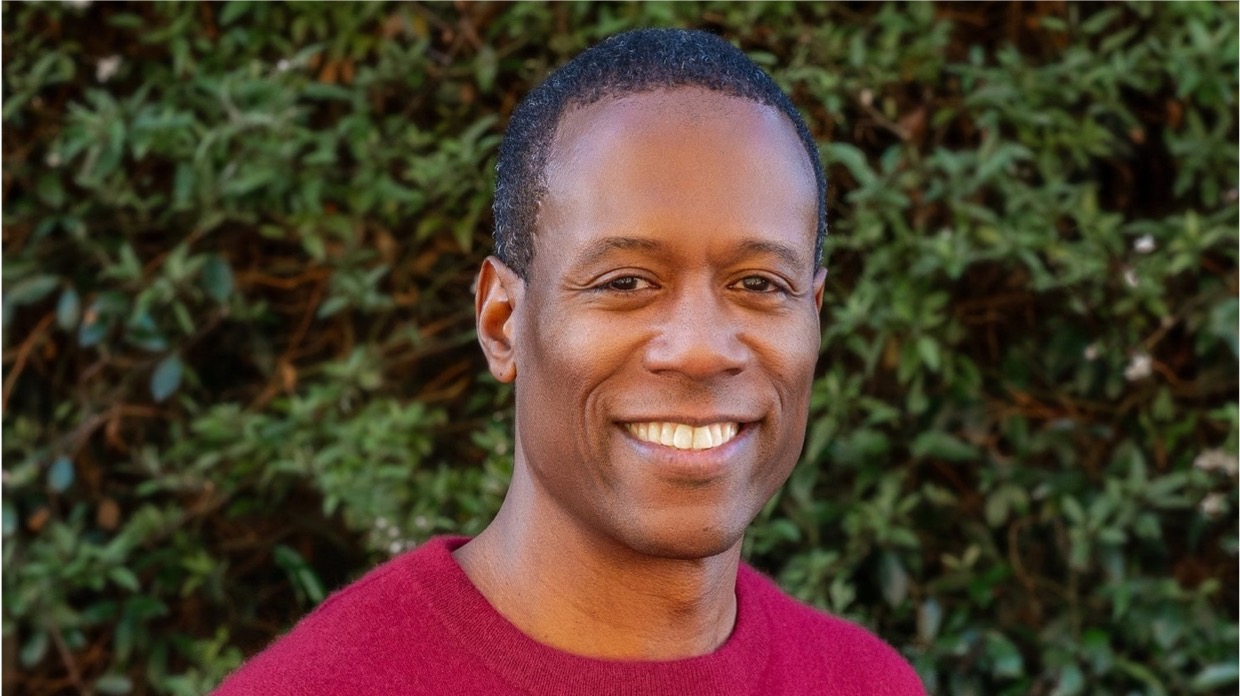
George Ashton is a partner and CEO at Candide Group, an impact investment and advisory firm focused on driving capital toward social justice. This post does not constitute investment, tax, or legal advice, and the author is not responsible for any actions taken based on the information provided herein.
Guest posts on ImpactAlpha represent the opinions of their authors and do not necessarily reflect the views of ImpactAlpha.