Capital for first-of-a-kind, or FOAK, deployments of climate technologies is among the hardest financing to raise, and even harder in small, emerging markets.
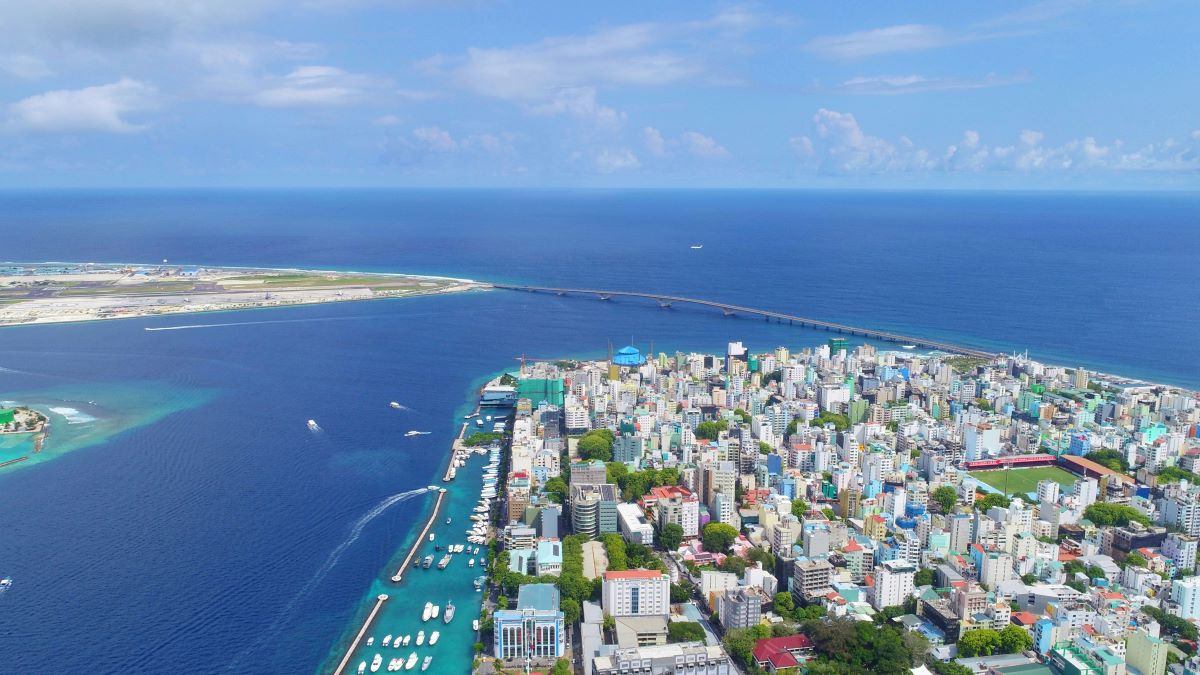
To help ready a subsea desalination facility in the Maldives for such financing, a catalytic water infrastructure fund from Water.org is investing an undisclosed amount of capital for a feasibility study to “establish the project’s technical and commercial structure” for the Malé Water and Sewerage Company, the local utility that is signing on as the project’s offtaker if it progresses.
The US-based nonprofit’s WaterConnect, which invests in water and sanitation infrastructure in emerging markets, is working with Norway-based desalination tech company Flocean to scope out a plant to deliver freshwater to Malé and Hulhumalé, two of the islands in the archipelago in the Indian Ocean.
Viable solution
Water infrastructure in WaterConnect’s target markets “can’t be done purely with public or commercial capital. It will inevitably require blended finance,” WaterConnect’s John Moyer told ImpactAlpha. The goal of the feasibility study and partnership with MWSC is to derisk Flocean’s plans so investors can come in on a fully “investment-ready project.”
Desalination is typically a “last resort” for producing fresh water because of the cost and complexity. Flocean develops undersea desalination facilities for islands and coastal regions. Its technology uses natural water pressure as its main energy source, rather than diesel or other fossil-fuel based energy sources. “Subsea technology is emerging as a viable solution for utility scale water supply,” said Moyer. “There’s real innovation happening in how water is produced or wastewater is treated.”
“Our overall objective is to increase the volume of investment ready opportunities in the sector.” Last year, WaterConnect invested with catalytic infrastructure investor InfraCo, Africa Water Infrastructure Development and others in a €93 million ($109 million) deal to develop water and wastewater treatment facilities in Naivasha, Kenya. The project was part of a public-private partnership. “Blended financing for water projects will continue to grow and hopefully concessional capital can be applied efficiently so that it’s crowding in private investment,” Moyer said.
Desalination innovation
Desalination is typically a “last resort” for producing fresh water because of the cost and complexity. Flocean develops undersea desalination facilities for islands and coastal regions. Its technology uses natural water pressure as its main energy source, rather than diesel or other fossil-fuel based energy sources.
“Subsea technology is emerging as a viable solution for utility scale water supply,” said Moyer, and uses about 40% less energy than traditional desalination methods. “There’s real innovation happening in how water is produced or wastewater is treated,” he continued. “That will open up new models and markets and opportunities for impact.”