Impact-linked finance, or ILF, is gaining visibility as funders look for ways to channel capital towards more inclusive ventures and hard-to-reach populations, and as entrepreneurs with impact-first models look for alternative sources of capital.
However, despite its merits, impact-linked finance is not scaling up as fast as it should or could. In addition to the need to make the sector more informed about these structures, there is also a need to simplify them, to ultimately bring down the time, resources and expertise needed to set them up and run them.
This is why LeFil Consulting decided to demystify and democratize impact-linked finance by developing facilities that would be dramatically faster and cheaper to implement than many other examples in the field. One such recent example is the gender impact-linked finance facility that we set up with Viwala, a Mexican debt investor specializing in small and growing businesses. Through this facility, we closed six impact-linked finance deals in less than two months, at a transaction cost of $3,000 per deal.
How did we do it? By finding a streamlined and scalable facility design. At its core, impact-linked finance is a contract that links financing terms to verified social outcomes. It is based on the premise that ventures that reach lower-income customers, strengthen gender inclusion or deepen impact should be able to access better or more flexible capital.
Where many impact linked finance facilities struggle, however, is to have a design blueprint that is easily replicable and relevant across a number of specific ventures, sectors and situations. After all, if every deal is customer-made, cost, expertise and time required inevitably go up. Three design principles helped us land such a blueprint.
1. A menu of impact items
Most impact-linked finance deals take a long time to set targets. Ventures often negotiate metrics from scratch, making verification costly and scaling difficult. Instead, we built an impact-target-setting system rooted in LeFil’s years of data collection stemming from working with hundreds of ventures, which helped us develop an impact assessment and benchmarking tool. After completing this short, structured self-assessment, each venture receives a tailored menu of improvement areas to choose from — some at the output level and some at the outcome level. Each impact item came with:
- a recommended benchmark;
- a predefined number of “impact points” that could be translated into interest rate discounts, if achieved;
- clear evidence requirements for verification purposes; and
- a structured implementation plan.
Ventures then chose the areas that were most relevant and feasible for them, usually three to five items on this menu. With this approach, each venture could choose where to focus and how ambitious to be, making trade-offs between the impact points it could collect and the improvement targets it could commit to. This menu approach also made replication easier. Metrics were immediately relevant; verification was predictable; and incentives were fair and motivating.
2. Gender as a North Star
To build an assessment and set of benchmarks that worked across diverse ventures and sectors, we needed a compass that was both universally relevant and operationally meaningful. The “gender inclusion angle” solved this. Gender is one of the most pervasive and structurally significant dimensions of inclusive impact for any organization. It consistently shapes access, usage, impact and growth performance across sectors. It is also a strong proxy for broader social impact: Improving gender practices often improves outcomes for typically underserved groups and tends to trigger wider inclusion benefits.
Gender inclusion is also linked to core business performance, including customer and staff retention, outreach growth, and teams’ creativity and productivity. For impact-linked finance facilities, this alignment between social impact and business performance matters. Incentivizing stronger gender practices drives impact and also strengthens the underlying business.
For us, gender provided a clear, scalable design anchor that was both impact-relevant and commercially meaningful. Instead of developing an impact menu that was centered on venture-specific operations or on a specific sector, we developed the assessment and benchmark tool focusing on gender dimensions detailed at every level relevant for an entrepreneurial venture.
3. Designing subsidies that reduce real barriers
We tested this blueprint approach through the Viwala gender impact-linked finance facility, which was funded by the Swiss Agency for Development and Cooperation. There is a second hurdle that is often faced by organizations wishing to work through an impact-linked finance loan, as they determine how exactly to use the impact subsidies. The choices for possible structures are endless.
At this moment, we went back to the drawing board and re-affirmed that an impact-linked finance deal is meant to bring hurdles and barriers down. Therefore, one of our key design principles was to understand the specific impediments that Viwala and its (potential) investees were dealing with. In this case, Viwala faced a high cost of capital and notable risk constraints that limited its ability to lend to impact-first ventures. The ventures themselves struggled with high interest rates, limited collateral availability, and limited resources to spend on staff and activities.
Based on this assessment, we leveraged grant-funded subsidies at four different levels, each addressing a barrier faced by the investor or the ventures:
- Blended capital to lower interest rates: SME loan rates in Mexico often exceed 30%. By blending Viwala’s capital with a recoverable grant from the Swiss Agency for Development and Cooperation, the facility cut rates to about 16%, a shift that made loans viable for impact-first ventures.
- Performance-linked discounts: Ventures could further reduce their interest rate down to 0% by achieving predefined impact targets.
- First-loss guarantee: A small first-loss tranche enabled lending to high-potential ventures that lacked collateral.
- Technical assistance: Targeted TA and small grants helped ventures reach their impact commitments, as incentives alone are rarely enough.
In other words, the facility was designed as a coherent bundle targeting the barriers that mattered most.
In terms of achievements, the facility was designed in weeks and fully deployed in a few months. Seven ventures were shortlisted, and six passed due diligence and closed impact-linked loans between $25,000 and $58,000. After the first year:
- Three ventures fully met their impact targets, reducing their interest rate to 0%.
- The other three ventures achieved between 76% and 89% of their targets.
- No venture defaulted.
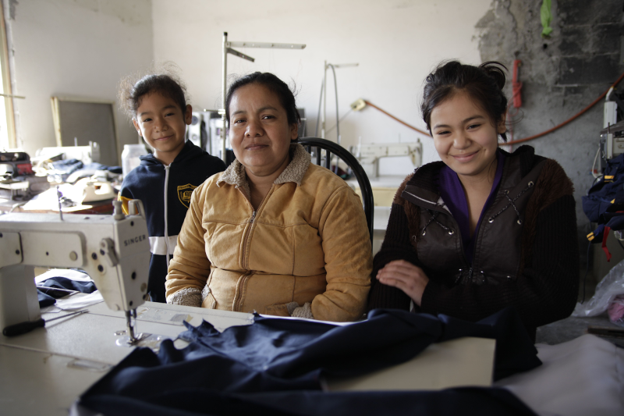
One venture, Altitud, a microfinance provider for home-based garment producers, discovered through our assessment tool that its marketing and sales force unintentionally reinforced gender stereotypes. It redesigned campaigns and rebalanced its sales team. As a result, it managed to double the share of male micro-entrepreneurs it served from 14% to 29%, driving a 10 to 15% sales increase.
Another venture, Básicos de México, identified gaps in caregiver protection and safety policies. The financing enabled it to introduce measures such as enhanced parental leave, lactation rooms and emergency protocols, improving staff satisfaction and retention.
Beneficiary ventures liked the model. They appreciated the transparency, fairness and the fact that they had agency in setting their impact commitments. Our experience with this facility demonstrates that adopting the design principles outlined above can unlock a simpler, faster and more effective approach to impact-linked finance. For those who want to dig deeper on how it works, our full impact-linked finance report unpacks the proposed methodology step by step.
Cynthia Tjin is a Consultant at LeFil Consulting.
Guest posts on ImpactAlpha represent the opinions of their authors and do not necessarily reflect the views of ImpactAlpha.