
I met Josephine in rural Kenya a few years ago. She had moved out of Nairobi to start farming — three acres of coffee, hibiscus, fish, and a small patch of maize and beans for her family. When I arrived, she proudly showed me her vision book, a notebook filled with hand-drawn sketches of what her farm would look like in three years. She wasn’t just a farmer; she was an entrepreneur, an optimist and a planner.
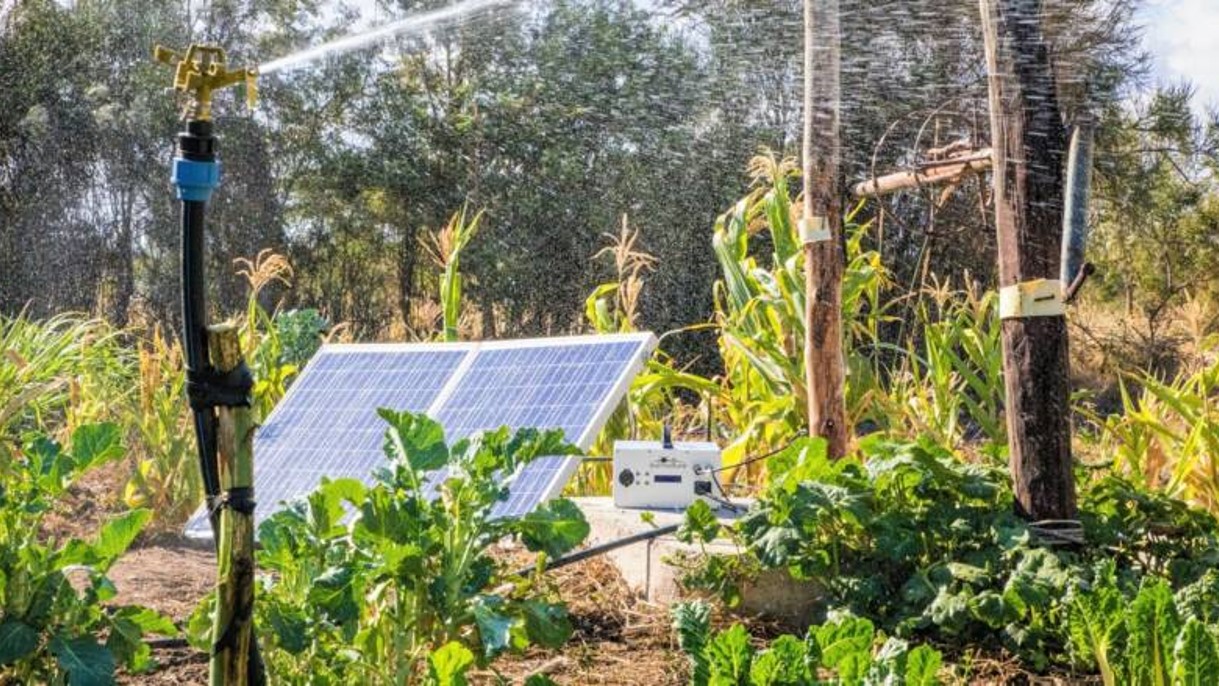
But she also told me how close she came to giving up. The rains had failed, her well had dried up, and she was at the edge of losing everything. One night, exhausted, she prayed for a solution. The next morning, she got a call from a salesperson at SunCulture — a company we invested in at the Acumen Resilient Agriculture Fund — offering a solar-powered irrigation pump she could pay for in installments. The only problem was the down payment, which was less than $100. She borrowed the money from her son, made the leap, and within two years, she had paid off the pump and transformed her life.
Today, Josephine sells branded coffee and herbal teas, runs a small fish pond and recently built a two-bedroom house where a shack once stood. Her story isn’t about charity. It’s about proof that when you give farmers the right tools, they do the rest.
Her story is one of thousands proving that resilience isn’t theoretical; it’s investable. And yet, the global system still treats stories like hers as exceptions rather than the rule.
From ambition to implementation
COP30 is being called the “Implementation COP.” The world has spent years making pledges. Now it’s time to fund the people and small businesses, like Josephine’s, that are proving what climate resilience actually looks like on the ground.
We know that adaptation and resilience receive only about 5% of total climate finance, and less than 5% of that comes from the private sector. It’s a trillion-dollar blind spot in global climate strategy. Yet for too long, resilience has been treated as a humanitarian expense rather than an investable opportunity.
We know where that leads. When farmers lack reliable water, inputs or access to markets, entire food systems weaken. Prices rise. Stability erodes.
Investing in resilience isn’t just about compassion. It’s about protecting supply chains, fiscal systems and political stability.
Proof that resilient agriculture pays
For investors and policymakers heading to COP30, implementation requires measurable evidence that climate adaptation delivers both impact and returns.
Across 12 agribusinesses in our portfolio at the Acumen Resilient Agriculture Fund, our latest research found that 89% of farmers reported higher production and 90% reported higher incomes. Portfolio companies saw 2.6x revenue growth, 5.6x follow-on capital and 129% job growth. Farmers with increased income were 33% more likely to recover from a climate shock and end up better off afterward.
These aren’t pilots or theory. They’re evidence that resilience delivers real, measurable returns.
Take Kentaste in Kenya, a coconut processor that sources from smallholder farmers across East Africa. When drought hit in 2024, follow-on financing by Acumen helped the company expand into Tanzania to secure supply. Instead of losing ground, Kentaste grew revenues by 47% and boosted farmer incomes.
Or look back at SunCulture, the company that sold Josephine her solar pump. A pilot program in Kenya showed that lowering the cost of pumps by just 25% tripled sales velocity. The impact goes far beyond one farmer. If Kenya invested in subsidies, farmer credit instruments and awareness campaigns to make solar irrigation affordable for smallholders, the country could achieve 50% food self-sufficiency within five years.
That’s what implementation looks like: turning climate ambition into investable proof.
Building the resilience asset class
Resilience needs a continuum of capital — philanthropic, concessional and commercial. Each has a role to play. At the Acumen Resilient Agriculture Fund, we’ve learned that philanthropic capital works like R&D funding, testing early-stage agribusiness models that are too risky for mainstream investors. Once those models are proven, funds like ours step in to scale them with patient, commercial discipline.
We provide a bridge between philanthropy and markets, helping promising enterprises graduate from dependency to profitability. It’s also how we de-risk resilience for larger investors without stripping away the social mission that makes it valuable in the first place.
Subsidies, for example, can be productive when used to lower the cost of climate-smart products and services so that more smallholder farmers can have access, which helps them improve their climate resilience. There’s a long history of being quick to subsidize farmers in the Global North, whether through cheap credit or price supports. Yet we hesitate to do the same for smallholders in Africa and Asia who produce the food that feeds billions. Strategic subsidies that make resilient technologies affordable aren’t charity, they’re common sense.
Fund proof, not promises
As we head into COP30, let’s measure progress not by the size of new pledges, but by the number of farmers, like Josephine, whose lives have been transformed.
We’ve spent years talking about resilience. The evidence is here. It delivers returns for farmers, for investors, and for the stability of nations. Now it’s time for capital to follow.
If ambition is to mean anything, we must stop counting promises and start funding proof.
Tamer El-Raghy is a managing partner at the Acumen Resilient Agriculture Fund. Check out Acumen’s “Investing in Resilience” report for more.
Guest posts on ImpactAlpha represent the opinions of their authors and do not necessarily reflect the views of ImpactAlpha.