
Greetings Agents of Impact!
📞 Agents of Impact Call No. 72: Policy action for shared prosperity. Abundant economic opportunity. Uplifted community ecosystems. Access to clean air and water. These opportunities require not only investment capital but effective public policy and incentives. Agents of Impact are working in a challenging environment to advance policies for shared prosperity in Washington, DC, and in the states. Join Opportunity Finance Network’s Dafina Williams, Ceres’ Andrew Collier and Fran Seegull of the US Impact Investing Alliance, to map the new policy landscape, Tuesday, June 24, at 10am PT / 1pm ET / 6pm London. RSVP today.
In today’s Brief:
- Raising African-led funds of funds to finance small businesses
- S2G’s investments in food as medicine
- Collateralizing loans with farmers’ produce
- Why private equity firms are managing companies for the longer term
Featured: Pathways to Growth
African investors warm to regional funds of funds to finance small business growth. Years-long efforts to get local funders in Africa to step up with financing for small businesses and economic development are starting to bear fruit. In Ghana, the Ci-Gaba Fund-of-Funds is nearing a first close to drive capital to small and mid-sized businesses revolving around sports betting online in West Africa. “Fundraising has been good,” said Hamdiya Ismaila of Savannah Impact Advisory, which manages the fund, expressing a sentiment not often heard from fund managers in today’s market. In Zambia, the central bank is providing $200 million to anchor the Small Business Growth Initiative, a small business fund of funds. “I’m looking forward to the numbers beginning to show that the finance ecosystem is being disrupted,” said Austin Mwape, a former deputy governor of the Central Bank of Zambia who is now working with the National Advisory Board for Impact Investing Zambia. And in Nigeria, pension funds have said they will match a possible $50 million investment from the government in the Nigeria Wholesale Impact Investment Fund, which will invest in funds tackling poverty alleviation, job creation and sustainable economic growth.
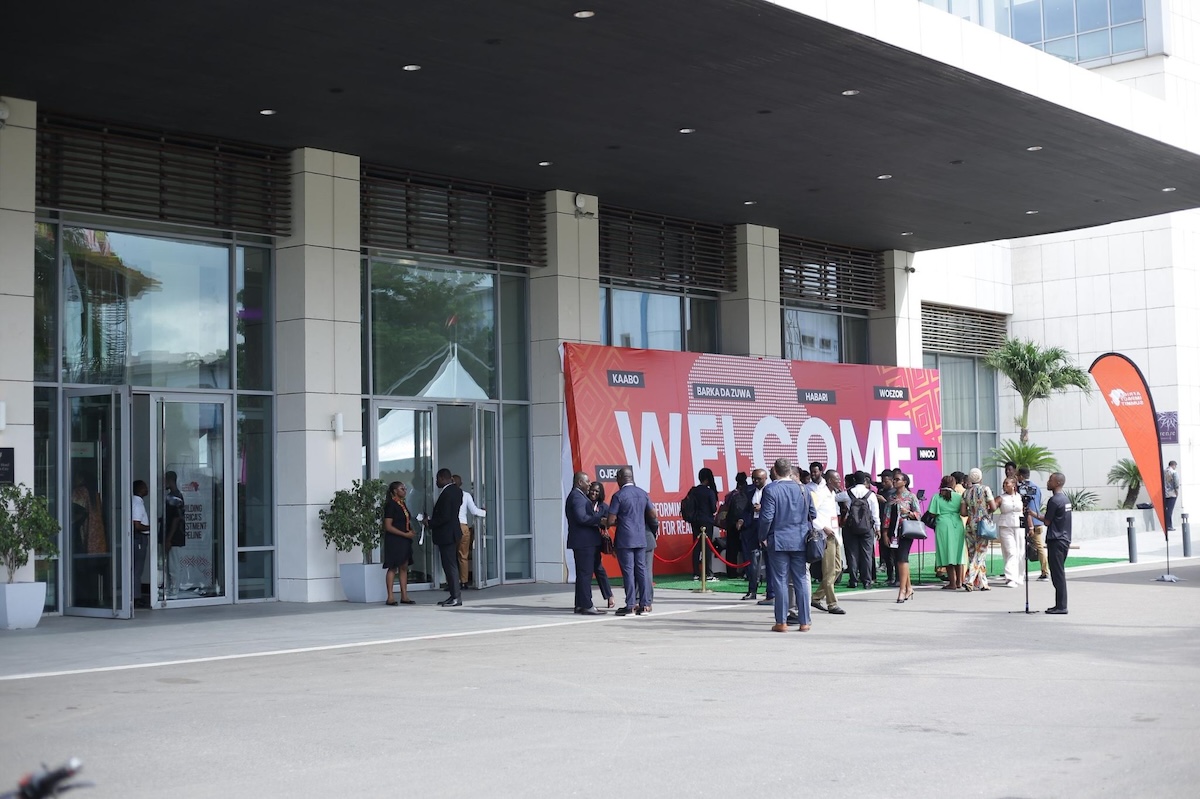
- Hourglass dilemma. Ismaila and Mwape spoke to ImpactAlpha at last week’s Africa Impact Summit, hosted in Accra, Ghana, by Africa Impact Investing Group, a consortium of African national advisory boards for impact investing. The theme of the event: “Transforming systems: Redefining impact for real change in Africa.” The locally-led funds of funds are a response to what has been called “the hourglass dilemma.” “We have all this big institutional capital that can’t get to small businesses,” said Drew von Glahn of the Collaborative for Frontier Finance. “These funds of funds create pathways for institutional capital to reach the underserved small business finance market.”
- Ghana model. Launched in 2023, Ci-Gaba, a $75 million blended finance vehicle developed by Impact Investing Ghana, is looking to raise 70% of its capital from domestic investors. It expects to reach a first close of around $35 million in September. Operational expenses have come from the Argidius Foundation, aided by the Growth Firms Alliance, an alliance of five philanthropic funders. Ci-Gaba already is making investments with capital from two Ghanaian pension funds, backstopped by catalytic capital from UK government-backed FSD Africa. “It’s a demonstration, and so I want to make sure that this thing works,” Ismaila said.
- Wholesale impact. The three funds, initiatives of GSG Impact’s national advisory boards in each country, are addressing a financing gap for small businesses and critical economic growth sectors. The strategy takes a page from other “wholesale” impact investment models, like the UK’s Better Society Capital (formerly Big Society Capital), which has leveraged £425 million from dormant bank accounts to finance UK-based social enterprises and charities. In Africa, “local pensions have been a clear and obvious potential source of patient capital,” GSG Impact’s Elizabeth Boggs Davidsen told ImpactAlpha. Domestic anchor investors are “the most important piece of the puzzle,” she added. “If you can hook a domestic source of capital, it gives a sense of certainty to other institutional investors.”
- Keep reading, “African investors warm to regional funds of funds to finance small business growth,” by Lucy Ngige.
Dealflow: Food as Medicine
S2G invests in Mealogic to provide ‘food as medicine.’ As the connections between food and health become more clear, entrepreneurs and investors see an opportunity to treat disease and promote health with nutritional interventions. Washington, DC-based Mealogic provides low-sodium, anti-inflammatory, plant-based and other nutritionally tailored meals on a white-label basis to healthcare providers. The company “is helping advance both prevention and treatment for diet-related health challenges,” says Mealogic’s Derek Mansfield. Mealogic raised $16 million, led by S2G Investment. Unilever Ventures, Dohmen Company Foundation and US Venture Partners also invested.
- Food as health. The emerging “food as health” or “food as medicine” sector is often seen as the realm of philanthropy or government funding (for background see, “Spotlight: The Rx for what ails Americans might be healthy food”). S2G Investments, the investment firm spun out of Builders Vision a year ago, has developed an investment thesis around healthy food. “Food and healthcare have traditionally operated as separate systems, yet they are deeply intertwined, shaping everything from individual health to national healthcare costs and long-term well being,” S2G’s Matt Walker told ImpactAlpha. “By supporting innovations that tackle chronic disease through nutrition and prevention, we’re helping build a more resilient, affordable and proactive health system.”
- Healthy portfolio. S2G, which also targets investments in oceans and energy, has more than 80 portfolio companies in its food and agriculture vertical. Mealogic marks the firm’s seventh “food as health” deal. Others include Mend, which provides nutritional supplements to aid in surgical recovery and rehabilitation; NourishedRx, which offers medically tailored meals to prevent and manage chronic conditions; and Faeth Therapeutics, which is developing cancer-specific nutrition interventions to improve patient outcomes.
- More.
Winich Farms tops up funding to offer ‘produce-collateralized’ loans. Lagos-based Winich Farms has built a digital marketplace connecting over 180,000 smallholder farmers, logistics partners and agricultural produce buyers and factories. The startup raised an undisclosed amount of funding from Egyptian venture capital firm DisrupTech Ventures. The funding is part of Winich’s pre-Series A round, which raised $3 million last year in equity and debt from the Acumen Resilient Agriculture Fund, the Climate Resilient Africa Fund, Plug and Play, Sahel Capital and others.
- Embedded finance. To bypass exploitative middlemen, farmers sell their harvest through Winich’s rural collection points and receive payments within 48 hours. Winich has partnered with Nigerian digital lending and payments platform SeedFi to extend loans collateralized by farmers’ produce. The startup links farmers to financial institutions that use farmers’ trading records to gauge their creditworthiness. Winich expanded to Tanzania last year and plans to enter other African markets. It is looking to export to Europe and the Middle East.
Dealflow overflow. Investment news crossing our desks:
- Orlando, Fla.-based PureCycle Technologies, which converts plastic waste into pure resin for use in the textiles, packaging and automotive industries, raised $300 million from the Duquesne Family Office, Wasserstein Debt Opportunities and others for a recycling plant. (PureCycle)
- LeapFrog Investments’ second fund has exited Fincare, an Indian microfinance lender that serves rural women running micro businesses. (LeapFrog Investments)
- Australia’s Allume Energy, which provides shared rooftop solar for residential homes, landed A$10.2 million (US$6.6 million), with backing from electric utility company E.ON’s UK subsidiary. (Renew Economy)
- Mumbai-based Saswat Finance, which uses alternative data to underwrite credit for rural entrepreneurs and smallholder farmers, raised $2.6 million in a round led by Ankur Capital. (Entrepreneur)
Signals: LP/GP
Private equity firms are managing companies for the longer term, by necessity. Private equity firms are sitting on $1 trillion in aging deals that they now must manage for the longer term. PE firms collectively own some 30,000 portfolio companies, worth an estimated $3 trillion. Nearly a third of those companies have been held for more than five years, years longer than was once typical. “These are staggering numbers,” says Josh Smigel of PwC. High interest rates, tariffs and economic uncertainty are gumming up the normal PE machinery, through which funds take stakes in private companies, make strategic changes to their operations, and spin them off to a buyer or public markets to recycle capital to their investors. With the increased holding periods, along with elevated interest rates, PE firms must increase portfolio company profits and enterprise value to achieve targeted rates of returns. Achieving attractive outcomes now depends on delivering operational performance and strategic transformation, PwC counseled in its mid-year deal and private equity outlooks released today.
- Take private. Mergers and acquisitions are likely to pick up as corporations look to exit underperforming assets to refocus on core businesses, reduce debt and boost cash flow, says PwC. Another propellant: activist investors looking to capitalize on market volatility and depressed valuations. PE firms sitting on dry powder are finding attractive opportunities, especially in public market sectors where they can get a discount on undervalued companies. Take-private deals this year are on pace to exceed last year’s, when the value of such deals increased by 32% year-over-year to nearly $150 billion globally. TPG Rise Climate acquired Stamford, Conn.-based solar developer Altus Power in February this year, with plans to take the company private.
- Go public. There are signs that the window for IPOs may finally be expanding. “We’re moving into a lean-in market, where buy-side investors are willing to accept the more bullish case,” said PwC’s Mike Bellin at a media briefing held ahead of the report’s release. The more than 30 IPOs that have taken place this year – notwithstanding a pause after President Trump’s early April “Liberation Day” – have mostly performed well. Some 200 companies have filed to go public and are waiting for the right moment. Special purpose acquisition companies, or SPACs, are also staging a comeback, with some higher-quality targets this time around. This week, sustainable fuels maker XCF Global Capital went public via a SPAC merger.
- Keep reading, “Private equity firms are managing companies for the longer term, by necessity,” by Amy Cortese and Roodgally Senatus.
Agents of Impact: Follow the Talent
Reinvestment Fund adds Grace Chang, previously with Umpqua Bank, as a community lending senior underwriter, Kimberly Lundy as chief people officer, Patricia Luna as southeast lending senior director, and Ramon Estevez as a national lending senior underwriter… Keely Anson, formerly with Loamist, joins Autodesk Foundation as an energy and materials investment lead… GLIN Impact Capital appoints Hideki Kojima of SHIFT Growth Capital as its growth strategy executive advisor.
The Illinois State Treasurer is recruiting a manager of stewardship and sustainable investments… Salesforce Ventures is looking for a San Francisco-based analyst for its impact fund… New York City’s Office of the Comptroller is on the hunt for a responsible investing officer… Johnson & Johnson is searching for a social impact director in New Jersey… The Greenlining Institute is recruiting a president and CEO in Oakland, Calif.… BBVA seeks a sustainability and low-carbon transition advisory associate in Houston.
The Global Energy Alliance for People and Planet is hiring a director of corporate and philanthropy partnerships in Washington, DC… Broadstreet Impact Services is looking for a vice president of New Markets Tax Credits lending and investing… The Asian Infrastructure Investment Bank has an opening for an environmental and social manager in Beijing… CapShift has mobilized $1 billion in impact investments… Northwestern University’s Kellogg School of Management is accepting entries for its Moskowitz Prize, an award for the best research paper on sustainable and responsible investing, until Tuesday, July 1.
👉 View (or post) impact investing jobs on ImpactAlpha’s Career Hub.
Thank you for your impact!
– June 18, 2025