
Private equity firms, long known for laying off workers to boost profits, are instead starting to look for a competitive edge by sharing a portion of their payouts with employees.
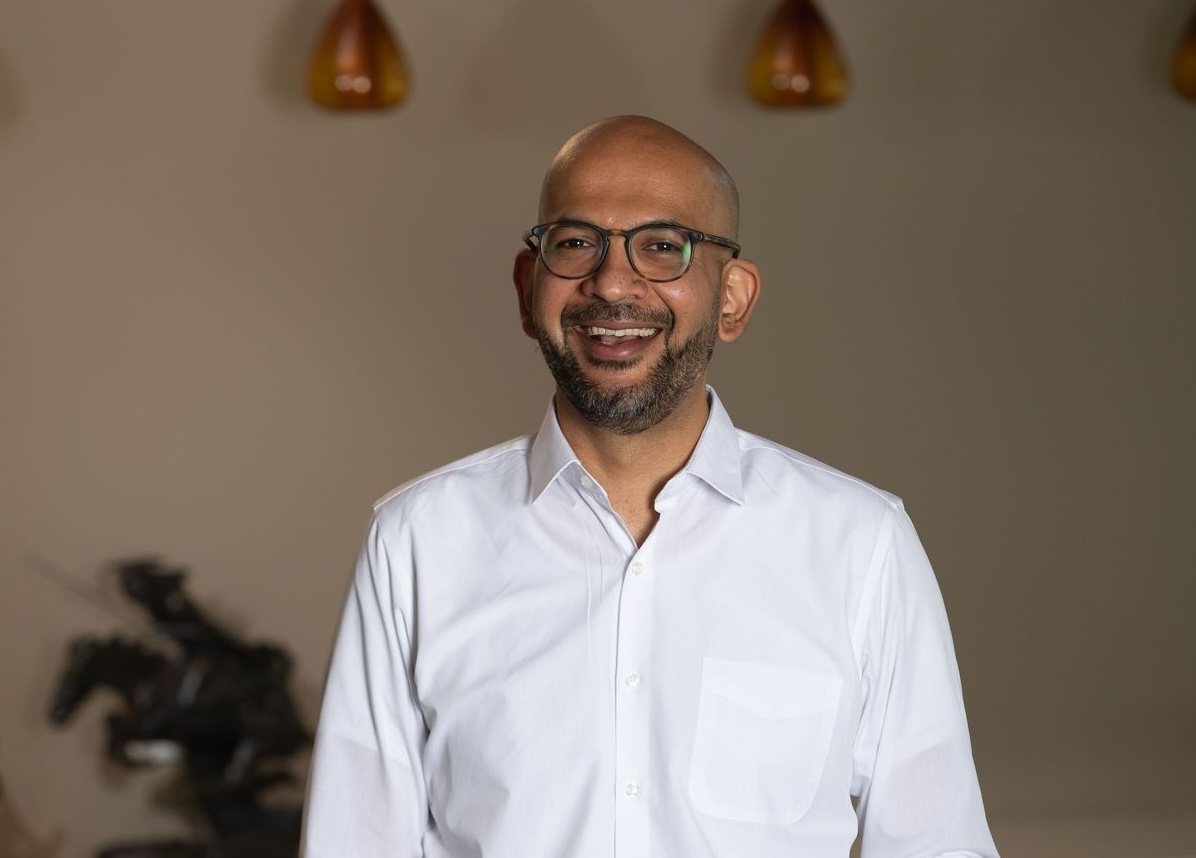
KKR, the $638 billion private equity buyout giant, is winning deals from competitors because of the firm’s commitment to employee ownership plans that promise millions of dollars in payouts to non-management workers, says Pete Stavros, KKR’s co-head of global private equity.
When KKR won a $1.6 billion auction to acquire Simon & Schuster in 2023, the publisher touted the private equity firm’s pledge to let employees “participate in the benefits of ownership.” The CEO of Charter Next Generation extolled the “life-changing benefits” of KKR’s ownership program for the packaging producer’s employees after KKR’s 2021 acquisition.
And Matt Malone, CEO of Groundworks, chose KKR in 2023 as a growth partner in part based on the firm’s commitment to cut in the foundation repair company’s 4,000 mostly blue-collar employees through an equity sharing program “that will allow every colleague to participate in the success they help to create.”
Malone’s “whole reason for being is to elevate trades people. So what we are trying to do and what he is trying to do are so values aligned,” Stavros said in a Q&A with ImpactAlpha.
“There have been some CEOs who have been pretty vocal that, ‘Hey, this was a close race at the end among multiple buyers, and we chose KKR because of their orientation towards workers,’” Stavros said. “It’s not just ownership. It’s the broader ethos around how people are treated, information sharing, employee engagement, teaching financial literacy that’s been pretty attractive.”
Policy proposals
Stavros is trying to bring his competitors along as well. He has championed broad-based employee ownership through Ownership Works, an association of more than 90 private equity firms, foundations, corporations and labor advocates. The members have a collective goal of creating $20 billion in wealth for workers through employee ownership by 2030. The organization’s model calls for workers to accumulate stakes worth at least half of their annual income over five years.
By the end of last year, Ownership Works had supported the introduction of shared ownership programs at 123 companies, reaching over 180,000 employees. The cumulative estimated value of the equity granted by these programs – directed to workers outside the C-suite – is over $8 billion. Workers have already realized over half a billion dollars in payouts through dividends and liquidity events.
Blackstone, another large private equity player that last year said it would adopt broad-based employee ownership as part of its US buyout strategy, is not a member of Ownership Works.
KKR in January became the largest non-index fund shareholder in Henry Schein, a publicly-traded supplier of dental and medical products, it was the first time the private equity firm had implemented shared ownership at a publicly-listed company.
In March, the 4,000 global employees of Kito Crosby, a Texas-headquartered manufacturer and distributor of shackles, chains, hooks and other industrial lifting and safety products, were set to receive checks worth up to 12 months of income following the company’s sale to its competitor, Columbus McKinnon.
And when KKR announced the sale of Kito Crosby, a share of the company’s employees were unionized under the International Brotherhood of Teamsters.
“Too often I hear people say that ownership and unions don’t mix and this is one of many examples proving that isn’t the case,” Stavros shared on LinkedIn.
Stavros has now turned his attention to policy changes to expand the use of Employee Stock Ownership Plans by expanding tax incentives and legal protections. Expanding ESOPs is working with legislators to introduce a bill in Congress.
ImpactAlpha caught up with Stavros on the eve of this week’s Milken Global Conference in Beverly Hills. Some excerpts from the conversation:
ImpactAlpha: Where does KKR’s employee ownership initiative stand?
Stavros: We’re still early. Within KKR, we have roughly 65-plus companies that we’ve rolled out ownership with. We are increasingly doing it around the world and across investment strategies. It started with one industry, which was industrials, and in just our US private equity business. Now, we’ve done this in Vietnam, Japan and across Western Europe in private equity infrastructure. We’ve done it in our SIG (strategic investment group) business a couple of times. And when I say private equity, I mean broadly: impact funds, large cap, mid cap. That is 150,000 frontline people.
We’ve stood up a Human Capital Center of Excellence, which I chair. Within the firm, we are trying to develop and share best practices around how to roll out these programs and communicate them and make them as effective as we can from a culture-building standpoint. And we share what we’ve learned with Ownership Works and we’re also, of course, taking in what Ownership Works has been developing.
ImpactAlpha: Your initial hypothesis was that manufacturing businesses were better suited for employee ownership than businesses in other sectors. Now you’ve expanded. How has shared ownership worked in other sectors?
Stavros: There are characteristics of a business that can make this easier or harder. Do you actually get culture change, measured as engagement scores increasing and quit rates dropping? Something like 60% of the time, we get a pretty meaningful and measurable drop in the quit rate. Unfortunately, it’s not 100%.
There are some things that make it harder or easier to get that cultural shift we’re looking for. One is how geographically distributed the workforce is. This is harder with a global business, where there’s lots of facilities. You’re dealing with all sorts of logistical challenges, languages, time zones, cultural differences around what ownership means in different countries. There are regulatory, legal, tax accounting differences around the world.
The second one is the number of employees relative to the value of the company. If you think about giving workers a shot at earning, let’s say, 100% of their income, and you have a grocery store chain with lots of employees, it’s very dilutive. So that makes it harder.
And third, to use the grocery store example again, it is harder if the workforce is just churning. Walmart or a big retailer probably rehires the whole front line every year. If you show up and start talking about ownership and five-year plans, that’s difficult.
When you look at manufacturing, you tend to have some anchor sites. It’s not like a grocery store chain, where there are little stores all over the place. Manufacturing tends to have a few anchor sites. The ratio of people to value tends to be reasonably attractive because a lot of the value in the company is going to be in property, plant and equipment, the actual hard assets. And then the last thing is manufacturing employees. There’s turnover, but it’s not the same kind of churn as in a retailer.
What we’ve learned is you can actually do this everywhere. In the situations where it’s harder, you’re starting from a higher point of churn and lower point of engagement, so you’re kind of starting in the basement. And so even though it’s harder, there’s more upside. I do think this can work everywhere.
ImpactAlpha: Tell us about the buy-in at KKR itself. Do all the different managers and divisions understand the value proposition behind ownership?
Stavros: It’s very culturally aligned with KKR. If you go back to when KKR went public, everyone got stock in KKR. Even today, everyone’s a shareholder at every level.
It’s not something we force on people. There’s not been a lot of resistance like, ‘Why would I ever do this?’ It’s been more, ‘Hey, sounds like there’s a real business case here, and we can do some real good for our employees. Let me try it.’ We’ve given them the freedom to experiment. We’ve had a steady and consistent uptick in adoption, to the point where we now do this with every company in the US where we have operational control across all of our private equity strategies. I suspect, over time, we’ll get there in Asia and Europe as well.
ImpactAlpha: You’ve touted the competitive advantage that employee ownership offers in the buyout market. How’s that thesis playing out?
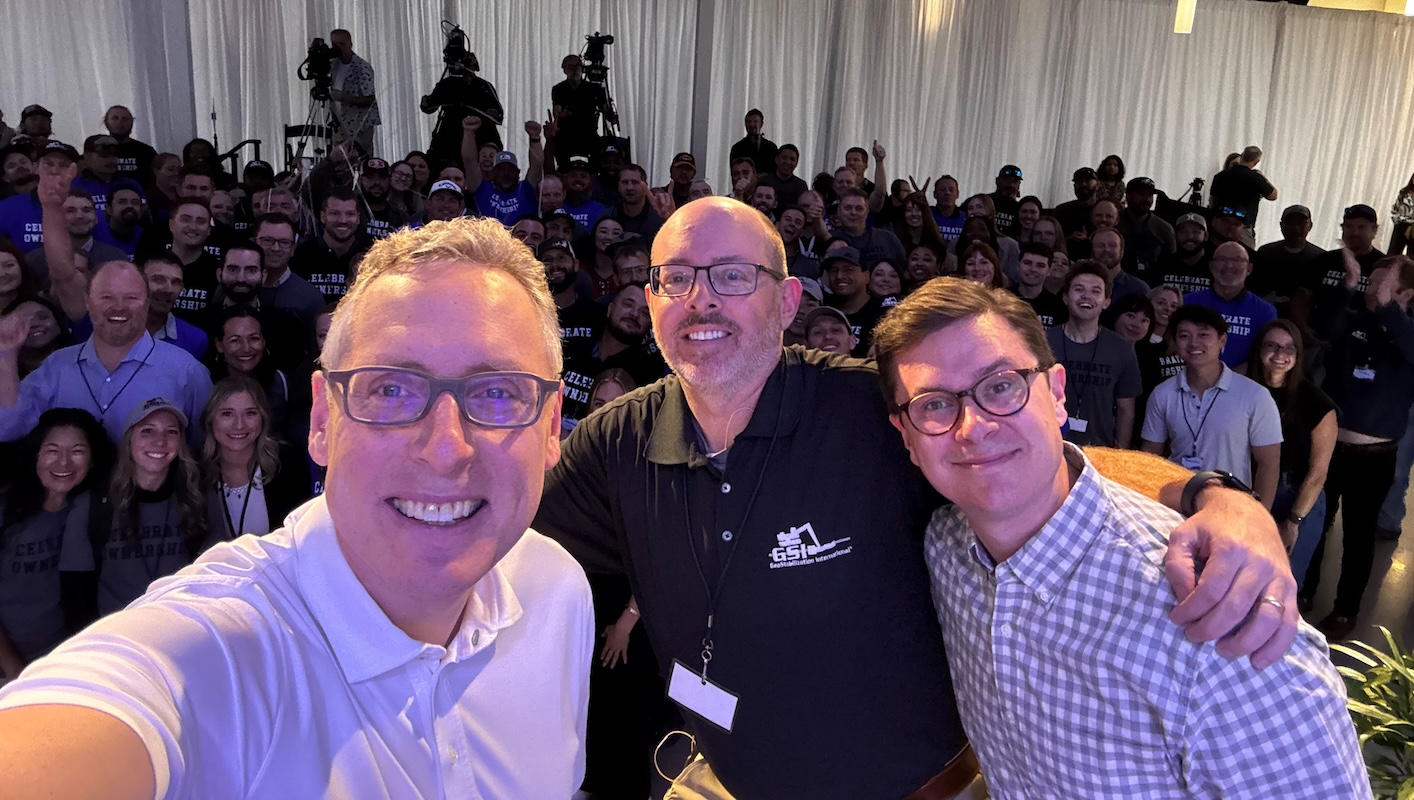
Stavros: We’ve had a number of these examples where a company has an Ownership Works program, and it sells to another private equity firm and they replicate the program. Imagine you’re the new private equity owner. Are you going to say, ‘Hey, Berkshire Partners did this, but we’re the new private equity investor and that’s all gone. All the ownership and worker voice and sharing information and sharing the business plan – we’re not gonna do that anymore.’ That’s a pretty tough message. Once the program is installed, it’s highly likely to be replicated by the new owner. That was the case when we sold RBmedia, when we sold GeoStabilization International.
There’s been a number of examples where not just employee ownership, but the whole philosophy of the focus on the frontline has been advantageous. There have been some CEOs who have been pretty vocal that ‘Hey, this was a close race at the end among multiple buyers, and we chose KKR because of their orientation towards workers.’ Simon Schuster is an example of this. The CEO of Charter Next Generation was also very vocal about this. And again, it’s not just ownership, it’s the broader ethos around how people are treated, information sharing, employee engagement and teaching financial literacy that’s been pretty attractive.
Another example is Groundworks, Matt Malone, the CEO, had a private equity partner. It was a great deal for them. Oftentimes private equity firms are quite appreciative of the job a CEO did to make them a lot of money, and they said to Matt, within reason, you can pick your partner. And Matt said, ‘Great, it’s KKR.’ That company is very much a worker-centric business. They repair and remediate foundation damage in homes from water damage, and so it’s kind of like a construction business. Matt, his whole reason for being is to elevate trades people. So what we are trying to do and what he is trying to do are so values aligned.
ImpactAlpha: The different structures of employee ownership vary in terms of how much wealth they share. How do you think about the gradations of ownership and levels of sharing?
Stavros: I’m a fan of all of it: worker-owned co-ops, employee stock ownership plans, employee ownership trusts, the Ownership Works model. It’s all great. I think it’s unfortunate when people start getting into, ‘Your (model) isn’t good enough.’
One of the things that people sometimes point to is a percentage. The first thing that’s really important to understand is that percentages are totally meaningless. I could give you 100% of a company and if I have enough leverage on it, the percentages, it doesn’t mean anything. What matters is dollars to workers.
And let me just compare ESOPs, which I’ve already said I’m a huge fan of, with the Ownership Works model. Sometimes people will say ESOPs are 30%, Ownership Works, I wouldn’t know what the percentage is. An average ESOP benefit to an employee, say a generous ESOP benefit, would be 8% of wages a year. So over a five-year period, that’s 40% of your income. The Ownership Works model is a bare minimum of 50% over five years and we’re shooting for much more than that.
ImpactAlpha: Ownership Works’ latest impact report shows that out of the $570 million of wealth created for workers, just $176 million had gone to low- and moderate-income earners and even less to families of color. How do you think about that breakdown?
Stavros: If you think about Ownership Works having just started, and a private equity timeline being ordinarily five years, the dollars you’re quoting is cash out the door to workers, which, to be honest, probably should be zero, because most private equity investments are five-year holds. What we’re after is dollars of stock allocated. It may take years for it to come to fruition in cash. It’d be crazy to think that $20 billion of wealth is going to be in cash in someone’s hands by 2030.
What we’re gunning for is the dollars of wealth, even if it’s not yet liquid. And by the way, take an ESOP as an example, you have to retire before you get your cash. What we’re after is dollars of wealth in people’s accounts and then it’s going to crystallize into cash as companies go public and get sold.
ImpactAlpha: You’ve launched Expanding ESOPs to expand the number of employee-owned businesses. What would drive adoption of employee ownership more broadly in the economy?
Stavros: One is continuing to prove out the business case. Doing employee ownership, where it’s not just, ‘I gave workers some stock,’ but doing it the real way, which is around driving employee engagement and sharing information, teaching financial literacy and everything that we always talk about. So building out the business case with more data, more case studies, showing things like what happened with GeoStabilization International. We took the quit rate from almost 50% to 15%. That’s transformational in terms of a culture. Having said that, even if the business case were bulletproof, there’s still gonna be a limit to how many CEOs want to take this on. This is a lot of work, it’s years to get the payoff, and it’s not always gonna work.
If we’re talking about transforming the economy, to have an economy of worker-owners, that’s going to take policy. That’s the idea behind trying to modernize the ESOP laws from 51 years ago. Fundamentally it’s protecting companies, as long as they do it the right way, in forming an ESOP, protecting them from litigation. There’s hundreds and hundreds of lawsuits that have taken place between the government or the plaintiff’s bar and ESOPs that have been formed that have a chilling effect on the market. We think there’s a way, if we can spell out what they call a safe harbor, to ensure that if you do things this way, we know workers are protected. We know it’s fair. You’re not going to get sued.
Secondly, there are different models of ESOPs. The partial ESOP model today is not terribly economic to the company, and so making the economics make more sense by adjusting the tax incentive would be a way to get much more partial ESOP activity. The 100% ESOPs that are formed, they’re most of what we have today. We just don’t get enough of them. We get a couple hundreds of them a year. They tend to be more small-cap businesses with fewer than 50 employees. That’s awesome. Let’s keep doing that.
This partial ESOP model could expand the market to include bigger companies, public companies, investor-owned businesses, companies that are in all sectors of the economy. Most new ESOPs are in services and industrial companies. But what about software, media, technology, financial institutions? We need activity there as well.
ImpactAlpha: Under these numbers, would KKR qualify for the ESOP tax benefits?
Stavros: I don’t know if we would do ESOPs or not, or whether we just keep doing what we’re doing. KKR, I’m confident we’re going to do this with hundreds and hundreds of thousands of workers and create tens of billions of wealth for workers. But it’s still a drop in the bucket in terms of the broader economy. So I don’t know if we will use the ESOP model even if the laws changed, but I do believe strongly it would be much more broadly used out in the economy than it is today.
We’ve done a bunch of private polling work and focus group work at expanding ESOPs. It’s popular across the political spectrum. People want to see more employee ownership. They’d be more likely to vote for candidates who support employee ownership (see, “In a polarized US Capitol, employee ownership brings lawmakers together”). And across the spectrum, they want government intervention to make it happen.
https://impactalpha.com/in-a-polarized-us-capitol-employee-ownership-brings-lawmakers-together/