
Greetings Agents of Impact!
📞 Today’s Call: Sharing the wealth through employee ownership. Join Malini Ramanarayanan Moraghan of the Essential Owners Fund, Apis & Heritage’s Michael Brownrigg, Ownership Capital Lab’s Alison Lingane, Social Capital Partners’ Jon Shell, and Lafayette Square Institute’s Jack Moriarty on today’s Agents of Impact Call to share emerging strategies for helping workers become owners. That’s today, March 26 at 10am PT / 1pm ET / 5pm London. There’s still time to register.
- Meet the speakers. Can’t tell the players without a scorecard? See below.
🔌 PluggedIn: Why LPs still see opportunities in equitable climate tech. Climate tech continues to attract significant investment despite shifting policy priorities in Washington, DC. On the next Plugged In, Symphonic Capital’s Sydney Thomas and Shruti Shah join Sherrell Dorsey to share how the early stage VC firm identifies and supports innovative climate solutions, and why they remain committed to equity and overlooked communities. Tune in Tuesday, April 1, at 10am PT / 1pm ET / 6pm London. RSVP now.
In today’s Brief:
- Biodiversity and regenerative models on the agenda in Latam
- Ownership opportunities via franchising
- Fund strategies for employee ownership
- Remembering Lisa Hall
Featured: Impact in Latin America
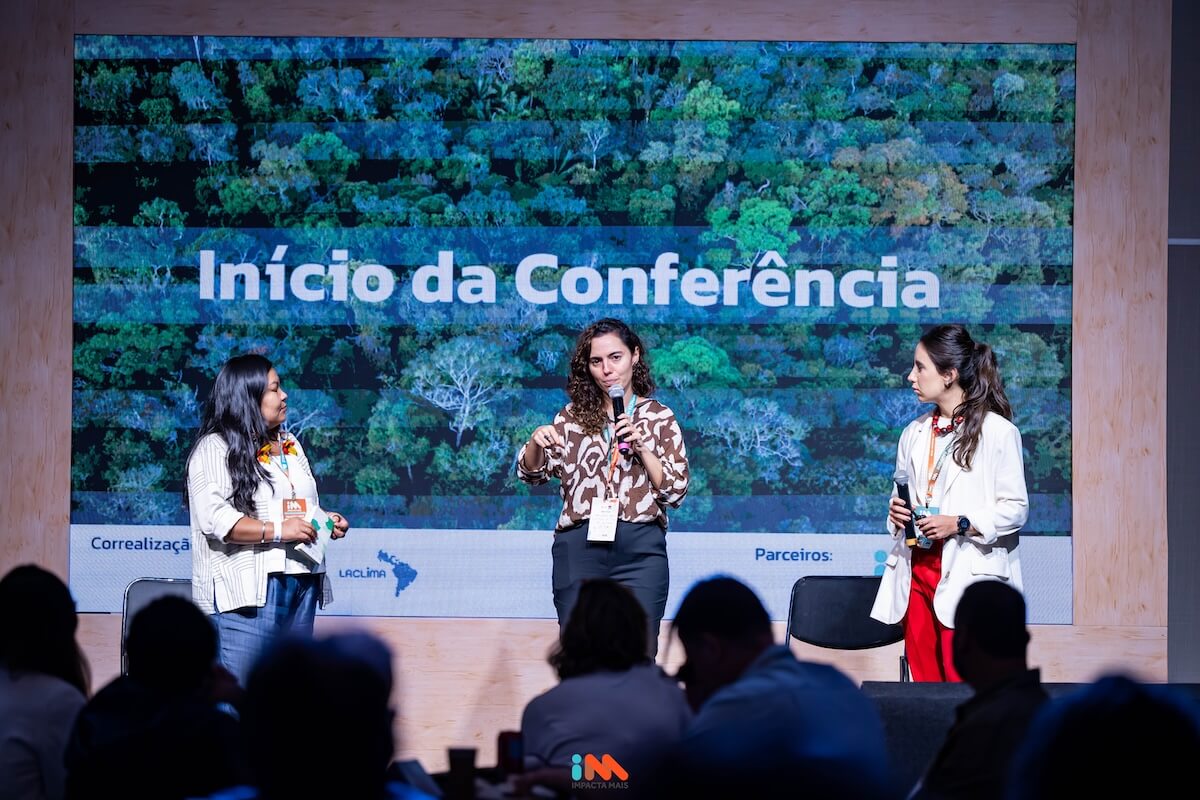
In Brazil, local impact opportunities emerge from global uncertainty. The cancellation of a decades-old festival celebrating Black culture and creativity sparked discussions at last week’s Impacta Mais 2025 gathering in São Paulo about whether the Trump administration’s stance against diversity and inclusion had reached Brazil. The decision not to host May’s Festival Feira Preta, for lack of sponsorship support, is more likely a symptom of a local issue in Brazil’s impact ecosystem, reports ImpactAlpha contributor Gilberto Lima: investors’ failure to grasp the strategic economic role of Brazil’s social, cultural and underinvested communities. Investors supporting such entrepreneurs do so with “a social impact lens, not an economic impact lens,” said Feira Preta’s founder Adriana Barbosa. The Impacta Mais gathering of more than 1,200 impact delegates surfaced challenges, both global and local, to Brazil’s growing impact economy, as well as creative ideas and opportunities for unlocking private capital. “I don’t notice any major investment practice shifts,” reassured GSG Impact’s Elizabeth Boggs Davidsen. “For environmental, social and governance risk managers, it’s a good business.”
- Innovative agri-finance. Protecting and nurturing biodiversity and natural resources were top of mind at Impacta Mais, as Brazil prepares to host the UN’s COP30 climate summit later this year. On display: a raft of new funds and financing vehicles designed to enable Brazil’s farmers to adopt and advance regenerative practices, restore degraded land and protect natural ecosystems. Macapá-based Engenho is raising capital to deliver on a major new contract in the US for its “açaí coffee,” which uses discarded açaí pits provided by 250 family farms. Three new entities are using tax-advantaged Agribusiness Receivables Certificates, or CRAs – a type of security backed by rural producers’ receivables – to channel capital to farming cooperatives and land restoration. VOX Capital is working with The Nature Conservancy on a catalytic fund for rural producers and sustainable land use in the Amazon and Cerrado biomes.
- Regenerative returns. Latin America has lost 95% of its biodiversity in the last 50 years. But upstarts are proving the business and environmental case for restoration and regeneration. At the Latin American Regenerative Investment Summit in Bogota last week, SVX’s Adam Spence pointed to Huiro in Chile, which is reviving marine ecosystems through regenerative seaweed cultivation. Amazonia Emprende is a forest school in Colombia that teaches academic, scientific and business groups about ecosystem conservation and restoration. Regenera Ventures, which co-hosted the gathering, channels capital to regenerative agriculture projects. Regenerative businesses often have more stable income and resilience to economic and environmental shocks, says Spence. “We need to think like a living system,” he writes. “It is the interaction, conflict and harmony, collective effort, and assembly of building blocks put together by stakeholders with a systems lens that can drive positive change.” Read Spence’s full piece.
- Uncertainty’s advantages. With the Trump administration’s retreat on climate, as well as immigration, foreign aid, diversity and inclusion, China is stepping up in Latin America. “I think China will be a significant inducer of the green agenda,” predicted Lucas Maciel of Brazil’s Ministry of Development, Industry and Commerce. Brazil is advancing its domestic initiatives to expand impact and climate investing, like its two-year-old National Impact Economy Strategy, and public bank BNDES’s impact program and climate fund (for background see, “Huge opportunities and trickle of capital make Brazil an impact growth market“). The macro-challenges to global impact and climate agendas may bring clarity, said Daniel Izzo of VOX Capital, one of Brazil’s veteran impact fund managers. “It’s a moment that will sort those truly committed from those speaking out just as a trend.” The next Feira Preta is scheduled to go ahead in November in the majority Black cultural hub of Salvador.
- Keep reading, “In Brazil, local impact opportunities emerge from global uncertainty,” by Gilberto Lima on ImpactAlpha. This month’s edition of ImpactAlpha Latin America drops later today. Opt-in to receive the speciality newsletter at no additional cost.
Dealflow: Inclusive Economy
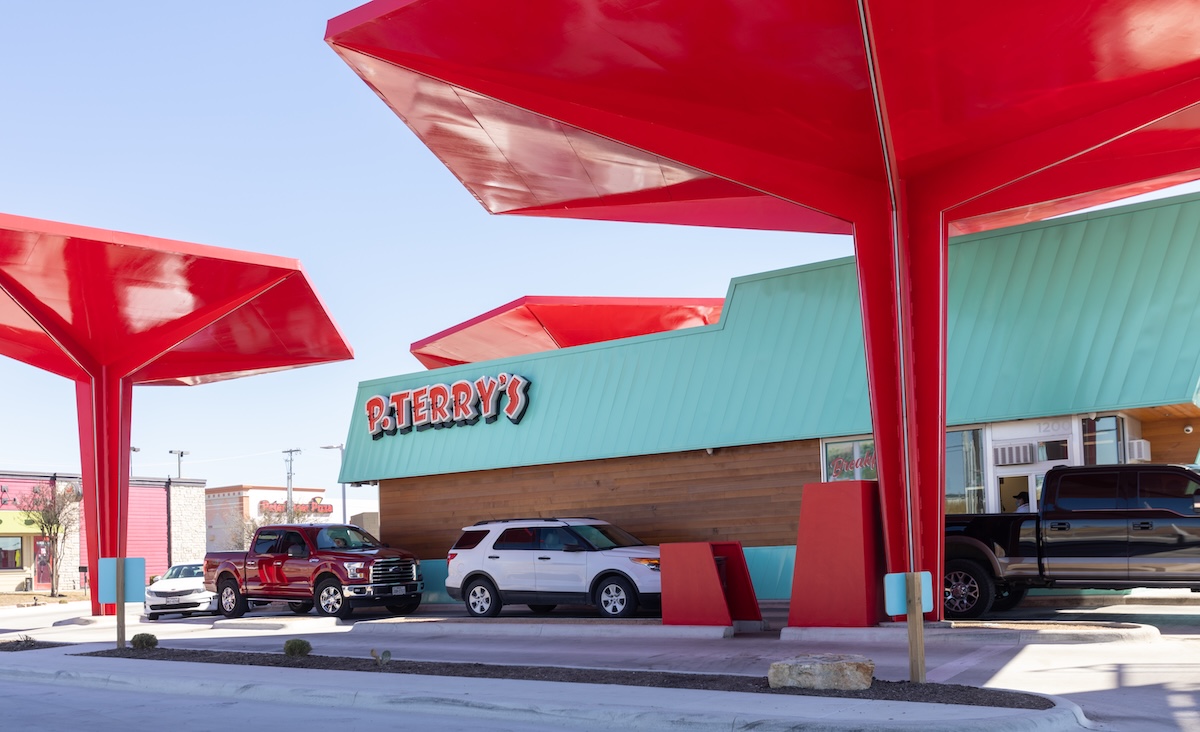
Lafayette Square finances Pacific General’s majority stake in Lenwich Holdings. First-generation Korean-American brothers Lenny and Brian Chu started Lenwich (then Lenny’s) in 1989 as a classic New York deli, selling sandwiches, wraps, cold cuts, cheese and other foods. Lenwich has grown into a well-known sandwich brand with 14 Manhattan stores and a store in Korea that opened three years ago. Capital from New York and Seoul-based private equity firm Pacific General will support Lenwich’s franchising and expansion beyond New York. “We have a deep conviction in the franchise restaurant business model and its ability to generate ownership opportunities for new entrepreneurs and economic benefits for working-class people,” said Damien Dwin of Lafayette Square, which provided debt capital to finance Pacific General’s stake (read and listen to “Lafayette Square’s Damien Dwin: Investing in working-class people and places”). Pacific General’s Dajeong Lee says the firm and Lafayette Square share the same “passion for growing businesses that sustain the communities around them.”
- Quality jobs. Washington, DC-based Lafayette Square, a private lender for middle-market businesses overlooked by commercial lenders, will help Pacific General and Lenwich improve worker retention and wellbeing through affiliate Workers Solutions. Worker Solutions helps Lafayette’s portfolio companies find third-party service providers that offer savings programs, emergency loans and other nontraditional benefits for their employees. Lafayette Square offers borrowers that provide such benefits a discount on the cost of their financing.
- Share this post.
Aura snags $140 million for AI-based online safety tools. Aura’s “all-in-one” online safety app combines AI tools to protect users from financial fraud, identity theft and malware, with password protection, online privacy and encrypted file sharing. The funding is the first for Boston-based Aura since it split off in September from Pango Group. The $140 million round, which includes equity and debt, was led by Ten Eleven Ventures and Madrone Capital, the family office of Rob Walton and other family members. AT&T Ventures also participated. The deal values Aura at $1.6 billion. “Aura’s innovative and comprehensive approach to online digital health and safety clearly positions it as a leader in protecting families in our increasingly connected world,” said Alex Doll of Ten Eleven Ventures.
- Youth mental health. This week, Aura added new features to help parents monitor the mental health of their phone-obsessed kids. Parents receive summarized insights that respect their children’s privacy but flag signs of stress and other behavior changes. “You get your kid a helmet when they learn to ride a bike, you sit in the passenger seat when they have their learner’s permit, but you do nothing to prepare them for life online,” warned Aura’s Hari Ravichandran. Aura also touts its consumer rights standards, including the right “to be forgotten.”
- Share this.
Dealflow overflow. Investment news crossing our desks:
- Mexican VC firms Nazca, with $300 million in assets under management, and Bridge, a $20 million manager, are merging to amplify support for the region’s early stage startups. (ImpactAlpha)
- Fidelity secured €330 million ($356 million) for its Logistics Impact Climate Solutions fund, or LOGICS, which acquires and decarbonizes logistics properties, such as warehouses, in Western Europe. (ESG Today)
- Boulder, Colo.-based Sunday raised $25 million from S2G Investments to expand its eco-friendly lawn care products. (Sunday)
- Ecofy Finance secured a $12.5 million loan facility from Denmark’s Investment Fund for Developing Countries. The Mumbai-based green lender will use the line of credit to finance electric two- and three-wheelers and rooftop solar. (YourStory)
- Norfund made a $7.5 million allocation to Inside Capital Partners’ second private equity fund, which is backing small and mid-sized enterprises in Southern Africa. (APEN)
The Call: Ownership Economy
Fund strategies to stabilize workers and companies through employee ownership. Essential workers won a measure of respect during the pandemic shutdowns. Malini Ramanarayanan Moraghan founded the Essential Owners Fund to help such workers share in the enterprise value that they create for their employers. In medical transport, food manufacturing, senior care, logistics and other critical roles, “essential workers power companies through all different parts of our lives,” Moraghan says. “Those same workers who are so important to the operating stability of their companies are also living at a level of economic precarity that’s not just moral failing, but bad for their businesses.” Moraghan will join today’s Agents of Impact Call, “Sharing the wealth through employee ownership” (register). The Essential Owners Fund uses debt and equity capital to finance non-control employee ownership conversions in which workers get at least a 30% share of a business. “I think every single American company should be at least 30% employee-owned,” Moraghan says. “When that happens, we will have the kind of social stability and community stability that we’ve all been working for.”
- Ownership funds. Apis & Heritage Capital Partners’ Michael Brownrigg believes in public service: he’s a city council member (and former mayor) of Burlingame, Calif. Apis & Heritage has championed employee-led buyouts, or ELBOs, to help companies with large low- and middle-income workforces transition to 100% employee ownership. Through employee-led buyouts, Apis & Heritage says worker-owners can retire with up to $120,000 in added savings. Ownership Capital Lab’s Alison Lingane co-founded Los Angeles-based Project Equity, where she managed the Employee Ownership Catalyst Fund and built a portfolio of employee-owned businesses. Lingane’s latest project is Ownership Capital Lab, a nonprofit to expand investment capital for employee ownership. Ownership Capital Lab and Transform Finance have identified 22 funds raising a combined $670 million to finance high-impact transitions to employee ownership.
- Policy support. Ownership is among the few broad wealth-building strategies able to attract bipartisan support. Case in point: this month’s article by Jim Sorenson and Terrence Keeley in National Review, “Democratizing American prosperity.” Lafayette Square Institute’s Jack Moriarty has been working such channels to build support in Congress for the Employee Equity Investment Act, which could increase the number of worker buyout funds from today’s handful to hundreds (listen to “Why employee ownership is the next big thing in impact, and America”). Moriarty has also led the creation of 535 Insights to provide data-driven insights on affordable housing, employee and home ownership risks and opportunities in local communities. Toronto-based Social Capital’s Jon Shell, with Bill Young, has built a portfolio of employee-ownership strategies in the US as a template for Canada’s enabling legislation for employee ownership trusts, or EOTs (see, “In Canada, employee ownership trusts offer a path to shared prosperity and national sovereignty”).
- Answer the Call. Moraghan, Brownrigg, Lingane, Moriarty and Shell will share emerging strategies for helping workers become owners, today, March 26, at 10am PT / 1pm ET / 5pm London. Share this post and register now.
Agents of Impact: Follow the Talent
Remembering Lisa Hall. The impact investing trailblazer served as a senior policy advisor in the Clinton administration and as CEO of Calvert Impact Capital, where she championed community development and the Women Investing in Women initiative. She led an impact investing portfolio at Anthos and most recently launched Apollo Global Management’s impact strategy. “She was one of the most inspiring, thoughtful and creative leaders,” Sonal Shah, who worked with Hall at the Beeck Center for Social Impact + Innovation at Georgetown University, wrote on LinkedIn. “Her remarkable career, spanning over three decades, was dedicated to uplifting communities through innovative investments, mentoring and public service.”
Tributes have poured in since Hall’s death from colon cancer on March 15. “The world has lost a true visionary, a quiet force of change, and a woman who embodied the spirit of defiant optimism,” wrote Durreen Shahnaz. “Lisa was a giant in impact investing – one of the founding mothers,” shared Tideline’s Ben Thornley. “Her example and advice blessed me in immeasurable ways,” added The Investment Integration Project’s Monique Aiken. Hall was a devoted mother to her daughter, Leah. Carolien de Bruin remembered that back in 2020, Hall shared her story of losing both her husband Randy and her sister Cindy to cancer, “not to ask for sympathy, but to remind us to love one another and put aside our differences” (more on Legacy.com).
David Macdonald joins Allivate Impact Capital from Woodforest National Bank as a managing director for the firm’s employee ownership finance strategy… TruFund Financial Services names OC Isaac, formerly of Locus Bank, as its chief lending officer. It also names Deirdra Cox of Community Sustainability Enterprise and Hilda Abbott of RudHil Companies to its board… Steve Rocco of MS Innovation Lab, co-founds Arketa Institute in Geneva, Switzerland.
Fundación Ayuda en Acción is hiring an impact investing associate in Bogotá… LGT Impact Fellowship is accepting applications until Sunday, March 30 for paid opportunities across Africa and India for mid-career impact professionals… British International Investment and MOBILIST Global are looking for a consulting firm with expertise in financial markets to produce a study of the role of secondary market vehicles in emerging markets.
👉 View (or post) impact investing jobs on ImpactAlpha’s Career Hub.
Thank you for your impact!
– March 26, 2025