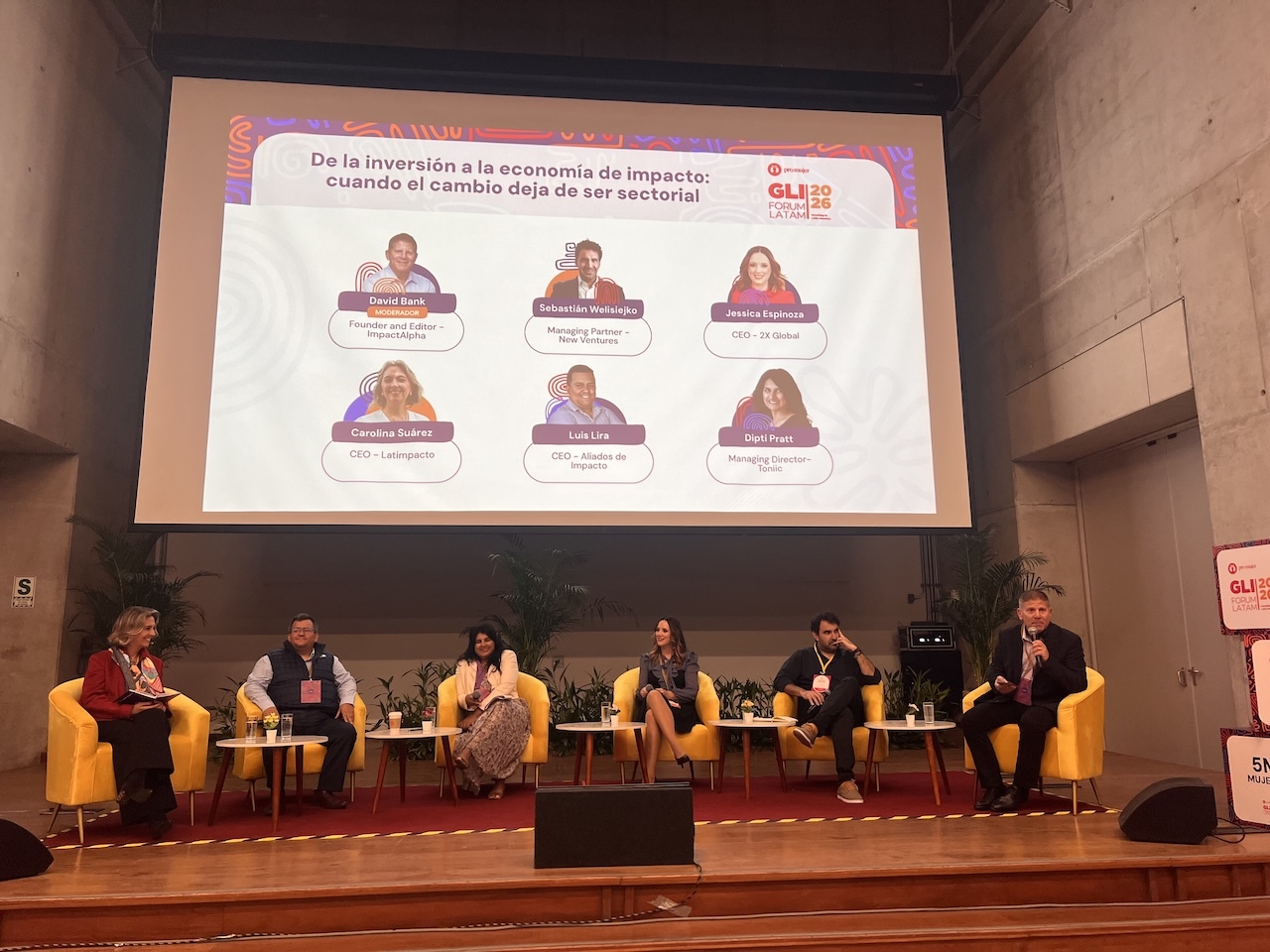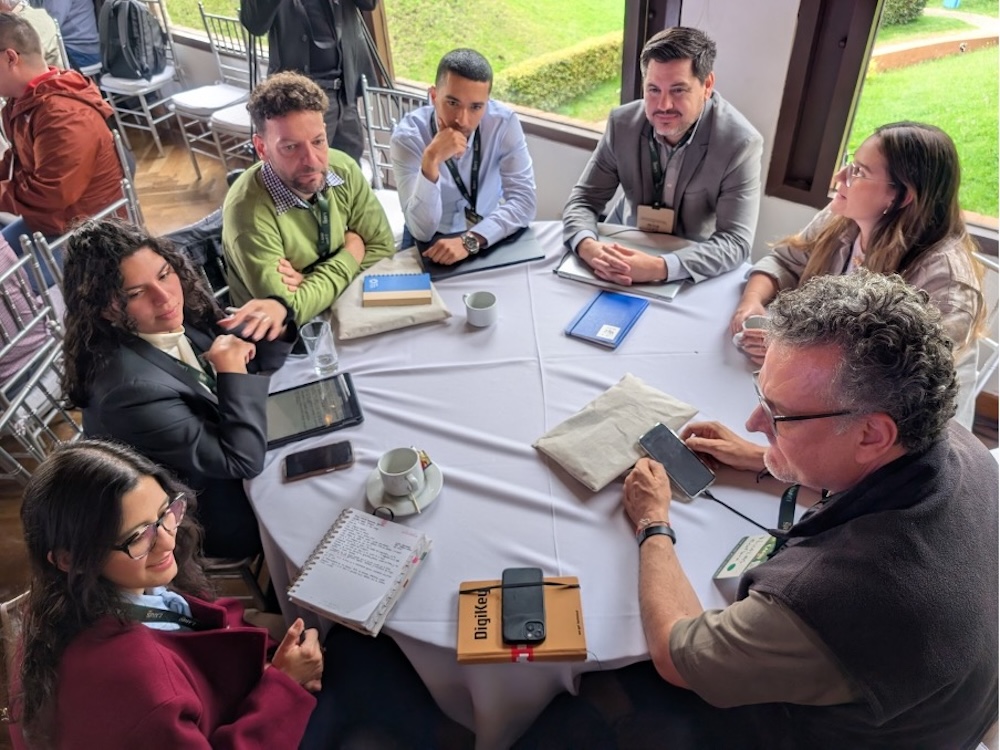

Last week, I had the good fortune of attending the Latin American Regenerative Investment Summit, or LARIS, in Bogota, Colombia. This inspiring and thought-provoking gathering sought to bring together a regional community of entrepreneurs, investors, philanthropists, policy makers and others interested in or engaged in regenerative business and investing. The event was organized by SVX Colombia, SVX Mexico, Regenera Ventures, and Negocios Alimentarios Regenerativos (NAR) and supported by IDRC, Social Capital Foundation, the Embassy of Canada in Bogota, Mustardseed Trust and Fundacion Avina.
Regenerative investing is an investment approach that deliberately deploys capital to restore and create regenerative ecological and social systems, rather than merely sustaining them or minimizing harm. By integrating long-term resilience, holistic systems thinking, and equitable community engagement, regenerative investing aims to create net-positive outcomes—maintaining biodiversity, sustaining natural ecosystems, improving soil health and fertility, integrating fair labour practices, strengthening local communities and more, all while delivering financial returns simultaneously. Regenerative investing has its roots in the regenerative agriculture movement through organizations like the Rodale Institute, but this approach extends to any sector that aims for regenerative practices.
Here are twelve key takeaways from the Summit including insights from the sessions and reflections from the experience:
1. We need to think like a system, a living system.
There are internal and external forces that drive individuals and organizations towards disconnection from one another and nature, a frame that we are fundamentally different, and a belief that we are all competitors for scarce resources. But we are nature. We are not apart from nature. Wherever we live or whatever field we work, we are also a part of a larger whole that is connected and has fundamentally similar wants and needs, locally, nationally and globally. We are also better when collaborating with a mindset of abundance.
Any field, sector, or group of citizens that thinks like a system will be much more productive and successful, including those driving regenerative or impact investing. In biological terms, a single molecule, cell, or tree cannot direct or solely maintain an organism or ecosystem. Furthermore, in the living system of a human body, the heart does not compete for oxygen with the lungs. They are fundamentally connected and rely on one another to survive and thrive.
Similarly, we cannot rely on a single actor, solution, or lever to maintain a sector or field. It is the interaction, conflict and harmony, collective effort, and assembly of building blocks put together by stakeholders with a systems lens that can drive positive change. These building blocks of a system include capital, policy, intermediaries, knowledge, culture, common understanding, and more.
2. We can take bioregional approaches to governance, development and investment.
Political boundaries are important in the modern world. But we need to evolve our approach to governance, development and investment to include bioregional areas that have been established by the natural world.
For Colombia, this includes subnational and trans-national bioregions including the Amazon, Andes, and the Pacific Coast. For Canada, this includes regions including the Carolinian Zone, Whitefeather Forest, Great Bear region, Great Lakes region, and agri-food regions connecting Ontario and Québec.
These bioregions cut across traditional boundaries for cities, departments, states, and provinces, and nations. They have shared interests and common resources, and actions taken in one part of the region invariably have impacts the people and natural ecosystems that are contained within them. We need to figure out how to organize and collaborate across these bioregions to effectively steward resources and create the conditions for prosperity, wellness, and success.
3. We are in trouble because we are sticking to our story of managing money, business and resources and we have not yet found our way to tell and live a new story of regeneration.
Our current, mainstream story is fairly simple: the planet operates in service of the economy and finance. We measure our success in GDP, generalized stock market performance, and accumulated wealth. We manage money and business with a fairly singular motive: profit. Further, we acquire, extract and exploit resources in pursuit of economic growth. In many ways, it’s Milton Friedman’s world. Now this story is not universal, nor is it really all that old. But it’s been the generalized narrative for the better part of the last 60 years, which in human memory, seems like it is immutable and forever.
There is another story. In fact, it is a very old story. We can live in greater balance with ecosystems. Money and business can act in service of all life on the planet. Money and business can also pursue more than one motive, including sustaining our material needs and our planet. We can measure our success based on wellness, happiness and quality of life. We can steward our resources for the collective and long-term benefit of all with a multi-generational horizon. We can also recognize that the soil is the oldest and most beneficial bank for the planet and humanity. But we had better take care of that bank before it runs out of resources.
Our regenerative story can and must also integrate Indigenous ways of knowing, experience and leadership. From the governance models of the Haudenosaunee to non-monocrop agricultural practices (for example, Three Sisters), we have a lot to learn from these old stories and ways of living.
Finally, it will be important to help visualize the regenerative world we are working towards in a simple and easy to understand narrative. There were several excellent examples shared that provides a starting point.
4. We cannot ignore the biodiversity and climate crisis. We still have time, but it is quickly running out.
This insight is as simple and brief as the story of the statistics. Latin America has lost 95% of its biodiversity in the past 50 years; North America has lost almost 30%. Our world is also warming, burning, and flooding at an alarming rate.
There are examples of reversing biodiversity loss (for example, the return of the South American tapir) and taking action on climate change. And there is still time to tackle these crises. But it is quickly running out before we face irreversible consequences. The next ten years will be decisive. A regenerative approach can help mitigate and reverse the impacts of these crises.
5. There are many examples of regenerative investing, business and approaches in Latin America.
The philosophy, principles, and problems related to regeneration are critical for us to understand. But it is just as important to make it real. From soil to software, there are many examples of regenerative investing and business approaches in Latin America. This was seen through showcases, stories, and examples shared by participants.
Here’s a sample:
- Costa Rica Regenerativa brings together a community with multiple capacities in order to reflect, plan and activate projects that enable the transition towards a regenerative paradigm.
- Regenera Ventures channels impact investments into regenerative agrifood and sustainability projects, focusing on biodiversity, soil health, and climate resilience across Latin America.
- Antom.la is a consulting firm that designs and implements regenerative agricultural strategies, empowering rural communities through sustainable land-management practices.
- Huiro is a Chilean venture specializing in regenerative seaweed cultivation and processing, aiming to restore marine ecosystems, create circular economies, and support coastal livelihoods.
- Ruuts is a social enterprise that connects smallholder farmers with conscious consumers through transparent supply chains, promoting fair livelihoods and regenerative agricultural practices.
- Biodiversal is a platform providing biodiversity-based solutions for regenerative agriculture, helping farmers and companies enhance soil health, ecosystem services, and climate resilience.
- Amazonia Emprende is a forest school in the Colombian Amazon that combats deforestation by developing Nature-based Solutions (NbS), training in ecosystem restoration and conservation, and offering academic, scientific, and business tourism programs.
- Campo Capital is a leader in sustainable investing that focuses on the agricultural, forestry, alternative energy, and rural development sectors, offering comprehensive financial and legal advisory services and drawing on the extensive multi-sector experience of its partners.
- Energia Vectorial is revolutionizing internal combustion vehicles through electrification and forging tailored charging solutions for electric vehicles, meeting the unique needs of every stakeholder in the sustainable mobility ecosystem.
We know these examples are not limited to Latin America. We have many examples of regeneration in Canada including Bloom Local Food Fund, Regenerative Capital Group, Cascadia Seaweed, Whitefeather Forest Initiative, Carolinian Canada’s Conservation Impact Bond, and many others.
6. Regenerative business and investment have a strong, long-term investment case for investors (as well as people and the planet).
Regenerative business and investment are inherently long-term propositions. And there is a strong case for investors as well as people and the planet. We can say that regenerative businesses:
- have greater levels of productivity compared to current, mainstream approaches;
- are more resilient to economic and environmental shocks;
- can produce higher quality products;
- are more efficient due to practices of circularity (eg. cost savings from reduced waste); and
- can have more stable income due to the above features.
As a result, regenerative investments can provide balanced returns for investors seeking positive social, economic and environmental impact alongside positive financial performance.
7. Education, philanthropy, and capacity building are required to build a regenerative investment and business ecosystem.
The regenerative business and investment ecosystem is vibrant. But it is still relatively small scale and fragile, like many peer systems and investment approaches (eg. community finance, impact investing, etc.). Accordingly, it is critical to direct non-investment capital into the ecosystem including education, philanthropic funding, and capacity building supports for entrepreneurs, financial and systems-level intermediaries, investors, and policy makers.
This may include resources for organizing, building enterprise capacity through bootcamps, accelerators, and one-on-one supports, creating infrastructure, training on regenerative business practices, and more. The objective is to advance adoption of regenerative business and investment practice amongst stakeholders.
8. There is a need for new incentives, new investors, new intermediaries and new, innovative financial products to advance regeneration.
Beyond building capacity and capabilities of stakeholders, there is a clear need for investment capital to finance regeneration. This will require:
- New incentives for individual and institutional investors to dedicate their capital towards long-term regenerative investments.
- New investors dedicating new capital towards regeneration. There is also be a need for existing mainstream actors to transform their criteria and approaches.
- New intermediaries developing and managing funds and products focused on regeneration.
- New, innovative financial products that seek to advance regeneration.
This capital will also need to seek non-extractive financial terms. There was some provocative debate and statements about the nature of those returns having reasonably different expectations than the current view of asset owners.
9. Large corporations can (and do) play an important role in advancing regeneration.
The current and potential regenerative business and investment world includes large corporations. In Colombia, corporates have been active in exploring and implementing regenerative practices, including entities such as ISA, Juan Valdez, Bancolombia, Postobon, and more.
Large corporates have an important role to play in any regenerative system. They operate at large scale, often at a regional, national or transnational level. They have access to significant resources including human, financial, natural, political and social capital. They are often at the coal face of resource management (literally and figuratively) including food, energy, mineral/material, and financial resources. They also have tremendous influence and impact in their business operations through customers, employees, communities, and the natural ecosystems where they operate.
The potential impact of large corporates adopting regenerative and impact business practices is immense. For some, it may require an entire rewiring or corporate DNA editing, while for others it is scaling or integrating what they are doing at a small scale across their business.
10. An enabling policy agenda is required for any system change, including the movement towards regenerative business and investing.
Laws, regulations, government institutions, public resources, and political leadership can enable (or hinder) any system change, including the transition towards regenerative business and investing.
In order to advance an enabling policy agenda, the following are required:
- a commitment to a process driving a regenerative vision: establishing an agenda, formulating a plan, implementing the plan, monitoring progress, and evaluating results to continually inform the process.
- an ability to navigate a range of needs and interests including: local and national; sectoral vs. transectoral vs. intersectoral; and managing / maintaining commitment through transition, including periods of emergency, changing priorities, and changing political leadership.
- a common understanding in government (with public support or the support of a constituency) before policy change can take place, from assumptions about the validity/utility of regulations and taxes to agreement on priorities as outlined above.
- exploration and inclusion of policy making strategies that are aligned with regeneration and better results such as participatory democracy.
11. The (regenerative) future belongs to all of us.
It was well said at the Summit that the future does not only belong to large global gatherings or institutions, whether it is Davos, G20, COP, or bilateral gatherings of the world’s largest political powers. The future belongs to individuals, communities, and organizations meeting, organizing and doing work across the planet. It belongs to all of us. And ultimately, we are only borrowing the present from our children’s future.
It is a major responsibility that requires commitment, effort, and collaboration within and between nations, sectors, and communities. To borrow a great movie line, it requires advanced citizenship. This represents a call to action to individually and collectively find ways to work towards a regenerative future. This may include a range of efforts from community or political actions to changing the way we invest or buy.
12. Regenerative investing and business must demonstrate real impact, particularly on people’s lives, livelihoods and communities.
We also have a core constituency to convince to make the transition to a regenerative approach: and it’s also us. Ultimately, this movement will need to answer the question: what is the benefit for our fellow citizens? There will be a need to show the value, benefits and results of this approach. Ultimately, there is a need to make a case and articulate a compelling narrative that this will make a real impact on people’s lives, their livelihoods, and the places that they live. This brings us back to a key question that anchors this conversation: what is the regenerative world we are working towards?
If we can build and prove the case that our new story of regeneration improves wellness, happiness and quality of life (and tell that story in a compelling way), then this is the future we will create together.
Adam Spence, founder and CEO at Social Venture Connexion (SVX).