
Greetings Agents of Impact!
In today’s Brief:
- Canada’s path to employee ownership
- Covering political risk in the global carbon market
- Remaking development finance
Featured: Ownership Economy
In Canada, employee ownership trusts offer a path to shared prosperity and national sovereignty. The 50 employees at Grantbook, a tech advisory firm for global grantmakers, have become owners of the Toronto-based company through Canada’s first “employee ownership trust,” an emerging form of worker ownership created by legislation last June. Another dozen or so Canadian companies are in the midst of their own employee-ownership transitions through the new trust structure, which through profit-sharing aims to distribute wealth more equitably than US-style employee stock ownership plans, or ESOPs (for background see, “With employee trusts, Canada opens a pathway to worker ownership”). With Canada’s economy under threat from an escalating trade war with President Donald Trump, employee ownership is becoming something of a nationalist rallying cry. The pitch: Strengthen the country’s economic sovereignty by putting businesses in the hands of Canadian workers to keep them out of the hands of American investors. “There’s no question that employee ownership could be mobilized to help keep Canadian businesses in Canadian hands in the face of US aggression,” says Jon Shell of Social Capital Partners, a Toronto-based nonprofit that supports policies to drive wealth and ownership for working-class Canadians (see, “Social Capital Partners widens its ownership lens”).
- Employee ownership 2.0. Grantbook has grown rapidly in recent years by helping partners, including World Education Services, and the Tides, Surdna and Libra foundations, digitize their grantmaking operations to roll grants out more efficiently. Grantbook’s employee ownership trust holds a 55% stake in the company on behalf of employees; it is buying out founder Peter Deitz’s share with a portion of the company’s cash flow. The CEO, Nikki Barrett, is retaining her 20% stake in the company. Former employees hold 25% of the company’s shares. An earlier US-style ESOP had been shut down because of a common problem – leaving too many of a firm’s shares in the hands of former employees. Deitz called the decision to transition via the EOT a no-brainer. “It sets the company up for success. It avoids exacerbating inequalities that might have resulted from a different path.”
- Agents of Impact Call. Canada’s employee ownership trusts are among a range of new structures models for employee ownership. Ownership Capital Lab’s new report, “The Silver Tsunami, the Great Wealth Transfer and the future of employee ownership in the United States,” cites 21 employee ownership funds raising a combined $670 million. Social Capital Partners’ Jon Shell and Ownership Capital Lab’s Alison Lingane will join ImpactAlpha’s Agents of Impact Call next week, “Sharing the wealth through employee ownership.” Essential Owners Fund’s Malini Ramanarayanan Moraghan will share employee ownership opportunities in non-cyclical, essential industries like food and agriculture, senior care and transportation and logistics. Lafayette Square Institute’s Jack Moriarty will discuss bipartisan federal and state support for expanding financing for employee ownership transitions. Join The Call, Wednesday, March 26, at 10am PT / 1pm ET / 5pm London. RSVP today.
- Keep reading, “In Canada, employee ownership trusts offer a path to shared prosperity and national sovereignty,” by Roodgally Senatus on ImpactAlpha.
Sponsored by Morgan Stanley
There’s still time to apply: Morgan Stanley Inclusive & Sustainable Ventures provides early stage innovators with access to capital, powerful networks and hand-picked mentors to help them develop and scale their startups. Morgan Stanley Inclusive & Sustainable Ventures includes two in-house accelerator programs – the Lab, designed for startup founders, and the Collaborative, to support emerging nonprofits.
Now extended through Monday, March 31, the Lab and Collaborative are accepting applications for their 2025 cohorts. Learn more about the mission to foster a more equitable and sustainable investment landscape.
- “The Lab helped us structure our organization, enhance product branding and prepare for our next funding round.” – Dr. Hanin Alsubaie, CEO and Founder of Darent
- “We have never had a non-industry advisor that has understood our business as quickly or thoroughly as our Lab Entrepreneur in Residence.” – Constanza Gomez, CEO and Co-Founder of Sortile
- “The Collaborative helped transform The Soil Inventory Project from a promising concept into a resilient organization with clear growth strategies.” – Kris Covey, Co-Founder and President of The Soil Inventory Project
Dealflow: Carbon Markets
Koko lands a $179.6 million World Bank guarantee to cover carbon market risks. The World Bank’s Multilateral Investment Guarantee Agency, or MIGA, issued a guarantee of almost $180 million to Koko Networks, a provider of clean cooking technologies in East Africa. The capital is aimed at securing and expanding Koko’s carbon credit and financing work. Koko designs and sells cookstoves and bioethanol cooking fuel, made from sugar molasses, to more than 1.3 million households through more than 3,000 “fuel ATMs” in Kenya and Rwanda. Cooking over charcoal and firewood has negative health impacts and is a significant driver of deforestation in the region; Koko sells carbon credits through the carbon trading mechanism created under Article 6 of the Paris Agreement based on the amount of charcoal and firewood displaced. Carbon credit revenues get passed on to Koko’s customers in the form of lower prices for its products (see, “Leveraging the carbon markets for clean cooking, climate justice and social impact”).
- Credit credibility. Koko has chosen a more difficult path than other social enterprises looking to tap the carbon markets for additional revenue streams. Most sell credit into the voluntary markets for corporate buyers. The Article 6 trading mechanism requires more rigorous accounting, verification and compliance. MIGA’s guarantee protects Koko in the event that host countries fail to honor their legal commitments. “We operate in the highly regulated energy and compliance carbon sectors and are therefore exposed to significant political risk,” said Koko’s Greg Murray. The agreement with MIGA covers political risks including “expropriation, war and civil disturbance, transfer restriction, and breach of contract” over the next 15 years. Murray noted Koko is “the first MIGA policy covering the unique political risks associated with the Paris Agreement carbon markets.”
- Financing expansion. Separately, French asset management company Mirova provided debt financing to help Koko scale its residential energy services in Kenya and Rwanda. The funding came through a carbon finance facility from the Mirova Gigaton Fund, which provides medium- and long-term debt for clean energy and other climate solutions in emerging markets. The Gigaton Fund has also supported solar companies SunCulture and Solar Panda in Kenya, ManoCap Energy in Ghana, and Solar Africa in South Africa.
Dealflow overflow. Investment news crossing our desks:
- Denver-based data center developer Stack Infrastructure notched $4 billion in green financing for its facilities in Stafford, Va., Portland, Ore., and Toronto, which Stack says it is committed to powering with 100% clean energy. (Stack)
- Abu Dhabi’s sovereign wealth fund ADQ and Energy Capital Partners are investing $5 billion in sustainable power generation projects to support AI data centers in the US. The commitment is part of a planned $25 billion dollar investment in such projects in the US. (Bloomberg)
- Colombia-based fintech company Ziro secured funding from Mondelez International’s impact investing group, Sustainable Futures, to provide inventory loans to small retail businesses. (Latam Fintech Hub)
- Massachusetts-based BlueShift raised $2.1 million from ConocoPhillips, Ridgeline and the Massachusetts Clean Energy Center to build a pilot facility to harvest minerals and carbon from seawater. (BlueShift)
Impact Voices: Development Finance
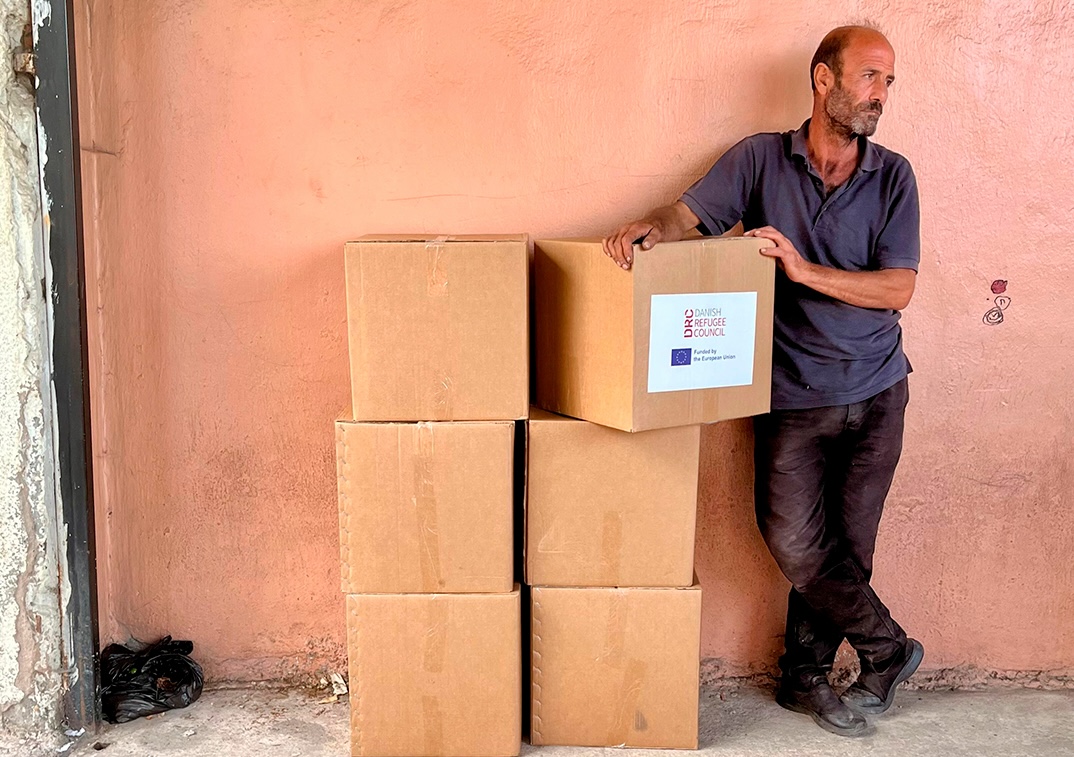
USAID crisis forces a reckoning – and remaking – of international development. A small loan from a specialized investment fund will have a big impact on the economic stability of dozens of Syrian and Palestinian refugees living in Jordan. Such creative financing and collaboration offers a guidepost to remaking a broken development sector, Ellen Brooks of the International Rescue Committee argues in a guest post on ImpactAlpha. The loan from the Refugee Investment Facility provided financing for Ali Dates, an 11-year-old date farm and processor in the Jordan Valley, to help the company acquire new equipment and increase production and employment. The Danish Refugee Council and iGravity, which manage the facility, designed terms compliant with the Islamic definition of ethical finance. The investment is an example of the kind of financing and support urgently needed by crisis-affected communities, especially amid the Trump administration’s gutting of overseas aid and European nations’ retreat on donor commitments (for background see, “US development financing freeze puts private investments in Africa in peril”). “The aid and development systems we have today were built on colonialism. So were our financial systems,” writes Brooks, who joined the IRC’s innovative finance team in 2021 to leverage useful financial market structures for long-term stability and sustainable development. “We have long known these systems were broken, or worse, designed to prevent problems from being fixed.”
- Aid overhaul. The two-year-old Refugee Investment Facility has provided four impact-linked loans to small businesses like Ali Dates that are creating good jobs for refugees and their support communities. The ICRC and the World Bank are building water infrastructure in the Democratic Republic of the Congo’s West Goma region. Kiva Capital’s Refugee Investment Fund has loaned $60 million to organizations advancing refugees’ financial inclusion. Sovereign debt swaps, which are being used to support nature conservancy and restoration, are a promising tool for social outcomes as well. Money and resources will always be needed for immediate crisis response, but aid shouldn’t be a long-term solution; funding should be designed for stabilization and economic resilience, says Brooks. “To the capital on the sidelines: this is a call to action. I am looking at you, private philanthropists, impact investors, banks with sustainability teams, and family offices. We all need to get more comfortable with losing some gains in the short-term to sustain the long-term.”
- Read the full piece.
Agents of Impact: Follow the Talent
Project Equity welcomes David Kenney, previously with VertueLab, as manager of its Employee Ownership Catalyst Fund, which is co-managed with Mission Driven Finance… Daniela Fernandez will step down as founding CEO of the Sustainable Ocean Alliance to launch a new ocean venture… CarbonQuest appoints Jake Wellman, previously with McKinsey & Co., as director of strategy and market analysis… Inspire Access adds Christine Roddy, previously with Clean Crop Technologies, as chief operating officer.
IIX is looking for a consultant in the Philippines… Chan Zuckerberg Initiative seeks a principal IT technical program manager in Redwood City, Calif… Incofin has an opening for an agrifood portfolio manager in Bogota… BlueOrchard Finance is on the hunt for a senior investment officer in Lima, Peru… British International Investment is hiring a London-based climate change manager for its impact group.
Triodos Bank is recruiting a performance analyst in the Netherlands… The Netherlands Advisory Board on Impact Investing is looking for an impact investing intern… Mastercard Foundation, IDH and Acumen are co-hosting, “Better business: The case for a gender transformative approach in agricultural value chains,” Thursday, March 27… The State of Latino Entrepreneurship Summit, hosted by the Latino Business Action Network with Stanford University, takes place Thursday, March 27 in San Francisco.
👉 View (or post) impact investing jobs on ImpactAlpha’s Career Hub.
Thank you for your impact!
– March 20, 2025