
Greetings Agents of Impact!
🌎 ImpactAlpha + Brazil at FLII. Are you an LP attending next week’s Latin America Impact Investing Forum? ImpactAlpha is partnering with Alianca pelo Impacto, which is hosting a Brazil-focused event, Wednesday, Feb. 26. Meet and connect with Agents of Impact from Brazil, as well as with other LPs and family offices. We have a handful of invitations available. Request an invite.
In today’s Brief:
- African-led small business investing
- Cybersecurity for entrepreneurs in Southeast Asia
- Closing the social enterprise funding gap
- Clash over Greenhouse Gas Reduction Fund
Featured: Impact in Africa
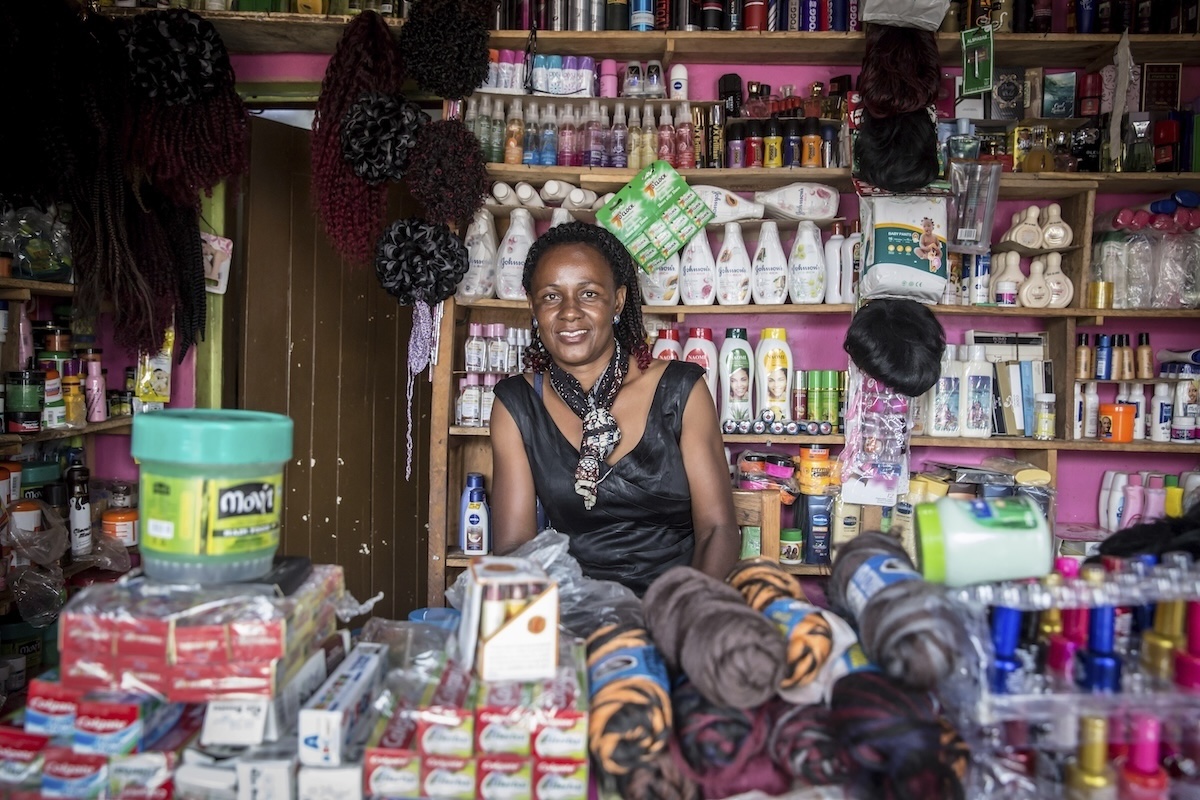
African leadership is reshaping the continent’s small business investing ecosystem. The Trump administration’s abrupt halt to overseas assistance has given new urgency to a long-standing critique: Foreign aid and grants, however well-intentioned, can instill reliance. As aftershocks continue to ripple through Africa and other emerging markets, the freeze on aid has become a catalyst for local stakeholders to accelerate efforts to establish more resilient local financing ecosystems. “It’s really up to us to figure out how we take responsibility for how we move forward as a continent,” Amma Gyampo of the Ghana Venture Capital and Private Equity Association tells ImpactAlpha. “America is going to be more inward looking. I think Africa probably needs to do the same. This is the time for us to do that with more seriousness for long-term benefits.” As the African ecosystem for financing small businesses has expanded, it has deepened its local roots. “It has become an African-led ecosystem,” I&P, an Africa-focused impact fund manager, writes in a new report.
- African-led. African decision-makers with deep market knowledge are leading more funds that invest in small businesses and offer more localized support. I&P mapped 135 small business and venture capital funds that are actively deploying capital in Africa. The vast majority of fund managers, at least for small business funds, are now based in Africa. Out of 55 small business funds, 80% are led by African general partners; two-thirds are fully led by African general partners, and another 13% are led by a mix of African and foreign general partners. Additionally, almost 70% of the funds have raised capital from African public and private investors.
- Track record. The growing ecosystem has its work cut out to bridge an estimated $330 billion gap in small business financing. Development finance institutions still account for the bulk of small business financing. As part of the Trump administration’s clamp down on overseas spending, some investments from the US International Development Finance Corp. have been paused (see, “US development financing freeze puts private investments in Africa in peril”). For emerging fund managers, it’s back to basics: Build a track record to woo private investors, suggests I&P. That can involve pilot funds, “warehousing” deals, and catalytic capital. Inua Capital, a woman-led fund for businesses in Uganda, built its credibility with a smaller financing facility backed by high net-worth individuals. Senegal’s WIC Capital grew out of a local business women’s angel network.
- Keep reading, “African leadership is reshaping the continent’s small business investing ecosystem,” by Lucy Ngige on ImpactAlpha.
Sponsored by BlueMark
Have your impact recognized. Impact verification firm BlueMark is collecting data from clients for this year’s “Making the Mark” report. Investors and funds that complete BlueMark’s verification process have the opportunity to be featured on two exclusive leaderboards and showcased in the annual report. The details:
- The Practice Leaderboard. The BlueMark Practice Leaderboard serves as the global benchmark for rigorous impact management, recognizing investors who demonstrate best-in-class practices and enabling market participants to identify top performers with confidence. To earn a spot on the 2025 Practice Leaderboard, verified investors must receive top-quartile ratings across all eight practices measured in the practice verification. To be considered, investors must have completed their Practice Verification after April 1, 2023 and no later than April 15, 2025.
- The Fund ID Leaderboard. This year, BlueMark is proud to introduce the Fund ID Leaderboard, designed to spotlight funds that uphold the highest standards of impact accountability. Each fund is rated across four key pillars: strategy, governance, management and reporting. Funds are awarded an overall rating – platinum, gold, silver or bronze – calculated by totaling the score earned in each of the four assessment pillars. To be considered for the Fund ID Leaderboard, funds must have received a Platinum score on their Fund ID assessment between April 1, 2024 and April 15, 2025.
Dealflow: Financing Small Businesses
Ethiopian bank partners with Accion and Mastercard to boost innovation in inclusive fintech. Dashen Bank, with nearly 900 branches across Ethiopia, is teaming up with global nonprofit Accion and the Mastercard Center for Inclusive Growth to create a digital innovation hub. The facility will develop financial products for micro- to medium-sized and women-led businesses. Ethiopia passed a law last year allowing foreign banks to operate and establish subsidiaries, an effort to make the country’s financial services more efficient, attract more foreign direct investment and spur innovation.
- Enabling innovation. Small businesses in Ethiopia generally rely on cash, which hampers their ability to establish credit, said Dashen’s Asfaw Alemu. Dashen was among the first banks in Ethiopia to launch a digital wallet. The new hub will integrate small business supply chains to provide visibility into transactions and enable suppliers to develop AI-based credit scoring. Accion and Mastercard have partnered on financial inclusion for eight years, and extended an initiative in 2023 with a $15.8 million grant from the Mastercard Impact Fund to connect five million small businesses to digital financial services.
- Share this post.
A sovereign wealth fund in Malaysia backs ArmourZero’s small business cybersecurity services. An estimated three in five small businesses that suffer cybersecurity breaches end up going out of business. Many businesses lack the digital infrastructure or knowledge to protect themselves. In Malaysia, ArmourZero has developed low-cost cybersecurity software for small businesses in Southeast Asia. The three-year-old company secured an undisclosed amount of financing from the Gobi Dana Impak fund, a partnership fund between Malaysia’s sovereign wealth fund, Khazanah Nasional, and VC firm Gobi Capital. ArmourZero is “making cybersecurity accessible for business and digital applications, as well as small businesses – a vital segment that drives economic growth yet remains underserved in digital protection,” said Gobi’s Jamaludin Bujang.
- Impact seed capital. Gobi is a Kuala Lumpur and Hong Kong-based venture capital fund with $1.6 billion in assets under management. It focuses on “empowering underserved entrepreneurs, promoting gender equality and circular economy initiatives, driving innovation in new markets and technologies, and nurturing entrepreneurial ecosystems.” In 2023, it launched the Dana Impak Fund as part of Khazanah Nasional’s five-year, six billion Malaysian ringgit ($1.3 billion) initiative to foster inclusive growth through entrepreneurship support and investment. Other investments through Gobi’s fund include BoomGrow, a high-tech indoor agriculture startup, and Care Concierge, a senior healthcare provider.
- Check it out.
Dealflow overflow. Investment news crossing our desks:
- Family office Ceniarth made a $4 million investment in Azure Source Capital to finance water service providers in Central America. (Azure)
- Lagos-based Oui Capital scored an $8 million return on a $150,000 investment in Nigerian digital payments provider Moniepoint. (Tech Cabal)
- British International Investment extended a $15 million trade loan to Nepal’s Sanima Bank, to help the bank finance businesses importing equipment for hydro and solar projects and materials for manufacturing and agri-processing. (BII)
Signals: Green Transition
EPA’s efforts to claw back ‘green bank’ funds hit a snag, for now. That bang you hear is the sound of the door slamming as another federal prosecutor resigned in the face of improper demands by the Trump administration. Denise Cheung, the head of the criminal division in the US attorney’s Washington, DC office, resigned Friday after being asked to initiate a criminal investigation into contracting for the Greenhouse Gas Reduction Fund and to freeze the funds held at Citibank (see, “Trump’s EPA takes aim at Climate United and Greenhouse Gas Reduction Fund”). The program, part of the Inflation Reduction Act, is aimed at establishing a green lending network. Under President Biden, the Environmental Protection Agency awarded $20 billion to eight nonprofit coalitions to finance energy retrofits, community solar, electric school busses, and other pollution-reducing projects in communities across the US. Those funds were deposited with Citibank under a financial agent agreement. To freeze funds in a commercial account, the government would need to suspect criminal activity. Cheung joined a half-dozen other federal prosecutors who have resigned in protest in recent weeks.
- Waiting game. Recipients of the $20 billion awards have been on edge waiting for the administration’s next move. EPA administrator Lee Zeldin has made a public show of declaring that he “found” $20 billion in wasteful and fraudulent awards, specifically naming Climate United, the coalition led by Calvert Impact. The expected freeze of the funds held at Citi has been slow to materialize, however, perhaps signaling the difficulty Zeldin is having backing up his allegations. Recipients were able to draw on their Citibank funds as recently as this week. Another $7 billion in GGRF funds for the Solar for All program, which went to a wider group and is held at the Treasury Department, remains frozen.
- Leveraging private funds. Zeldin has said the arrangement with Citibank “was purposefully designed to obligate all of the money in a rush job with reduced oversight.” Such arrangements have long been used by agencies under Republican and Democratic leadership, including the Reagan, Bush and first Trump administrations. The EPA worked with the Treasury Department, which is authorized under the National Bank Acts of 1863 and 1864 to use private banks as financial agents, to set up the agreement with Citi. The financial agent arrangement helps recipients strike public-private partnerships, a key goal of the GGRF, Kyle Kammien, a lawyer and policy director at Dream.org, tells ImpactAlpha. The arrangement “allows that money to be on the balance sheet,” he says, “to have it in a bank account that you can point to.”
- More.
Agents of Impact: Follow the Talent
Jigar Shah, the climate tech veteran who led the Department of Energy’s Loan Programs office, joins Powerhouse Ventures as a venture partner (read and listen, “Jigar Shah on building a $140 billion ‘bridge to bankability’ for the energy transition”)… Jonathan Rose Companies is looking for an acquisitions analyst in New York… Sunwealth has an opening for a senior manager of investor development… BlueOrchard Finance is on the hunt for a senior investment officer in Lima, Peru… Greentown Labs is hiring a community and events coordinator in Somerville, Mass.
GSG Impact is recruiting a development manager focused on Asia… Paul Ramsay Foundation seeks a chief impact officer… UCLA Anderson Social Impact Consulting Corps is looking to provide pro-bono MBA consulting to nonprofits and social enterprises working on long-term recovery in relation to the LA wildfires… Impact Frontiers’ Strengthening Impact Management program for investors is partnering with Prime Coalition for this year’s cohort, which is focused on climate action… Sankalp Africa Summit is happening in Nairobi, Feb. 26-27. Register with code IMPACT25 for a discount.
👉 View (or post) impact investing jobs on ImpactAlpha’s Career Hub.
Thank you for your impact!
– Feb. 19, 2025