
In just a few years, the first woolly mammoths to live in more than 4,000 years may be taking their first tentative steps across the chilly Arctic tundra.
If they do, it will be a crowning moment for Colossal Biosciences, the bold-thinking “de-extinction” startup behind the mammoth and other projects intended to rewild long lost species and restore degraded ecosystems.
In addition to mammoths, the Dallas-based biotech company is using gene editing tools and AI to resurrect the Tasmanian tiger and the iconic dodo bird. The research is already spawning technology and insights that could help preserve currently endangered species and keep them from disappearing.
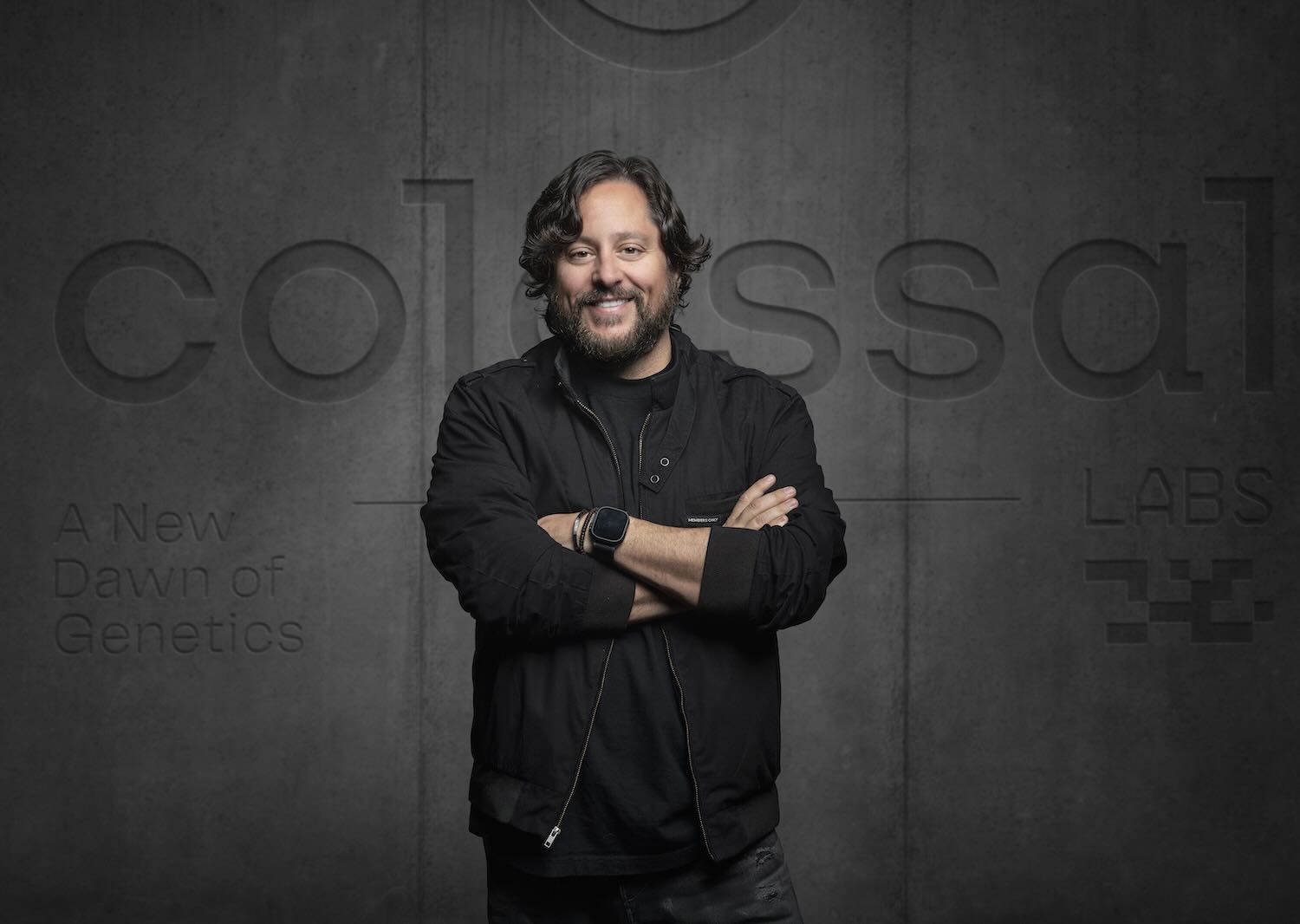
“The world is in the middle of the 6th mass extinction event caused by humans,” Colossal cofounder Ben Lamm, a serial entrepreneur who founded the company in 2021 with Harvard’s star geneticist George Church, tells ImpactAlpha. “Conservation works, but not at the speed at which we are changing the ecosystem and eradicating species.”
To bring back the mammoth, Colossal has assembled a reference genome of the ancient beast from preserved DNA samples and other genomes. It will edit the mammoth genes into Asian elephant DNA cells, and transfer the nucleus into an elephant egg, creating a mammoth-elephant hybrid that can withstand the cold (Colossal is also supporting research into artificial wombs). Researchers say the stomping and grazing of the mammoths could help restore tundra to nutrient-rich grasslands that can support biodiversity and compact carbon-laden permafrost to keep it from melting.
“De-extinction and species preservation we think go hand in hand,” Lamm says.
Colossal’s research is also generating important knowledge about elephant genomes and reproductive cycles that could protect Asian and African elephants, including the development of mRNA-type vaccine for a virus that kills 20% of young elephants. There are fewer than 50,000 Asian elephants left in the wild.
The dodo program is leading to advances in avian genetic tools that will benefit threatened bird species worldwide.
Lamm says Colossal “is working to build an end-to-end de-extinction toolkit focused on providing new technologies to conservation groups and governments to combat the loss of biodiversity crisis.”
Billion-dollar spinoffs
To support that mission, Dallas-based Colossal has raised a fresh $200 million from TWG Global, the personal investment vehicle for Guggenheim Capital cofounder Mark Walter.
“Colossal is the leading company working at the intersection of AI, computational biology and genetic engineering for both de-extinction and species preservation,” Walter said. The company “has assembled a world-class team that has already driven, in a short period of time, significant technology innovations and impact in advancing conservation.”
The deal values Colossal at more than $10 billion — just a year after it earned unicorn status with a $150 million Series B round led by United States Innovative Technology Fund, a Pittsburgh-based venture firm that invests in companies with solutions for the commercial and defense sectors.
The company has raised a total of $435 million since 2021.
A wide range of investors have been attracted to its mission, from Silicon Valley venture investor Jim Breyer and biotech venture firm Arch Ventures to Lord of the Rings film director Peter Jackson, and In-Q-Tel, the venture arm of the CIA. (In-Q-Tel said Colossal’s research could unlock new capabilities beyond re-wilding species, such as re-engineering wood to improve building materials, sequestering carbon, curing human diseases and enhancing crop species to tolerate climatic changes).
Colossal’s big pay off may take years, but its investors are spreading their bets. Colossal already has spun out two companies, in which its investors received stakes: Form Bio, spun out in 2022, offers computational biology tools and software developed at Colossal to help speed research for human healthcare. It has raised over $35 million with, according to Lamm, seven-figure annual recurring revenue.
Last April, Colossal spun out Breaking – named for its synthetically enhanced microbes that can break down plastics into harmless biomass. The startup raised $10.5 million in seed funding and has several active pilots underway.
“We think those are billion dollar-plus businesses,” says Lamm. “We’re like a laboratory that’s not only doing science but also spinning out companies.”
Early investor and Colossal board member Tom Chi of At One Ventures anticipates another spin-out this year and perhaps an eventual IPO of one of the companies. “Colossal’s technology has progressed rapidly,” he told ImpactAlpha.
Colossal also plans to make money from its genome engineering tools and, eventually, biodiversity credits. As the market for biodiversity credits evolves to include, say, creating thriving new herds of elephants, “the evolution of that market will be billions of dollars in annual annuities for our business,” Lamm said.
De-extinction toolkit
Colossal employs 170 scientists and sponsors another 40 researchers working on conservation and de-extinction at partner labs via its $50 million Colossal Foundation. The foundation this week made a $1.5 million donation to George Church’s Wyss Institute for Biologically Inspired Engineering at Harvard University to support its artificial womb research.
The company also makes its genetics tools free for conservation partners, which include Re:wild, the BioRescue consortium, and Save the Elephants. With Re:Wild, for example, it is building a distributed genetic repository of endangered species as an “insurance policy.” Its technology has also helped identify a gene that could provide resistance to toxin from the invasive cane toad to help protect Australia’s endangered Northern Quoll.
“If you think about the de-extinction toolkit you need to bring back a mammoth or a dodo, you’ve got to build ancient genomes, you’ve got to do comparative genomics, you’ve got to build computational maps, and then figure out what to edit,” explains Lamm. The same steps are needed to preserve genetic diversity, he says. “We are the partner on: How do we engineer genetic diversity so that we make thrivable herds?”
Colossal will use the latest funding round to expand its team, support new technology development, and add new species to its de-extinction list.
“This year is all about focusing on continuing to deliver on our current milestones for our three flagship species,” says Lamm, as well as reviewing additional candidates for de-extinction, increasing the teams, and investing in gene editing tools, artificial wombs and other core technologies.