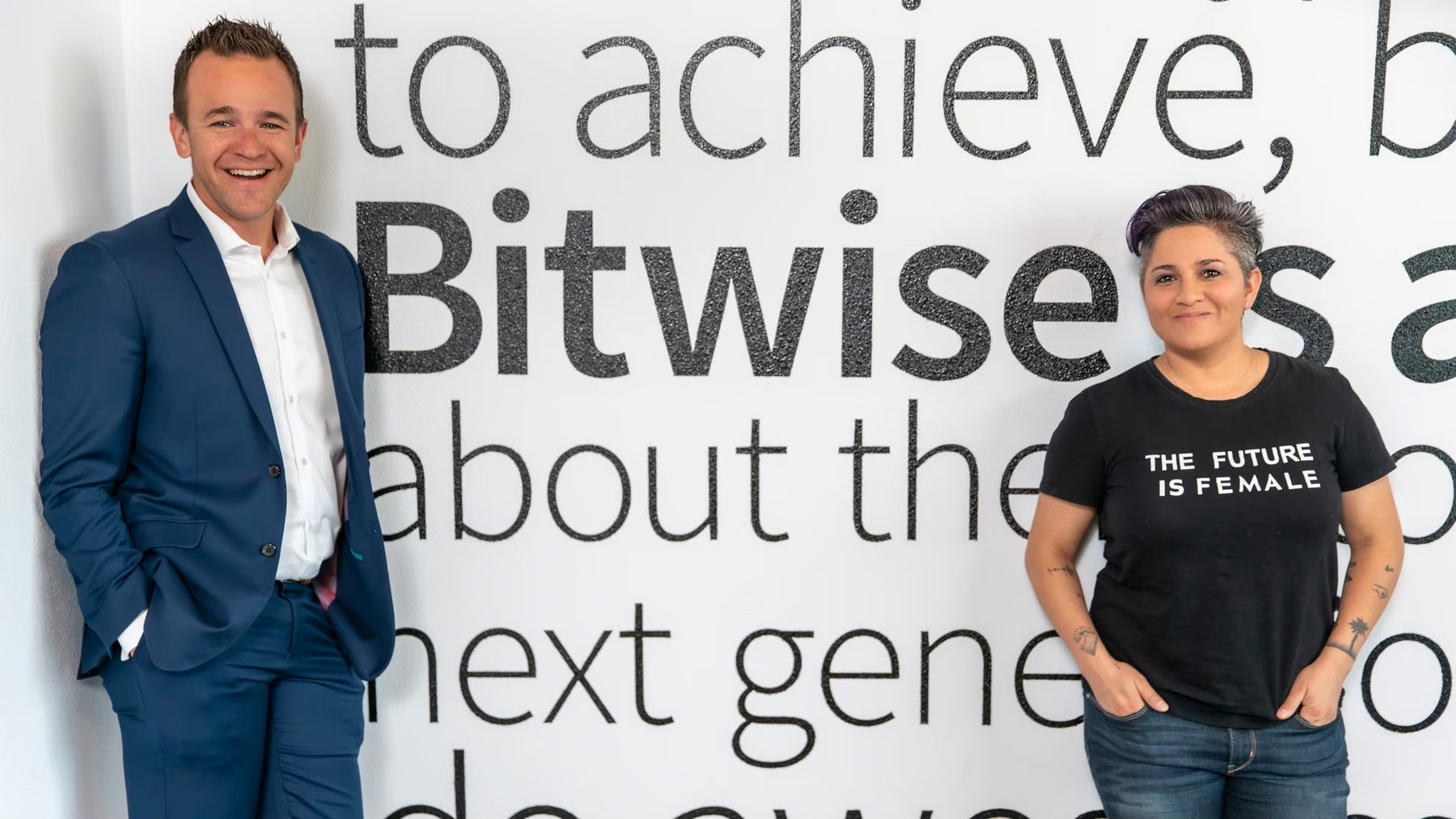
Just over a year after the collapse of Fresno, Calif.-based tech upskilling and real estate company Bitwise Industries, co-founders and co-CEOs Jake Soberal and Irma Olguin Jr. pleaded guilty in federal court to wire fraud and conspiracy to commit wire fraud.
The one-time impact darlings admitted to defrauding investors, lenders and others of as much as $115 million in what prosecutors described as a sprawling pattern of fraud. They face up to 40 years in prison and fines of up to $500,000.
“We lied to lenders and investors in egregious ways so that they would give Bitwise money that we could use to keep the company going, and keep our teammates employed,” Olguin Jr. and Soberal wrote in a public apology posted on the social media site X.
The Bitwise founders also apologized to investors for “the money entrusted to us that you may never get back.” They acknowledged having “lost the ability to see the collateral damage that was possible” from their actions.
ImpactAlpha first wrote about Bitwise in 2019 and tracked the impact high-flier through multiple milestones and financing rounds. Before it imploded, the company raised at least $157 million over several financing rounds from Kapor Capital, Motley Fool Ventures, Candide Group, ImpactAssets, Libra Foundation, Citi Impact Fund, and Goldman Sachs Asset Management.
Olguin Jr., 38 years old, and Soberal Jr., 43, agreed to pay restitution of as much as $115 million. It’s unclear where that money will come from, especially since both Olguin and Soberal have been unemployed since May 2023 when Bitwise collapsed. The co-CEOs had been earning roughly $600,000 each despite the company’s cash crunch.
The guilty pleas come after investigations by the Federal Bureau of Investigations, Internal Revenue Services and the Securities and Exchange Commission and multiple lawsuits from employees, investors, lending and other financial partners.
From Bitwise’s inception in 2013 to up until the beginning of 2022, Bitwise had raised $75 million in Series A and B rounds, according to the US Attorney’s office for the eastern district of California. Even with fresh funding, Bitwise had been operating at a loss and kept running low on funds.
According to prosecutors, throughout 2022 and early 2023, Olguin Jr. and Soberal misled investors on the company’s financial health, including reporting that Bitwise’s cash balance was $77 million at the end of 2022, when in fact it was less than $5 million. The founders also lied to a California-based investment firm about a $150 million investment from a London-based investment firm in an attempt to convince the California firm to purchase buildings owned by Bitwise.
Dignified tech jobs
The social-enterprise darling of California farm cities Fresno, Bakersfield and Merced, Bitwise’s Olguin Jr. and Soberal had promised to bring high-wage, Silicon Valley-like tech jobs and transform old, blighted buildings into inclusive learning, business incubator and co-working spaces. Olguin Jr. and Soberal, both Fresno natives, left after high school to attend college in other US cities, and later returned to the San Joaquin Valley to share their vision with their communities.
Their goal was to bridge the racial wage and wealth gaps by training low-income and minority residents for high-paying tech jobs, and to revitalize underrepresented communities through real estate development. Bitwise drew enthusiastic support from local and state government officials in those California cities, and later from governments and other private-sector organizations in Chicago, El Paso, Buffalo, Columbus and other cities.
Right up to its collapse, Bitwise seemed like a company on the way up. It was in full-on expansion mode, scooping up buildings in several US cities and acquiring small software and consulting firms. Months before its meltdown, Soberal told ImpactAlpha in an interview, “What has been critical in our expansion is being a listener and our understanding of those places, and partnering with local leaders to help lead the work.”
In Chicago, the latest market it entered, Bitwise secured partnerships with then Chicago mayor Lori Lightfoot, the Obama Foundation and the Comer Science and Education Foundation.
Tech apprenticeships
Since 2013, Bitwise said it paid $20,000 a year each to train roughly 15,000 students from underrepresented tech communities in US cities. Graduates went on to earn $60,000 annually on average. More than half of graduates are women and Latinos and identify as LGBTQ and close to 10% have been incarcerated. Black graduates make up nearly 20%.
In addition to raising hefty amounts of venture capital, the company also launched Bitwise Capital fund, backed by Bank of America, to provide pre-seed funding for founders from its graduating classes of tech workers.
Mitch Kapor and Freada Kapor Klein of Kapor Capital, which led several Bitwise investment rounds, were among some of Olguin Jr. and Soberal’s biggest advocates, highlighting them in their book, “Closing the Equity Gap: Creating Wealth and Fostering Justice in Startup Investing.”
Contacted several times via email and phone, Kapor declined to discuss the company’s meltdown.